

Blockchain transparency was never neutral.
It created a market of watchers.
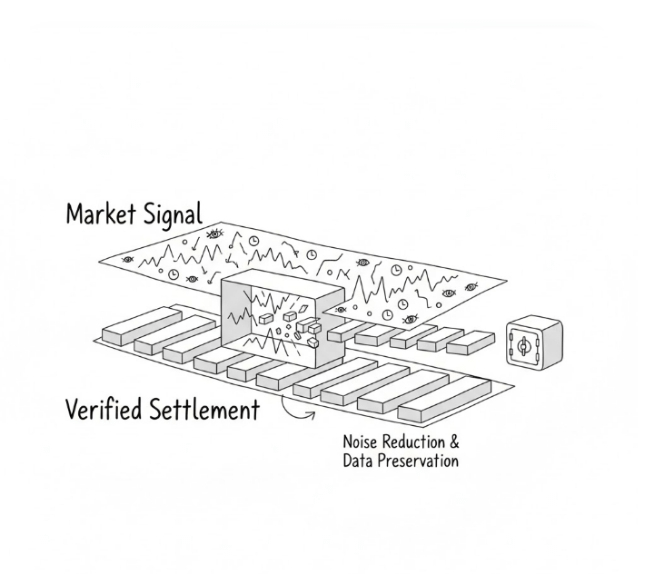
Every mempool, every single pending transaction, every half-baked idea now became tradeable information. Bots didn’t need to steal data – they simply needed to observe what was about to be done. Markets were no longer responding to events, but rather to expectations.
This is the invisible tax of open ledgers:
economic anticipation leaks.
VANRY differs from previous attempts to protect privacy in its approach. It doesn't try to hide the ledger. It tries to change what the ledger may reveal.
Rather than directly communicating the intent, VANRY dissolves interactions into an action of state change. The action is still observable, but how we got there is not—the narrative we normally see as leading up to the action is absent. The chain is public, the market is no longer predictive.
That distinction makes all the difference.
In a traditional blockchain, traders react to probabilities. But on VANRY, they react to reality. There is no pre-trade echo that the bots can exploit, no shadow market emerging around another player’s potential move.
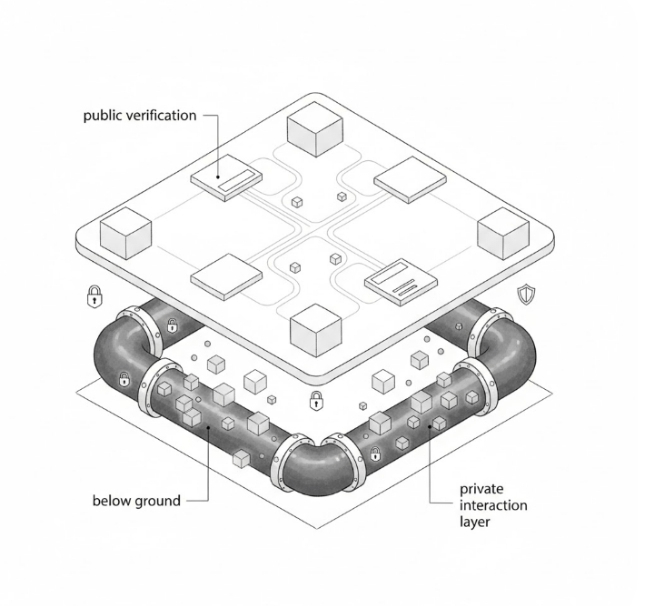
It's similar to the concept of dark fiber for telecommunication purposes.
