
Privacy is one of the most abused words in crypto.
Everyone claims it. Few agree on what it actually means. And almost nobody talks about the cost of getting it wrong.
In retail crypto, “maximum privacy” is treated like a virtue. Hide everything. Reveal nothing. If someone asks for visibility, assume bad intent. That mindset works fine in a permissionless playground. It breaks the moment real financial actors step in.
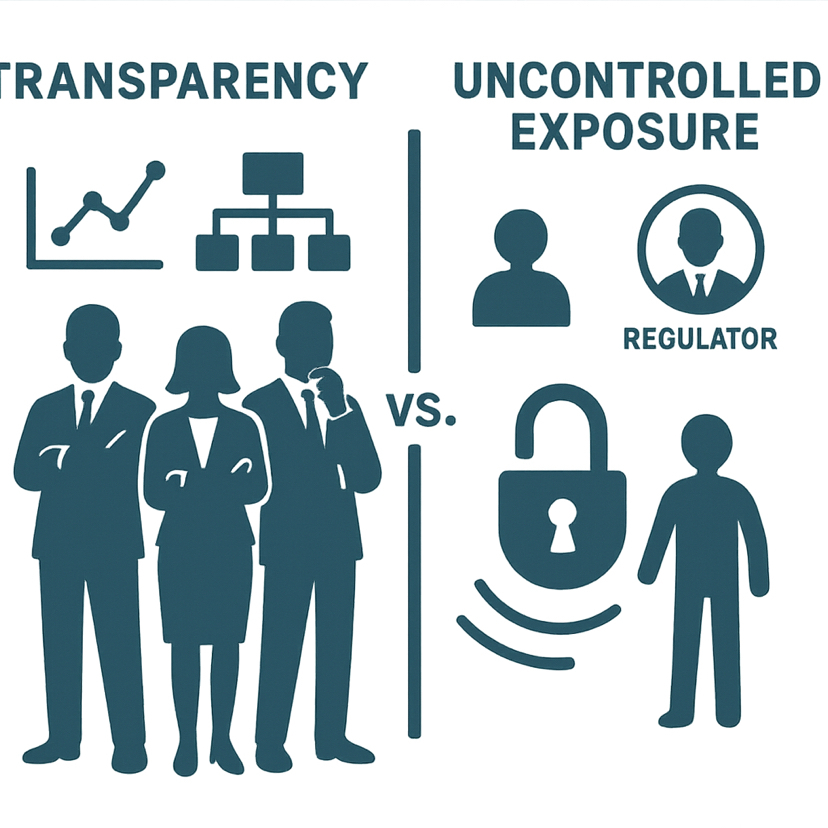
Regulated markets don’t fear transparency. They fear uncontrolled exposure.
Banks don’t want their positions broadcast in real time. Issuers don’t want capital structure visible to competitors. Asset managers don’t want trading strategies inferable from public flows. At the same time, regulators don’t accept invisibility. They need auditability, accountability, and the ability to reconstruct events when something goes wrong.
This is the tension most “privacy chains” collapse under. They treat privacy as absence of information. Regulators treat absence of information as risk. End of conversation.
What’s interesting about Dusk is that it doesn’t argue with this reality. It designs around it.
Instead of selling privacy as a shield, Dusk treats it as a control system. Information isn’t hidden forever. It’s gated. Some data stays confidential by default. Some data can be revealed under defined conditions. And crucially, this isn’t handled off-chain, through legal agreements or trusted intermediaries. It’s enforced at the protocol level.
That distinction matters more than it sounds.
When privacy is bolted on as an extra layer, it becomes optional. Optional privacy turns into inconsistent privacy. Inconsistent privacy turns into operational risk. Dusk avoids that by making selective disclosure part of the base design, not an afterthought.
This is why the phrase “auditable privacy” keeps coming up around Dusk. It sounds boring. It’s actually expensive to build correctly.
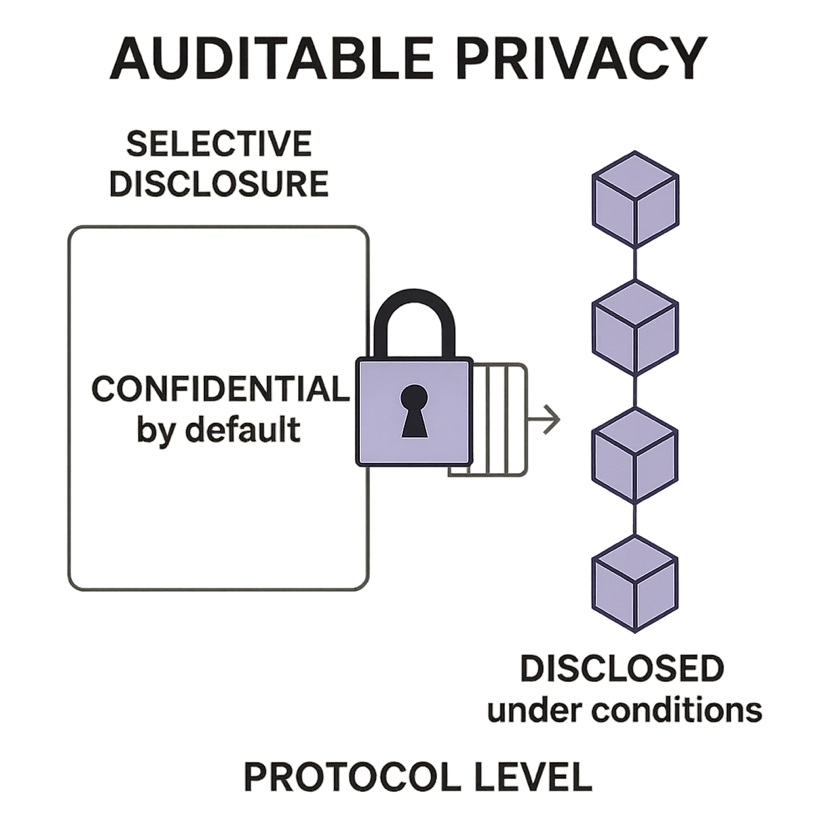
Auditable privacy means transactions can remain confidential without breaking settlement guarantees. It means validators can agree on correctness without seeing sensitive data. It means auditors can verify behavior without the entire market watching. None of this is trivial, and most chains avoid it because it forces hard trade-offs instead of clean narratives.
There’s also a second cost people underestimate: legal friction.
In regulated environments, every system eventually gets stress-tested by lawyers. If your privacy model depends on “trust us, no one can see it,” it fails that test immediately. If your system can demonstrate how data is protected, who can access it, and under what rules, you at least get a seat at the table.
Dusk seems built with that meeting in mind.
You can see it in how the network talks about applications. Not “apps anyone can deploy anonymously,” but financial workflows where identity, eligibility, and disclosure rules exist because they have to. You can see it in the way execution and settlement are separated, allowing applications to evolve without destabilizing the base layer. You can see it in the choice to support EVM compatibility, reducing the surface area for mistakes when institutions try to build.
The upcoming regulated trading and tokenization efforts push this even further. Tokenizing real securities is not a branding exercise. It means dealing with reporting obligations, transfer restrictions, and compliance events that don’t care about crypto ideology. If privacy is wrong at that layer, the product doesn’t fail loudly. It fails quietly — by never being used.
That’s the real cost of doing privacy wrong: irrelevance.
What I find compelling about Dusk isn’t that it promises a privacy-first future. It’s that it accepts privacy as a constraint, not a superpower. A constraint shaped by law, competition, and institutional risk management. Designing within constraints is slower. It’s less exciting. It’s also how real infrastructure survives.
Crypto has spent years optimizing for visibility and speed. Regulated finance optimizes for discretion and predictability. Dusk sits in the uncomfortable middle, trying to make both sides work without pretending one can replace the other.
That approach won’t win popularity contests. But if regulated on-chain finance actually scales, the projects that treated privacy as a controllable system — not an ideology — are the ones that will still be standing.
And that’s why, in regulated markets, doing privacy wrong isn’t just a technical flaw.
It’s a strategic dead end.
