

When people talk about competition in blockchain, they usually mean users. Daily active wallets. Transactions per second. Social engagement. Everything gets framed as a race to attract attention, and the assumption is that the chain with the most noise wins.
Looking at Vanar, I don’t get the sense that this is the race it’s running.
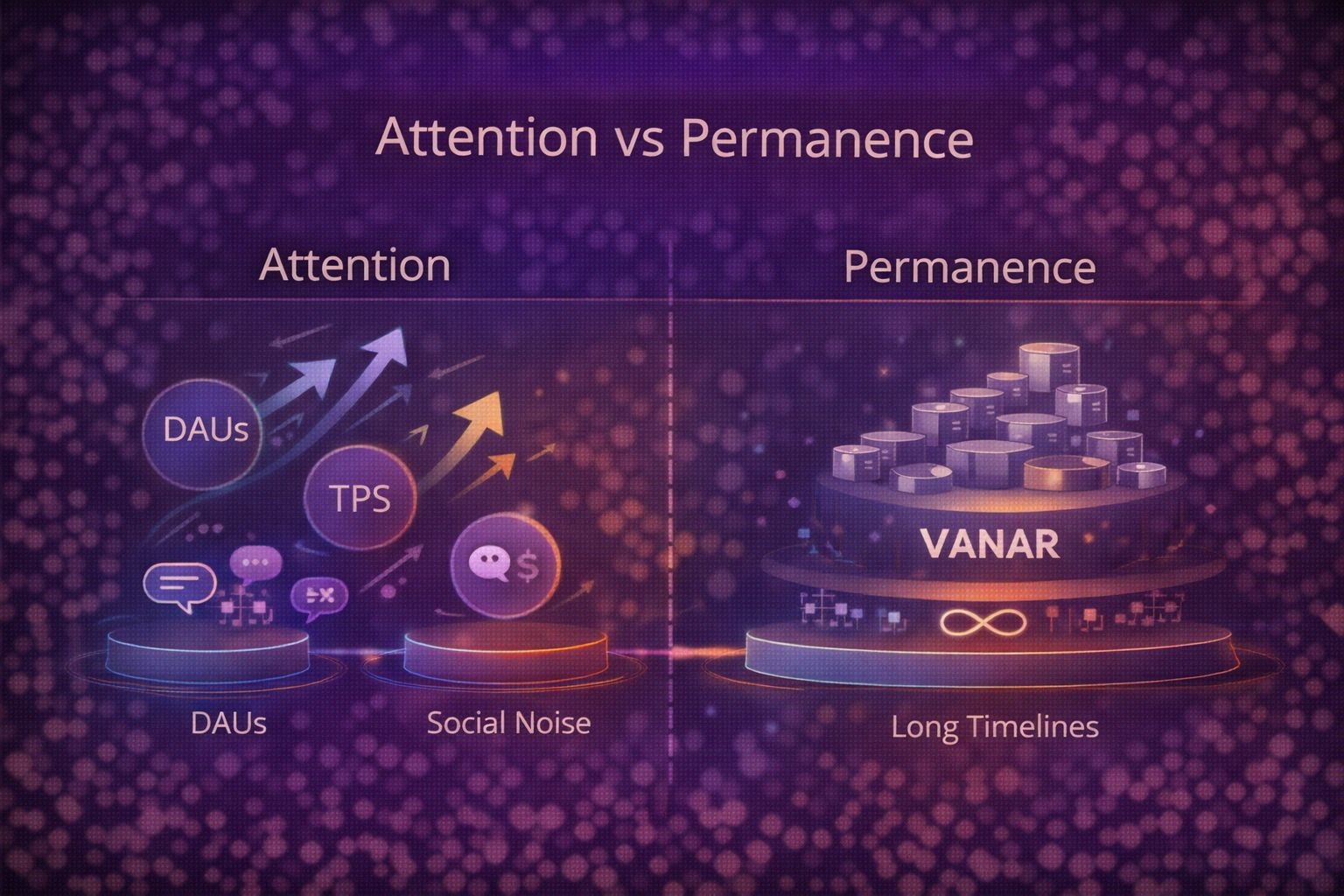
If anything, Vanar seems less concerned with how many users it can attract quickly and more concerned with what actually stays once the excitement fades. That difference is subtle, but it changes how the project feels when you spend time with it.
Most networks optimize for growth first and worry about durability later. Vanar appears to be doing the opposite.
The idea of permanence isn’t especially exciting in crypto. It doesn’t lend itself to hype cycles or viral moments. But permanence is what determines whether an ecosystem becomes infrastructure or just another chapter in a long list of experiments. And the more I look at Vanar, the more it feels like permanence is the real target.
That shows up in how the chain positions itself. Vanar doesn’t frame adoption as conquest. There’s no urgency to pull users away from other ecosystems or to declare itself the next dominant platform. Instead, it behaves like something meant to be lived on over time, quietly supporting products that already exist and those that will take years to mature.
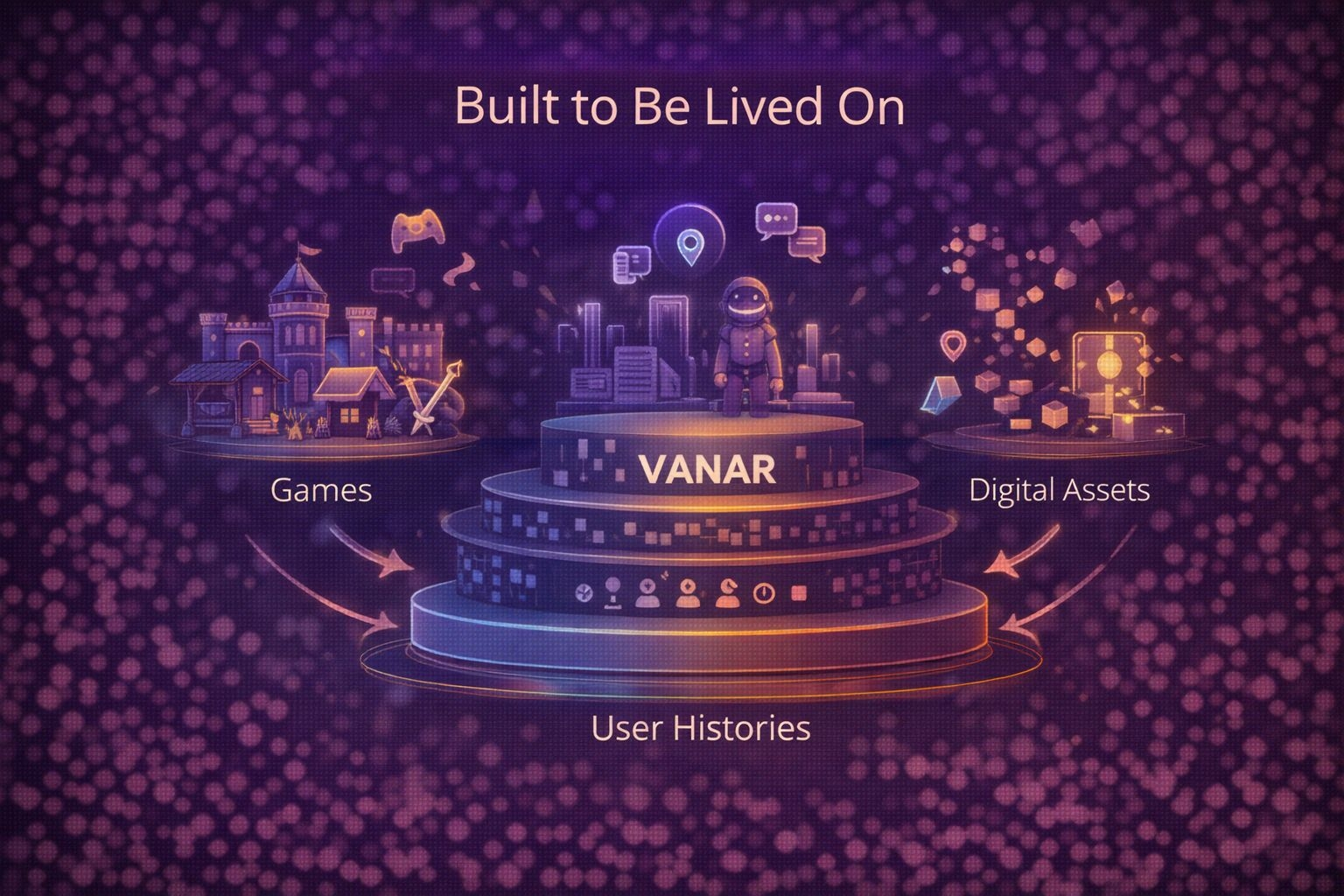
This mindset makes more sense when you consider the environments Vanar is designed for. Games, virtual worlds, and brand-driven digital experiences aren’t built for temporary infrastructure. They need stability. Assets need to persist. User histories need to remain accessible. Systems need to behave predictably years after launch, not just during the first growth phase.
In those contexts, permanence matters more than novelty. You don’t rebuild a game economy every year because a new chain is trending. You don’t migrate digital collectibles repeatedly without losing trust. Infrastructure becomes part of the product’s identity, and changing it lightly carries real cost.
Vanar seems aware of that reality.
Rather than positioning the chain as something users should constantly notice, it’s treated more like a foundation. The infrastructure isn’t the destination. It’s the layer that allows other things to endure. That approach doesn’t generate excitement in the short term, but it aligns with how lasting platforms are usually built.
Even when you look at activity on the network, the signals point more toward persistence than speculation. The volume of transactions and blocks demonstrate a consistent usage rather than random stress testing. This is a significant difference. Permanent systems should not only work once or under perfect circumstances. They need to work repeatedly quietly and without demanding attention.
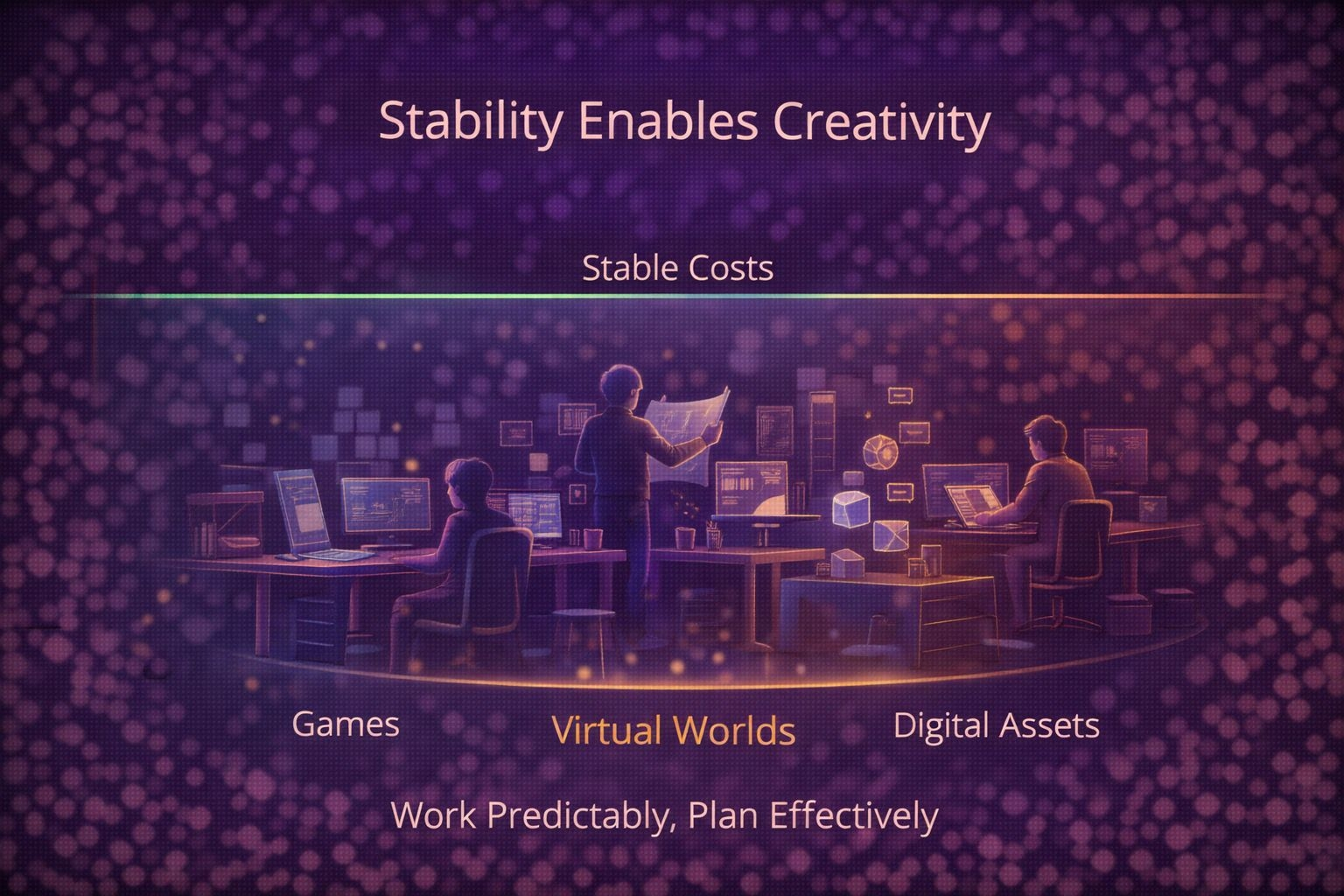
Another aspect of permanence is predictability, and this is where Vanar’s approach to fees stands out. Volatility is exciting for markets but it’s corrosive for products. If costs behave unpredictably developers are forced to design around uncertainty. Over time that uncertainty becomes a tax on creativity.
Vanar’s effort to keep transaction costs stable reflects a long-term mindset. Stability doesn’t maximize short-term value extraction but it reduces friction for builders and users alike. It allows applications to make assumptions and plan around them. That’s what permanence looks like in practice.
The same thinking applies to how the VANRY token fits into the ecosystem. There’s nothing exotic about its role, and that’s probably intentional. Tokens designed to constantly demand attention often struggle to age well. In contrast tokens that operate quietly as infrastructure tend to integrate more naturally into products.
In a future where Vanar succeeds many users may not consciously engage with VANRY at all. It will simply exist as part of the system that enables experiences to function. That invisibility is not a weakness. It’s a sign that the system is doing its job.
Permanence also shows up in how Vanar approaches AI. Instead of positioning AI as something that transforms the chain overnight, it’s treated as a way to make the system easier to operate and understand over time. That’s a long game.
AI that helps organize data, interpret activity, and reduce operational friction contributes to durability. It doesn’t chase spectacle. It supports maintainability. In complex systems, that often matters more than innovation for its own sake.
What I find telling is how little Vanar leans on urgency. There’s no sense that if you don’t pay attention right now, you’ll miss everything. That absence of pressure feels intentional. Systems built for permanence don’t need to rush. They need to be correct, resilient, and adaptable.
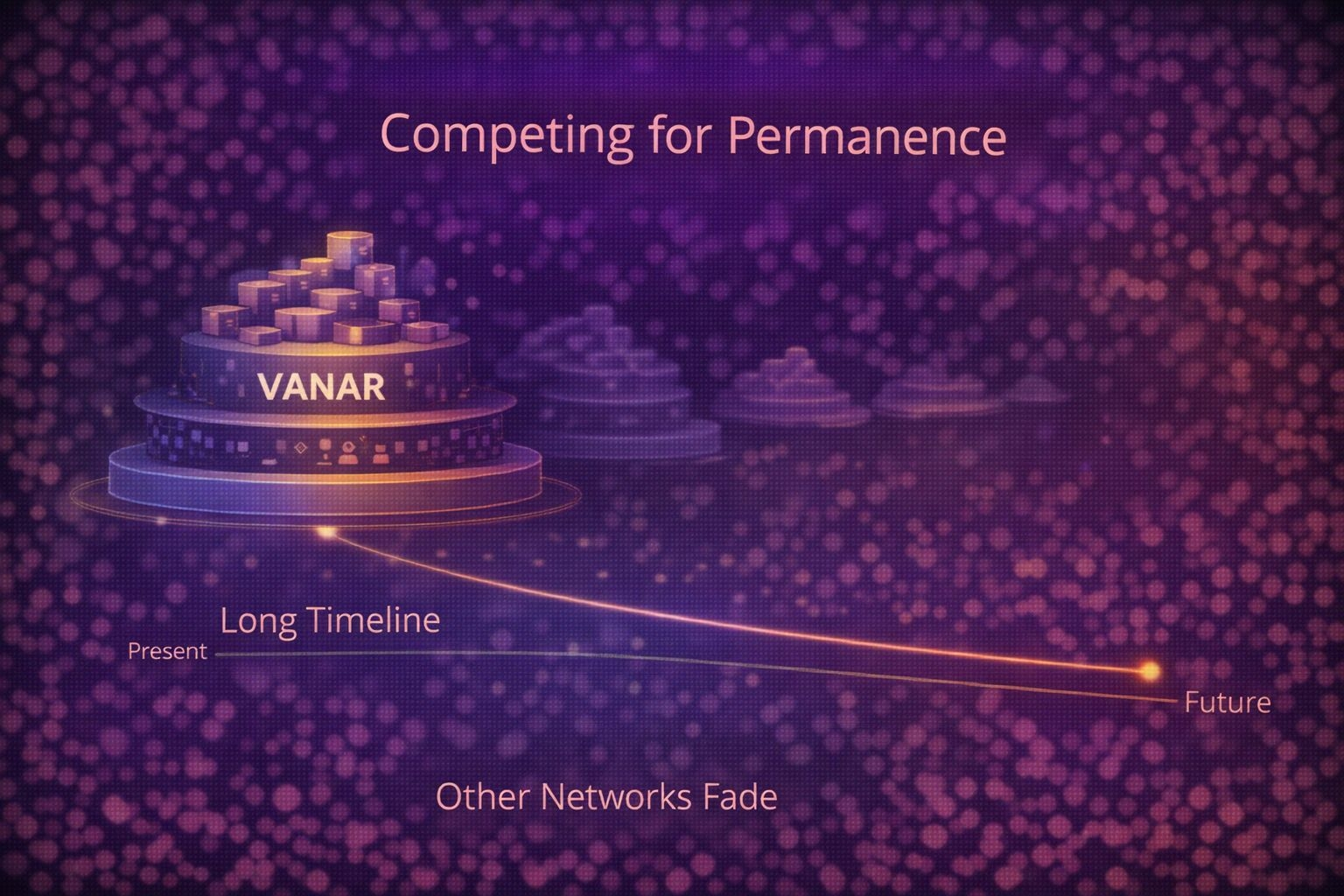
Crypto has spent years rewarding speed over stability. Launch fast. Grow fast. Move on. But the infrastructure that lasts tends to emerge from a different set of priorities. It’s built by teams that assume they’ll still be maintaining it long after the spotlight has moved elsewhere.
Vanar feels like it’s being built with that assumption.
This doesn’t mean Vanar will inevitably succeed. Permanence is a difficult goal, and many projects aim for it without reaching it. But competing for permanence rather than attention at least puts the focus in the right place. It asks harder questions and avoids easier distractions.
If Vanar succeeds, it probably won’t be because it attracted the most users at any single moment. It will be because the users and applications that arrived didn’t feel a strong reason to leave. Over time, that kind of quiet loyalty compounds.
In an industry obsessed with growth metrics, permanence is easy to overlook. But permanence is what turns infrastructure into something people rely on instead of something they experiment with. And looking at Vanar through that lens makes its choices feel less conservative and more deliberate.
Not every chain needs to win the race for attention. Some are trying to outlast it.