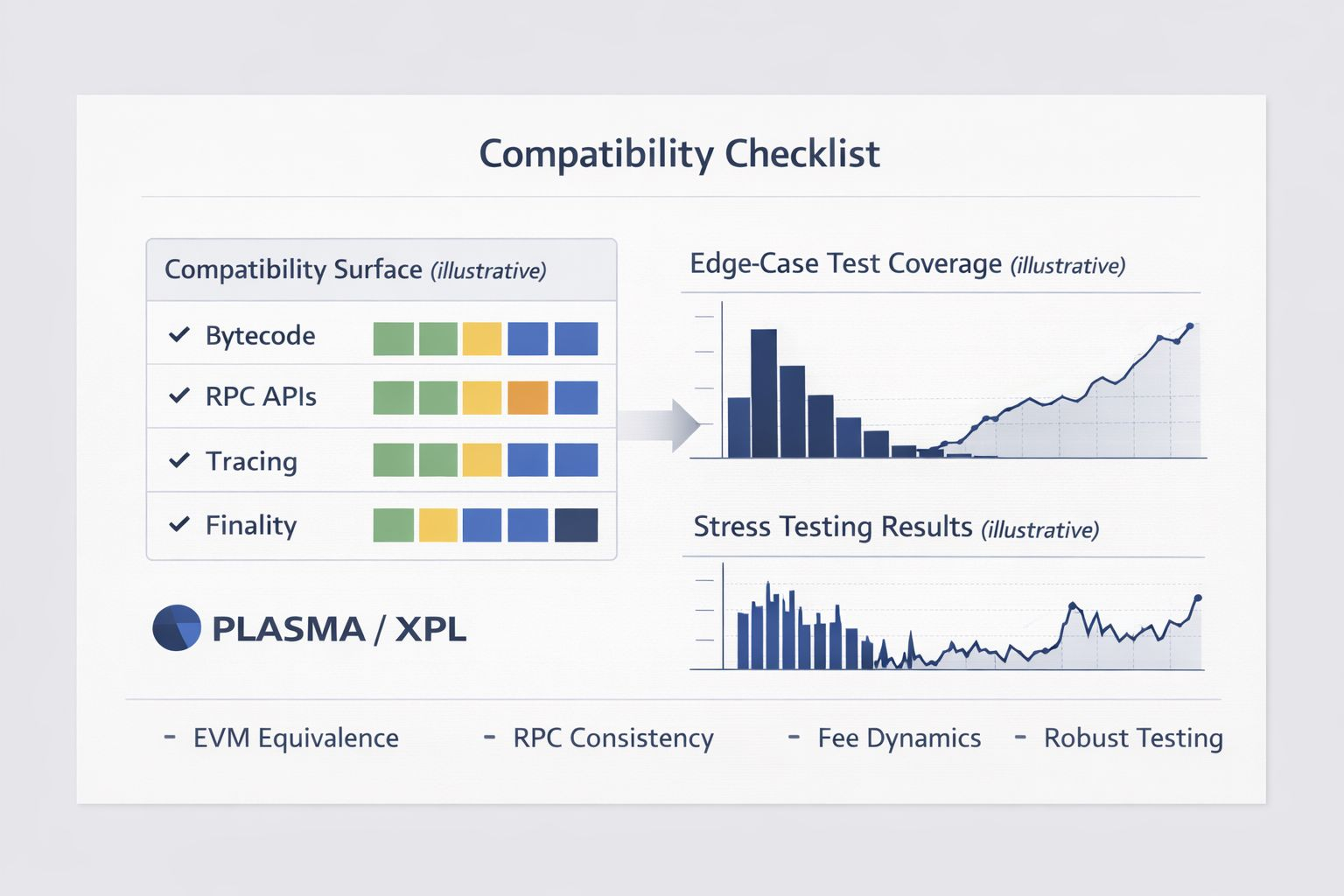
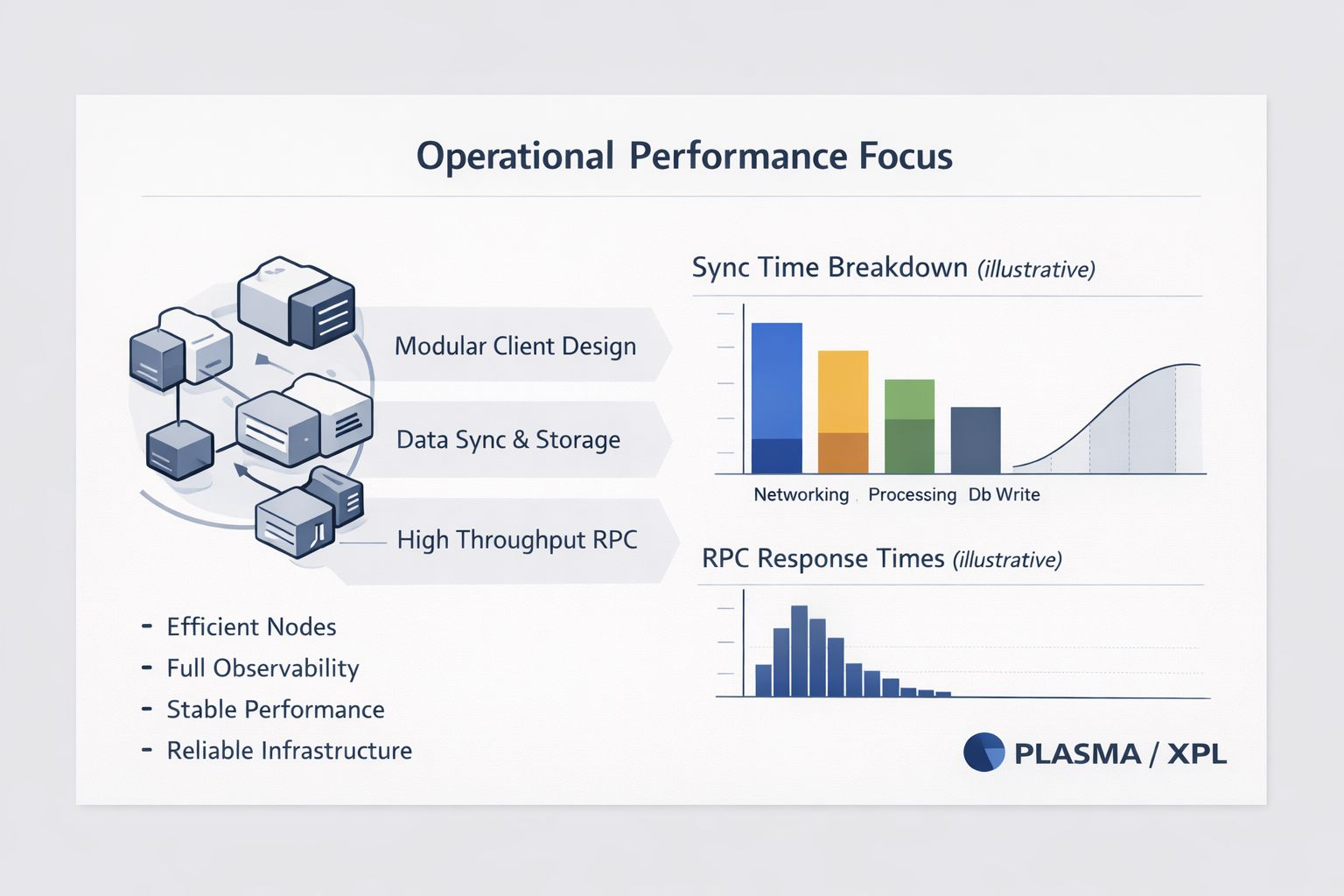
When someone tells me a chain is “EVM compatible,” I feel a little tension I can’t quite turn off. On one hand, it suggests I can keep shipping with the tools I already know: Solidity, Foundry or Hardhat, the usual wallets, the same mental model for how contracts behave. On the other hand, I’ve watched “compatible” get used as a friendly label for systems that are only similar in the broadest sense. Plasma is a good lens for this, because its docs say the execution environment is fully EVM compatible and powered by Reth, and that developers can deploy existing Ethereum contracts with familiar tooling. That statement sounds straightforward until you sit with what builders actually rely on. The EVM is not just a runtime; it’s a bundle of expectations. It’s opcode behavior, gas accounting, precompiles, and the exact way calls and reverts play out in the odd corners you only hit after launch. It’s also the plumbing around it: the JSON-RPC methods your backend assumes exist, the tracing calls your debugger and monitoring rely on, and whether your node falls over when a release drives a burst of reads. This is where “Reth on Plasma” matters more than it sounds. Reth is an Ethereum execution client written in Rust. Paradigm put it forward as something built for speed and clean modular design, and it’s presented as a real full-node client—not a thin wrapper around someone else’s code. So when Plasma leans on Reth, it’s basically saying: we can make the unglamorous stuff like syncing, storage, RPC performance, and day-to-day node operations better, without asking builders to rewrite contracts or learn a new execution model. You can see the same bet spreading: BNB Chain has publicly discussed work on a Reth-based client with an eye toward faster sync and higher node throughput. The reason this conversation feels urgent now, instead of five years ago, is that the workload is changing. Stablecoins have moved from being mostly trading plumbing to something closer to payment infrastructure, and recent reporting describes record stablecoin transaction volumes across 2025. When money-like flows are constant, “almost the same” stops being good enough. I’ve felt that anxiety myself: the fear that a tiny difference will surface only after users arrive, when you have no easy rollback option. A subtle mismatch in RPC behavior is annoying in a demo and catastrophic in a settlement path. At the same time, compatibility has a spectrum, and the ecosystem has scars. Optimism put words to this when it argued for “EVM equivalence,” basically saying that bytecode execution alone isn’t enough if the wider universe of Ethereum tooling keeps breaking in small, surprising ways. I find it useful because it keeps the conversation grounded. If Plasma is saying your contracts can move over as-is, take the win, then immediately start validating the assumptions that sit underneath your app. Look at block cadence and how finality is expressed, how fees fluctuate, how much lag your indexing pipeline introduces, and what happens when you lean on tracing or less-common RPC methods. EVM compatibility gets you through the door, but the real payoff depends on whether everything around the EVM behaves the way your product expects.