
Most infrastructure is designed to disappear.
When storage works, nobody thinks about it. When it fails, everyone does. Walrus sits in an uncomfortable middle space where storage doesn’t fail loudly—but it also refuses to be invisible.
That’s the shift most teams aren’t ready for.
On Walrus, data isn’t something you upload and forget. It persists under conditions that change, degrades in ways that are technically acceptable but operationally meaningful, and keeps exerting pressure long after the incident is “over.” The blob exists—but now it has history.
And history changes how builders behave.
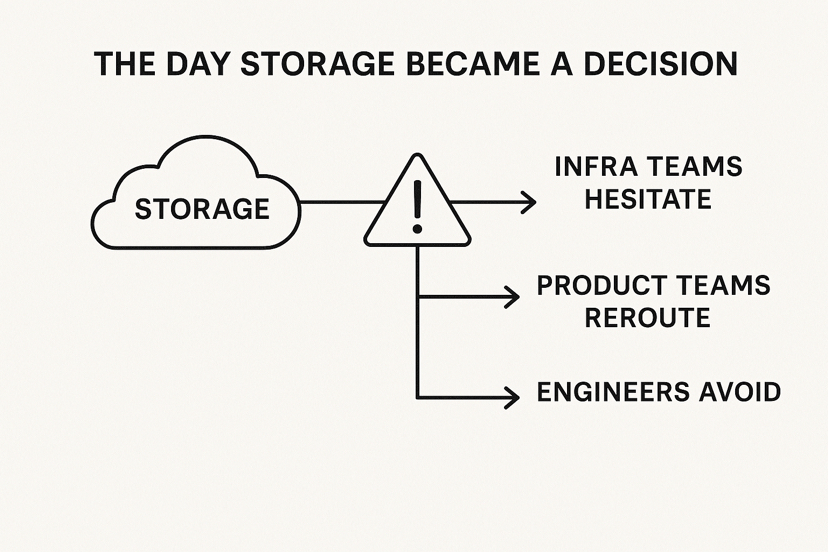
The Day Storage Became a Decision
In traditional systems, availability is binary. Data is either reachable or it isn’t. Walrus breaks that illusion.
A blob can survive repairs, clear thresholds, and pass proofs while still carrying operational risk. Latency creeps in. Recovery margins shrink. Load sensitivity increases. Nothing triggers an alert, yet everyone quietly adjusts their behavior.
Infra teams hesitate.
Product teams reroute.
Engineers stop anchoring critical paths to that object.
No one files a ticket. But a decision has been made.
This is the moment storage stops being passive infrastructure and becomes an active constraint.
Why Walrus Makes Teams Uncomfortable (In a Good Way)
Most decentralized storage systems try to hide complexity. Walrus exposes it just enough that teams can’t ignore it.
It doesn’t flatten survivability into a green checkmark. It lets correctness and confidence drift apart. That gap is where real infrastructure judgment happens.
Builders don’t ask:
“Is the data there?”
They ask:
“Will this still behave the same way tomorrow, under stress?”
That’s a much harder question. And it’s the one institutional teams actually care about.
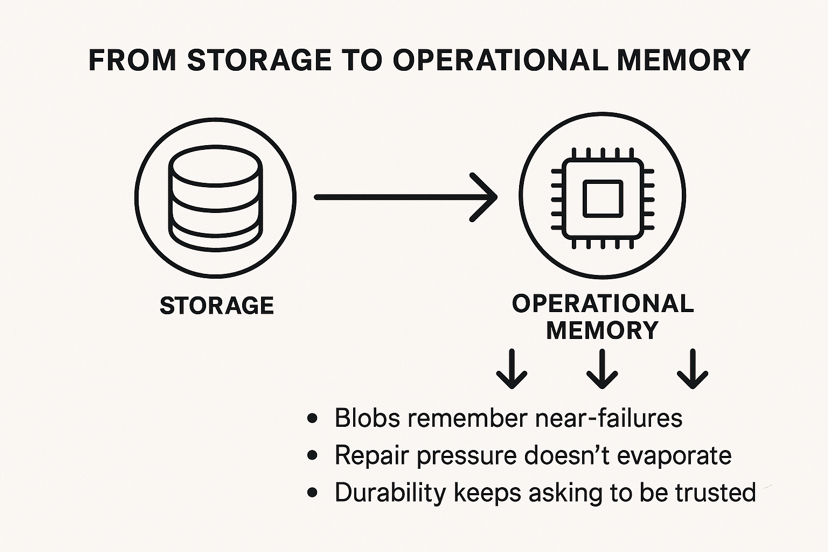
From Storage to Operational Memory
Walrus behaves less like a hard drive and more like a system with memory.
Blobs remember near-failures.
Repair pressure doesn’t evaporate.
Durability keeps asking to be trusted again.
This is uncomfortable because it mirrors reality. In real systems, nothing truly resets. Risk accumulates quietly. Past instability shapes future decisions.
Walrus doesn’t abstract that away. It forces teams to reckon with it.
Why This Matters for Web3 Infrastructure
Web3 doesn’t need more storage capacity. It needs infrastructure that reflects operational truth.
As ecosystems like Sui move toward real applications—data markets, AI agents, consumer-scale media—storage becomes a behavioral dependency, not just a technical one. Systems that pretend reliability is binary will fail socially before they fail technically.
Walrus survives because it doesn’t pretend.
Conclusion
The most dangerous storage system isn’t the one that loses data.
It’s the one that survives everything and teaches teams nothing.
Walrus does the opposite. It turns survival into signal. It makes builders feel the cost of uncertainty early, quietly, and repeatedly—until trust is earned the hard way.
That’s not friendly infrastructure.
That’s infrastructure grown-up enough for real stakes.