

When I sit down to think about Walrus Protocol, I don’t do it with the mindset of evaluating a product roadmap or measuring ambition. I think about it the same way I think about storage systems I have depended on in the past: by asking whether I would trust it to keep working long after the initial excitement fades. That framing changes everything. It shifts the conversation away from features and toward behavior. It forces me to consider what kind of user the system is really built for and what assumptions it makes about how people actually interact with data.
What becomes clear very quickly is that Walrus is designed for users who don’t want to think about storage at all. Most people creating applications, managing content, or running internal systems do not wake up wanting to optimize data distribution. They want files to upload without friction, remain available under load, and stay private when they need to. They want costs that don’t surprise them six months later. Walrus feels like it starts from this reality rather than trying to educate users into caring about infrastructure details they will never love.
The technical choices reinforce that interpretation. The use of blob-style storage acknowledges something basic but often ignored: real data is large, uneven, and persistent. It does not move in neat transactional units. Pairing that with erasure coding signals an expectation of scale and long-term use. Erasure coding is not something you reach for if you expect light usage or short-lived experiments. You reach for it when you expect volume, redundancy requirements, and failures that are normal rather than exceptional. To me, that suggests Walrus is being built for systems that grow quietly over time instead of systems that spike and disappear.
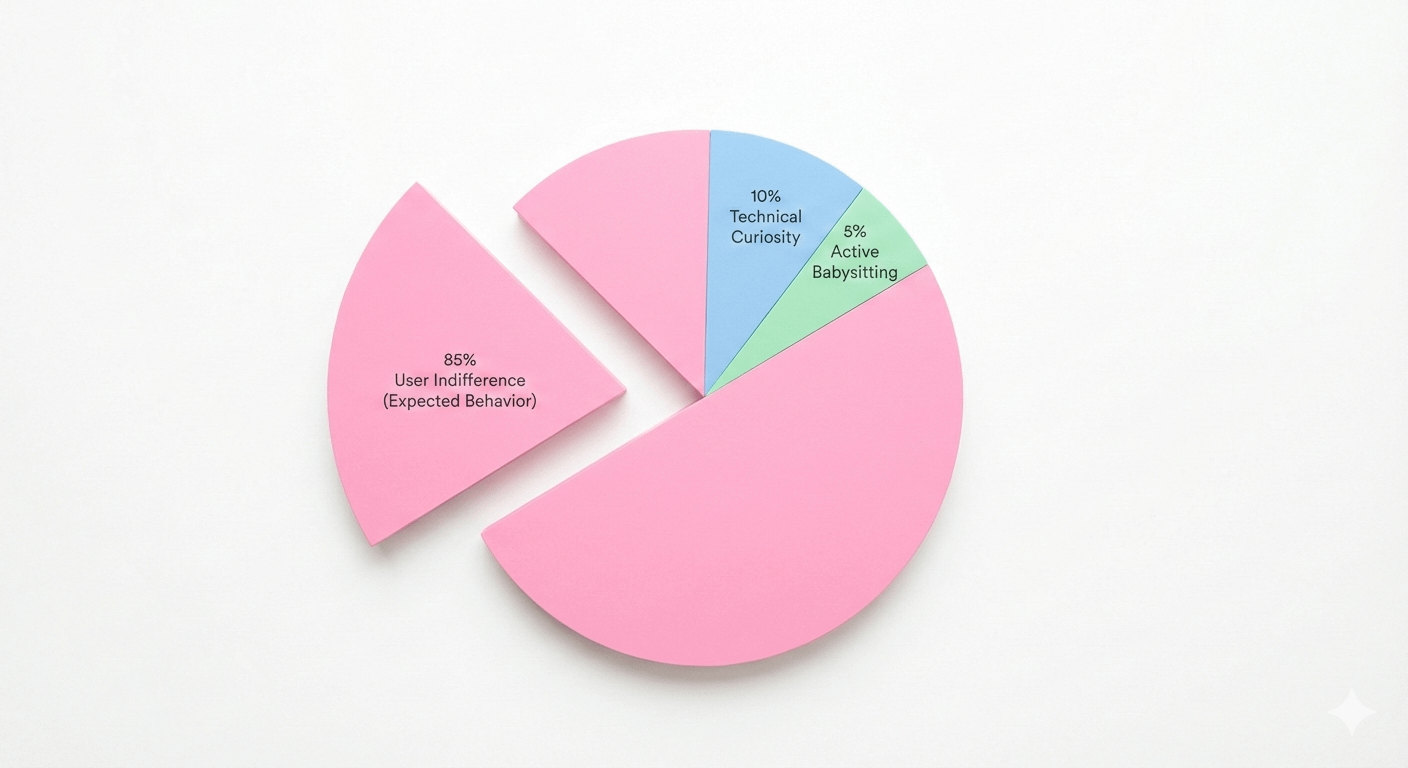
What I find more telling than the architecture itself is what it implies about user behavior. Walrus seems to assume that users will not babysit the network. They will not rebalance storage manually or monitor node health obsessively. They will treat storage as a background utility. That assumption forces discipline. It means the system has to handle uneven access patterns, partial failures, and growth without asking users to intervene. Many decentralized systems struggle here because they are built with the expectation of attentive, technically curious users. Walrus appears to expect indifference, which is closer to how mainstream usage actually looks.
 Building on Sui fits naturally into this picture. The execution environment is designed to handle parallel workloads with predictable performance, which matters a great deal when storage and retrieval are not edge cases but the main activity. Large data objects expose inefficiencies very quickly. Latency becomes visible. Coordination overhead becomes painful. Cost instability becomes unacceptable. Walrus feels structured around the idea that these pressures will be present from the start, not as future problems to be solved later.
One of the things I respect most is how the system treats complexity. It does not try to turn internal mechanics into selling points. Distribution, redundancy, and recovery are handled quietly. They exist to protect users, not to impress them. This is an important distinction. Systems intended for everyday use cannot rely on curiosity. They have to assume users will ignore them until something breaks. Walrus seems designed to avoid being noticed in the first place, which is usually the highest compliment you can give infrastructure.
There is ambition here, but it is a restrained and practical kind. The idea that decentralized storage can be censorship-resistant and cost-efficient at meaningful scale is not trivial. Walrus does not present this as an ideological victory. It presents it as an engineering challenge with trade-offs. Erasure coding reduces overhead but increases coordination complexity. Distributed blob storage improves scalability but demands careful availability guarantees. These choices acknowledge reality instead of denying it. They suggest a team more interested in durability than elegance.
When I think about real applications, I do not think in terms of showcase demos. I think in terms of stress. Media archives that grow every day, application state that must remain consistent, user-generated content that arrives unpredictably, enterprise datasets that cannot afford downtime. These use cases are unforgiving. They surface weaknesses quickly. Walrus does not appear optimized for a single polished scenario. Instead, it seems built to tolerate messy, uneven usage, where some data is accessed constantly and other data sits dormant for long periods. That tolerance is often what determines whether a system survives real adoption.
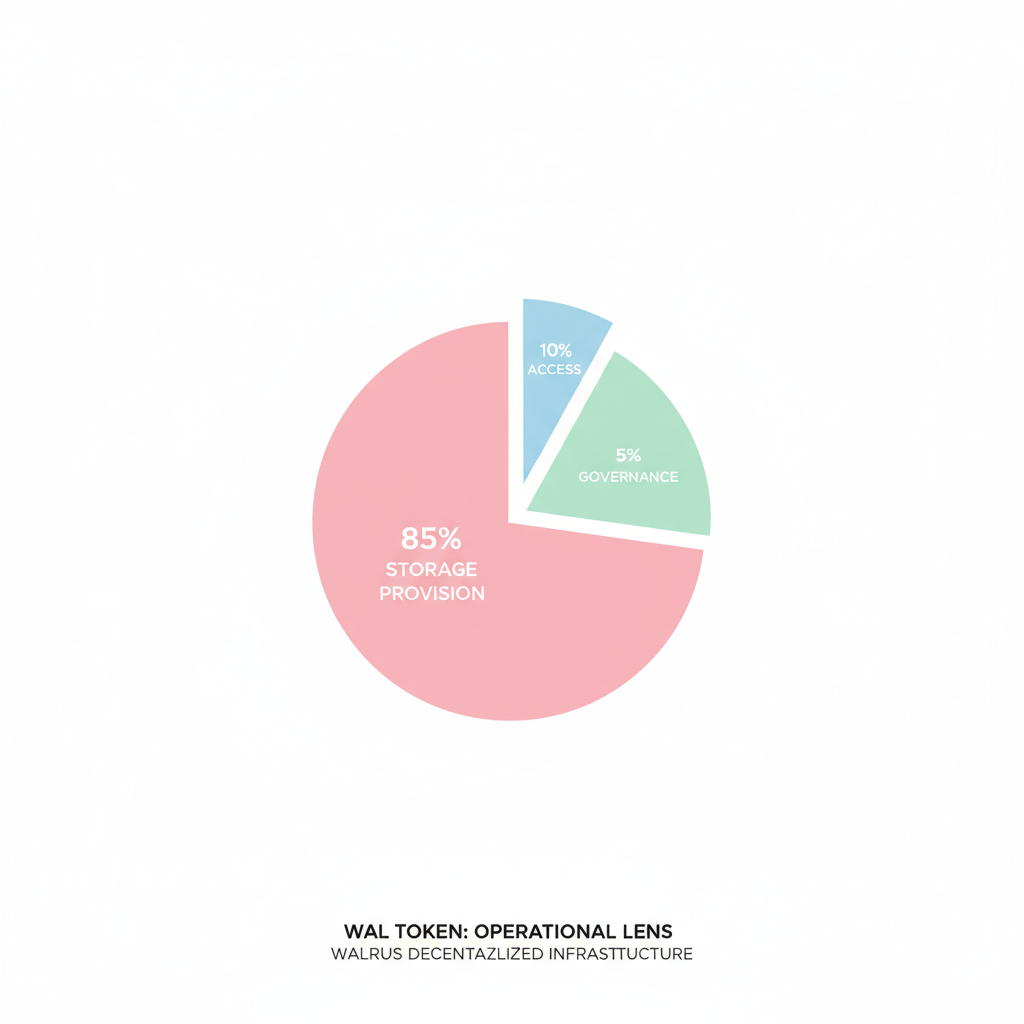
The WAL token only makes sense to me when viewed through this operational lens. It is not positioned as a speculative instrument but as a coordination mechanism. It aligns storage provision, access, and governance with actual usage of the network. If the system is not used, the token has no meaningful role. That dependency is intentional. It creates a form of accountability that many systems lack. The token exists to support the system’s function, not to replace it.
 What stands out to me in the latest state of the project is the consistency of this philosophy. There is no sudden pivot toward spectacle or simplification for attention’s sake. The focus remains on making storage predictable, private, and resilient. That consistency matters because infrastructure is not judged on announcements. It is judged on how it behaves under pressure, over time, when attention moves elsewhere.
Zooming out, Walrus signals a particular direction for consumer-facing blockchain infrastructure. Less emphasis on visibility and more emphasis on disappearance. The most successful outcome for a system like this is that users forget it exists. They interact with applications, files, and services without ever thinking about where data lives or how it is protected. That is not glamorous, but it is honest. It reflects how people already use technology.
I tend to trust systems that start from that premise. Walrus does not try to change user behavior. It adapts itself to it. It assumes that people value reliability over novelty and predictability over explanation. If decentralized infrastructure is going to earn a lasting place in everyday workflows, it will likely do so by behaving this way. Quietly functional. Resistant to failure. Uninterested in being admired.
That is how I interpret Walrus today. Not as a statement or a movement, but as an attempt to build storage that people can rely on without ever having to think about it.

