

As blockchain and artificial intelligence move closer together, a critical problem keeps resurfacing: trust. Smart contracts may be transparent, but AI-driven decisions often are not. When logic runs off-chain or inside black-box models, users are asked to trust outcomes they cannot verify. This is where Kayon becomes important within the Vanar ($VANRY ecosystem. Kayon is designed to bring reasoning, traceability, and explainability directly on-chain, aligning AI logic with the core values of decentralization.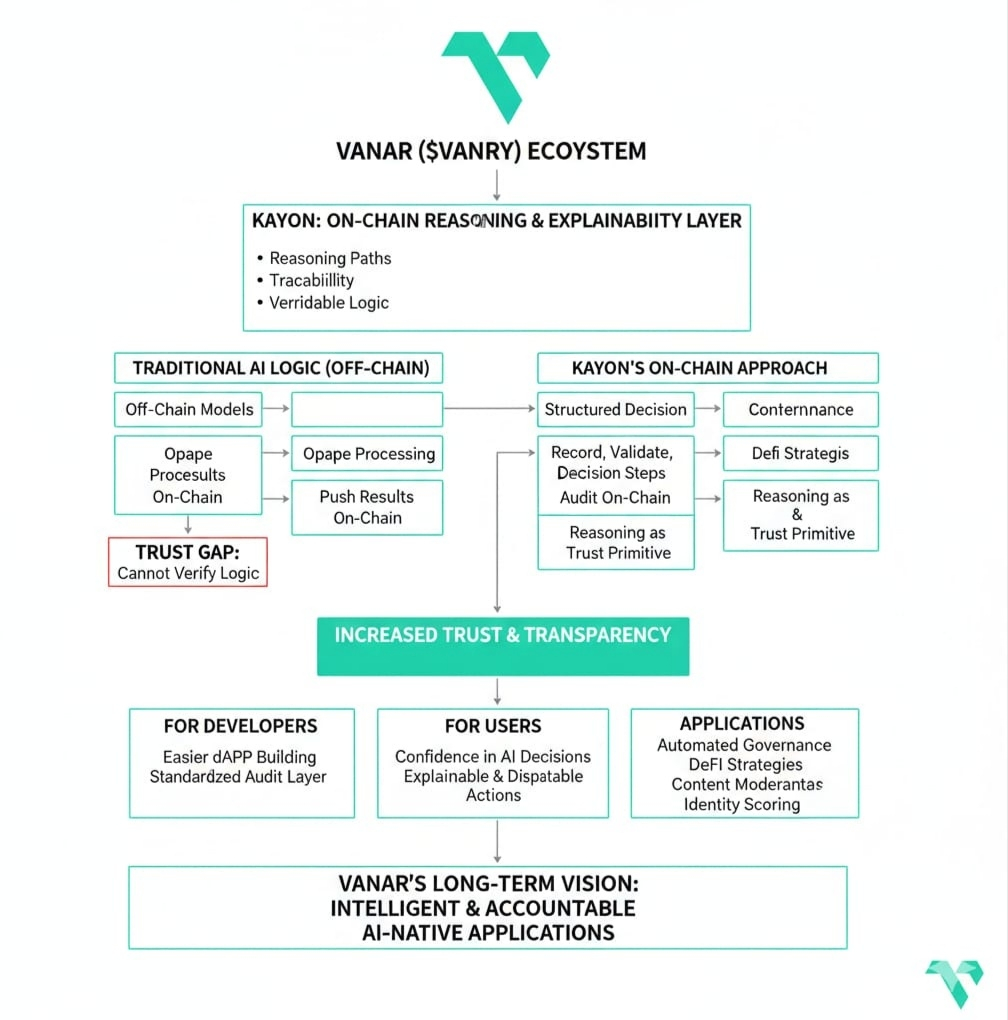
Vanar’s broader vision is to support AI-native applications at scale. That ambition requires more than speed or low fees. It demands a way to understand why a system behaves the way it does. Kayon addresses this by focusing on verifiable reasoning rather than opaque outputs.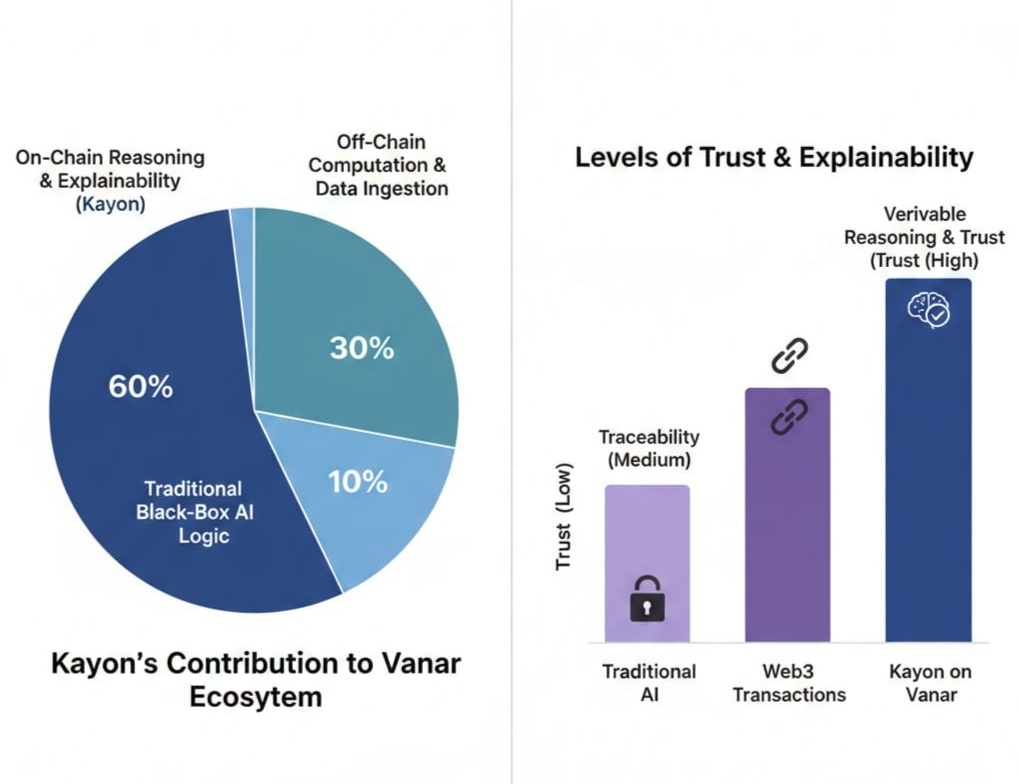
The Problem with Traditional AI Logic in Web3
Most AI systems today operate outside the blockchain. They ingest data, produce results, and push those results on-chain as final answers. While efficient, this approach breaks the trust model of Web3. Users can verify a transaction, but not the logic that led to it.
This becomes risky in areas like automated governance, AI-assisted DeFi strategies, content moderation, or identity scoring. If a decision affects value or access, users need more than a result. They need an explanation that can be independently checked.
Kayon is built to close this gap by making reasoning itself a first-class on-chain component.
What Kayon Brings to Vanar
Kayon functions as a reasoning and explainability layer that integrates with Vanar’s modular L1 architecture. Instead of treating AI logic as an external service, Kayon structures decision-making steps in a way that can be recorded, validated, and audited on-chain.
This does not mean running heavy AI models directly inside smart contracts. That would be impractical. Instead, Kayon focuses on representing reasoning paths, constraints, and outcomes in a verifiable format. These representations can be stored, referenced, and challenged within the Vanar network.
By doing this, Kayon ensures that AI-assisted actions on Vanar are not just fast, but understandable.
On-Chain Reasoning as a Trust Primitive
One of Kayon’s most important contributions is turning reasoning into a trust primitive. When an AI-driven contract executes, it can expose the logic framework behind the decision. This includes the rules applied, conditions checked, and the sequence of logical steps that led to the final action.
Because Vanar supports high throughput and predictable execution costs, these reasoning artifacts can exist on-chain without degrading performance. Validators and users can independently verify that a decision followed agreed-upon logic, rather than hidden assumptions.
This is especially valuable for decentralized governance and automated agents, where accountability matters as much as automation.
Explainability Without Sacrificing Efficiency
Explainability often comes with a performance tradeoff. Kayon avoids this by separating reasoning representation from raw computation. Complex processing can still occur off-chain, but the explainable structure of that processing is anchored on Vanar.
This allows developers to build AI-powered applications that scale while remaining transparent. Users do not need to inspect neural weights or datasets. They only need to verify that the reasoning adhered to predefined rules and constraints.
In practice, this creates a middle ground between full on-chain computation and blind off-chain execution.
Why This Matters for Developers and Users
For developers, Kayon lowers the barrier to building trustworthy AI-native dApps. Instead of inventing custom audit or logging systems, they can rely on a standardized reasoning layer aligned with Vanar’s infrastructure.
For users, it restores confidence. When interacting with AI-driven protocols, they are no longer forced to trust outcomes without context. Decisions can be explained, reviewed, and disputed using on-chain evidence.
This shift is subtle but powerful. It transforms AI from an authority into a participant within decentralized systems.
Kayon’s Role in Vanar’s Long-Term Vision
Vanar positions itself as a base layer for intelligent applications. That vision only works if intelligence remains accountable. Kayon supports this by ensuring that reasoning is as verifiable as transactions.
As AI agents become more autonomous on-chain, the ability to explain actions will define which ecosystems earn lasting trust. Kayon gives Vanar a structural advantage by embedding explainability into the protocol stack rather than treating it as an afterthought.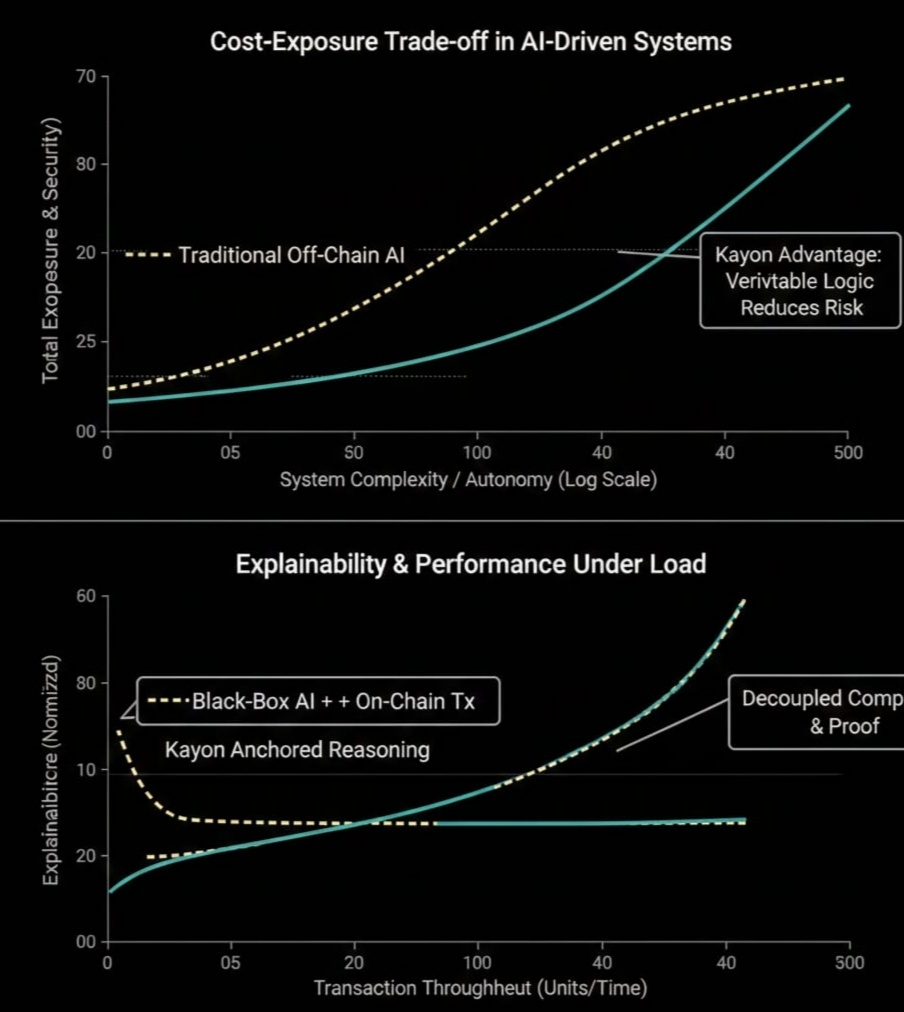
Final Thoughts
Kayon is not about making AI louder or more complex. It is about making it understandable. By enabling on-chain reasoning and explainability, Kayon strengthens Vanar’s commitment to transparency, security, and long-term usability.
In a future where AI and blockchain are deeply intertwined, systems that can explain themselves will be the ones people rely on. Within the Vanar ecosystem, Kayon is a meaningful step in that direction.
