

By February 2026, if you’ve spent enough late nights tracking what big players actually do rather than just staring at price charts you’ll spot a real change. Institutions have stopped asking whether blockchain fits into regulated finance. They’re focused on which blockchains won’t turn into headaches down the road. It’s a subtle shift, but you can see it in the way Dusk keeps coming up in serious infrastructure talks.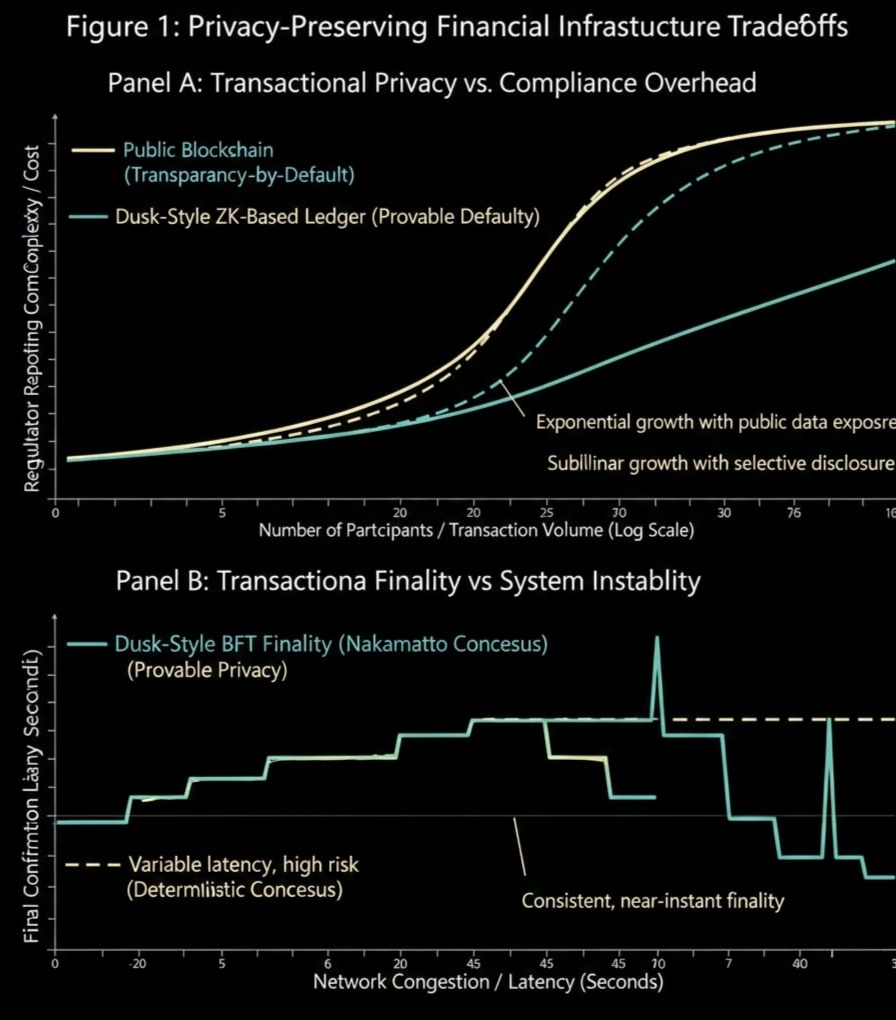
I’ve traded through a few cycles, and honestly, privacy always gets misunderstood. Retail crowds think privacy means hiding. Institutions see it as controlling information. In traditional finance, nobody broadcasts their positions or counterparties to the world. Public blockchains flipped that script. Sure, transparency is great for open systems, but it’s never been a natural fit for regulated markets. You can tell Dusk was built with that tension in mind.
If you read the Dusk whitepaper, one thing jumps out: it’s not stuck in the old trade-offs. Most privacy chains lean into anonymity but end up fighting with compliance or smart contract flexibility. Dusk does it differently. Transactions can stay private to outsiders, but they’re still provable to the people who need to see them. That’s a big deal now, especially since regulators like MiCA in Europe have stopped talking and started enforcing. Every infrastructure decision is getting filtered through that lens.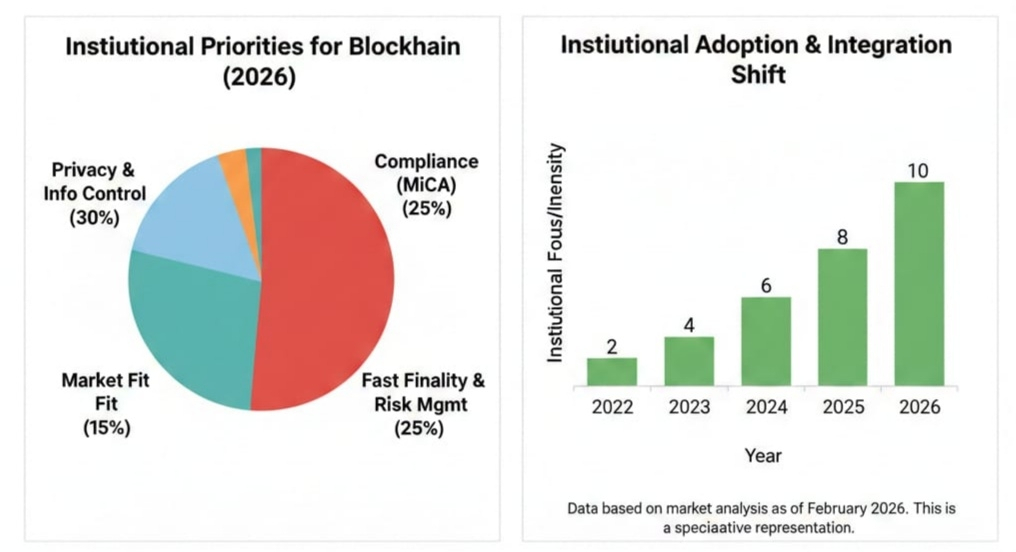
Finality is another thing people ignore until they can’t. Dusk’s consensus nails it in seconds. For traders and institutions, that’s not just a technical detail. Faster finality means less risk, more capital freed up, and way less stress in volatile moments. Anyone who’s sweated out slow confirmations while the market swings knows how much a few extra minutes can cost.
What I like about Dusk is that privacy isn’t just an add-on. It’s baked in, right alongside compliance. That shows some foresight. From what I’ve seen, when platforms try to slap on privacy as an afterthought, things break under real volume or regulatory pressure. Dusk feels more like real financial plumbing designed with its limits and responsibilities in mind from the start.
Timing matters too. Back in 2022 and 2023, institutions were still playing around. Now, in 2025 and 2026, they’re narrowing it down. Banks and trading venues are choosing what survives audits, reporting, and real-world stress. Dusk isn’t in these talks because it promises crazy innovation. It’s there because it fits how regulated markets already work.
From a trader’s angle, this kind of infrastructure never gets hyped early. Adoption is slow and quiet. But those are the systems that end up sticking around. Dusk isn’t out to kill traditional finance. It’s meeting it where it already lives. To me, that’s not a speculative moonshot it’s a steady answer to where the industry is actually headed.
