The rise of decentralized finance, or DeFi, has transformed how we think about money, digital assets and online interactions. At the core of this revolution are smart contracts and decentralized applications (dApps). But even the most innovative contracts and apps need the right foundation to run smoothly. That’s where Plasma Coin comes in. In my view, Plasma Coin is more than just a blockchain, it’s a high-performance foundation designed to handle fast, low-cost transactions without compromising security or decentralization. Simply put, it solves the problems that have held back widespread adoption of DeFi and Web3 technologies.
Understanding Smart Contracts and dApps
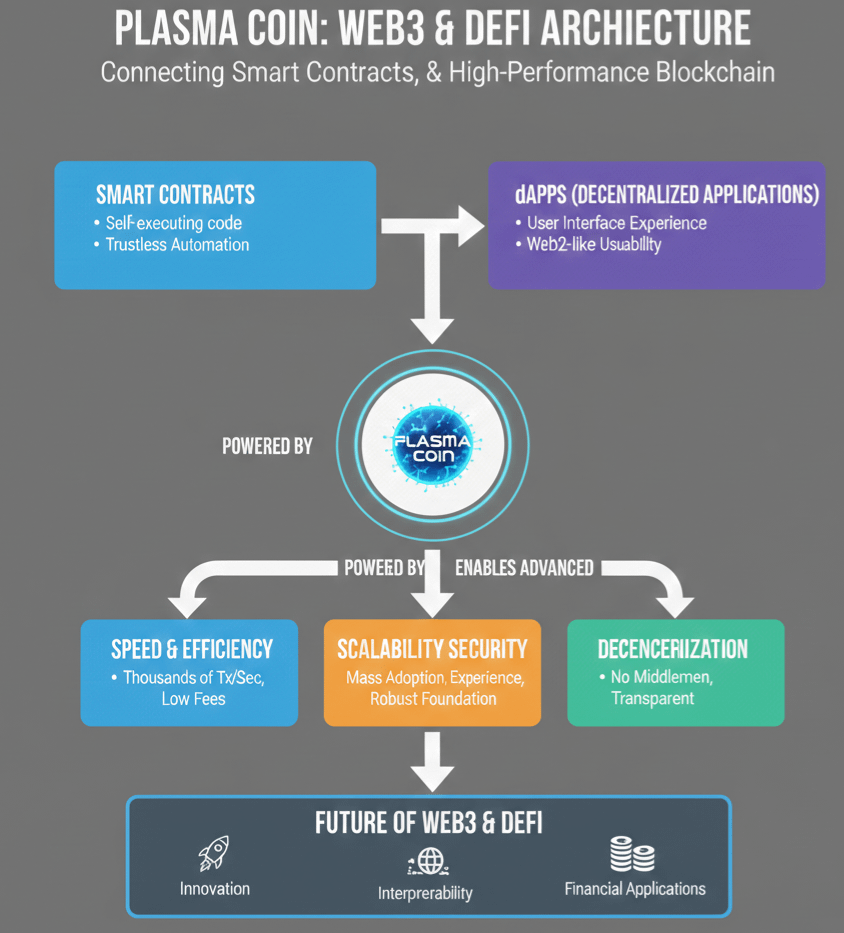
Before diving deeper into Plasma Coin, it helps to understand how smart contracts and dApps work together. Smart contracts are self-executing pieces of code stored on a blockchain. They follow strict “if-then” rules, automating transactions, enforcing agreements and removing the need for middlemen. dApps are the user-facing applications that interact with these contracts, providing an interface that makes these automated processes accessible to real people.
Think of smart contracts as the engine and dApps as the vehicle. The engine can run on its own but without the vehicle, no one can drive it. Similarly, smart contracts provide the backend logic, while dApps make it usable and intuitive. But even this combination can struggle if the blockchain underneath is slow or expensive to use. Plasma Coin addresses these exact issues.
Why Plasma Coin Matters
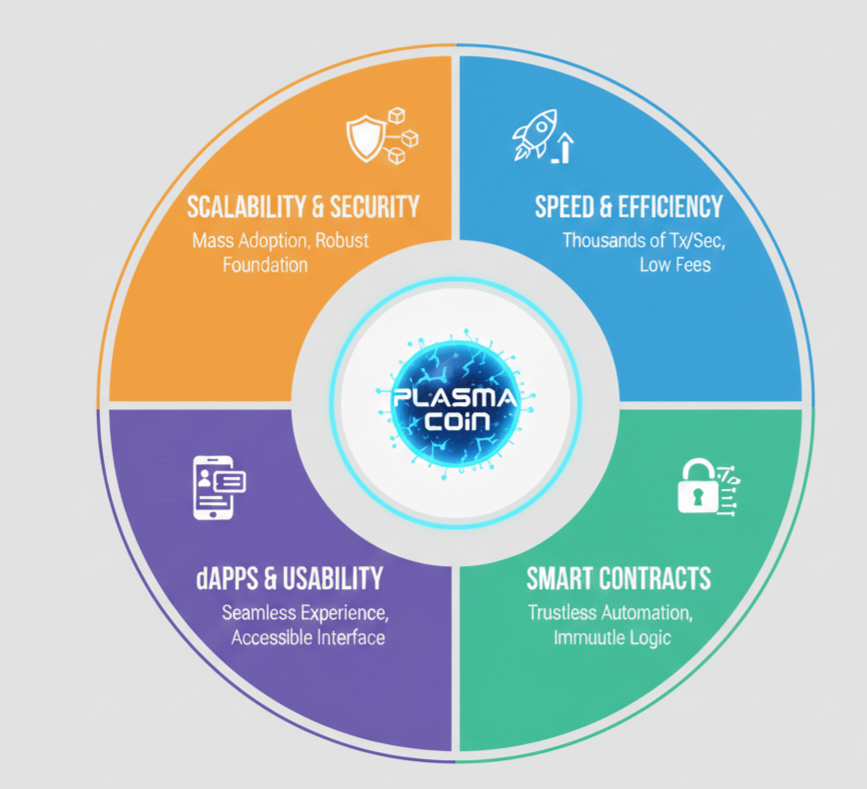
What sets Plasma Coin apart is its focus on speed, efficiency and scalability. Traditional blockchains often force developers to make trade-offs between decentralization, security and scalability. Plasma Coin, however, is engineered to handle thousands of transactions per second while keeping fees minimal and security strong. From my perspective, this is a game-changer, especially for financial applications that rely on stablecoins or frequent transactions.
High fees and slow block confirmations have historically limited DeFi adoption. With Plasma Coin, these barriers are removed. Developers can build sophisticated applications without worrying about network congestion and users can interact with dApps smoothly and affordably.
Smart Contracts on Plasma Coin
Smart contracts on Plasma Coin form the backbone of trustless automation. They can manage lending pools, collateralized borrowing, token transfers and governance without any intermediaries. Because these contracts are immutable, once deployed, the rules cannot be changed, this guarantees fairness and transparency. However, immutability also means that any bug must be caught before launch, making careful auditing essential. In my view, Plasma Coin’s commitment to robust smart contract execution and security sets it apart from other blockchains.
The platform makes it easier for developers to create complex financial protocols, automated escrow systems and decentralized governance structures. Speed and low cost are crucial here, without them, even the most innovative contracts can fail in practice. Plasma Coin solves this problem, giving developers a reliable, scalable environment to innovate.
dApps on Plasma Coin
While smart contracts handle the logic, dApps provide the interface. On Plasma Coin, dApps are fast, responsive and easy for users to navigate. Whether a user is lending stablecoins, voting on governance proposals, or interacting with tokenized assets, the experience is smooth and affordable. From my perspective, this usability is essential. For blockchain technology to reach mainstream adoption, it needs to feel as seamless as any Web 2.0 app and Plasma Coin makes that possible.
By combining a trustless backend with a user-friendly frontend, Plasma Coin enables dApps to scale while staying decentralized. A slow, expensive or clunky dApp will never attract users, no matter how innovative its underlying smart contracts. Plasma Coin removes these limitations, paving the way for real-world adoption.
The Power of Smart Contracts and dApps Together
On Plasma Coin, smart contracts and dApps work hand-in-hand. Smart contracts handle all automated transactions and governance rules, while dApps make these interactions accessible to users. For example, a decentralized finance platform could allow users to deposit funds, earn interest, or vote on proposals, all executed automatically by smart contracts but displayed through a clean, intuitive interface.
This combination is what makes decentralized applications not only secure but usable and engaging. In my view, this balance between automation and accessibility is what the next generation of Web3 needs.
Plasma Coin has the potential to transform not just DeFi but the broader Web3 ecosystem. Its high-speed, low-cost architecture supports advanced smart contracts, layer-2 scaling and cross-chain interoperability. This opens the door for complex financial applications, tokenized real-world assets and new governance models that can operate at scale.
The platform also encourages developers to experiment and innovate without worrying about network congestion or high transaction fees. This is critical for mass adoption. From my perspective, Plasma Coin is a bridge between the promise of Web3 and the practical realities users face today.
Plasma Coin is more than a blockchain, it is a foundation for the future of decentralized finance and Web3. By combining fast, low-cost transactions with secure, immutable smart contracts, it empowers developers and users alike. Smart contracts provide the engine of trustless automation, dApps deliver the vehicle for usability and Plasma Coin ensures the road is smooth, fast and reliable.
In my view, the future of decentralized technology will depend on platforms like Plasma Coin, blockchains that can scale without compromising security or decentralization. With Plasma Coin, we finally have a network that can handle high-frequency financial operations, real-world asset tokenization and next-level DeFi applications. It’s the infrastructure the decentralized movement has been waiting for, and it’s only going to get more critical as adoption grows.