
In 2018, when the crypto world was loud with promises of overnight freedom and reckless abundance, Dusk Network was born almost in defiance of the noise. It didn’t shout. It didn’t sell dreams of instant wealth. Instead, it asked a question that felt heavier, slower, and far more uncomfortable: What if finance could finally be honest without being exposed?
Finance is deeply emotional, even when we pretend it’s not. It carries fear—of loss, of scrutiny, of being misunderstood. It carries power, memory, and the weight of responsibility. For institutions, a single breach can erase decades of trust. For individuals, a single exposure can change a life forever. Dusk emerged from this fragile truth, recognizing that the future of finance wouldn’t be decided by speed alone, but by whether people could feel safe again.
Privacy, in Dusk’s world, is not an act of hiding. It is an act of care. It is the difference between living behind locked doors and living with dignity. Too many systems before it forced a cruel choice: either be transparent and vulnerable, or private and unaccountable. Dusk refused that bargain. It believed that compliance did not have to mean surveillance, and that accountability did not require public confession.
This belief shaped everything. Instead of exposing transactions to the gaze of the entire world, Dusk allows them to be proven. Zero-knowledge cryptography doesn’t ask you to trust blindly; it asks you to trust mathematics. It whispers instead of broadcasts. It says, “This transaction is valid. The rules were followed. The obligations were met.” And then it stops—protecting the people behind the numbers.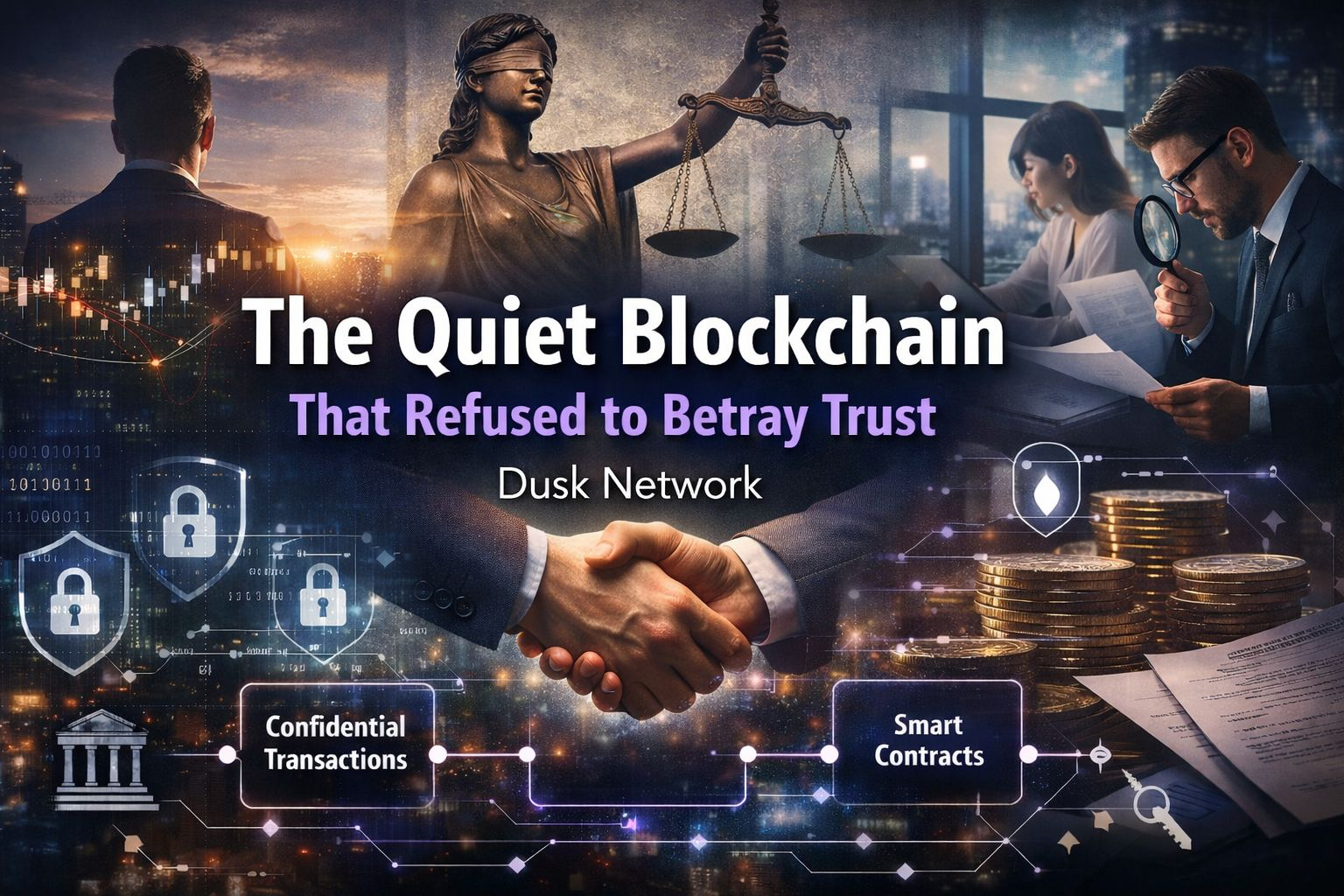
There is something profoundly human about that restraint. In a digital age obsessed with oversharing, Dusk chose silence where silence protects. It chose discretion where discretion preserves dignity. That choice matters more than it seems. Businesses are not just balance sheets; they are people working late, worrying about payroll, guarding trade secrets that represent years of effort. Investors are not just wallets; they are families, futures, and fragile plans. Dusk was built for them.
The architecture reflects this empathy. Modular, careful, deliberate—it doesn’t force the world to adapt to it. Instead, it adapts to the world as it is. Regulated assets, tokenized securities, institutional DeFi—these aren’t buzzwords here. They are responsibilities. Each smart contract is written with the understanding that mistakes are not theoretical. They have consequences. Legal ones. Human ones.
Dusk’s approach to real-world assets is especially revealing. Tokenization promises efficiency, but efficiency without privacy is cruelty. No serious institution can place its internal structure, investor positions, or settlement logic on full public display. Dusk makes space for confidentiality without sacrificing oversight. Regulators can verify. Auditors can inspect. Rules can be enforced. And yet, the inner life of financial actors remains protected. That balance is rare. And it is fragile.
Even its economic model feels shaped by patience rather than greed. The native token is not a lottery ticket; it is a tool. It secures the network, aligns incentives, and rewards long-term participation. There is no illusion that value comes from hype. Value comes from endurance—from systems that survive stress, scrutiny, and time.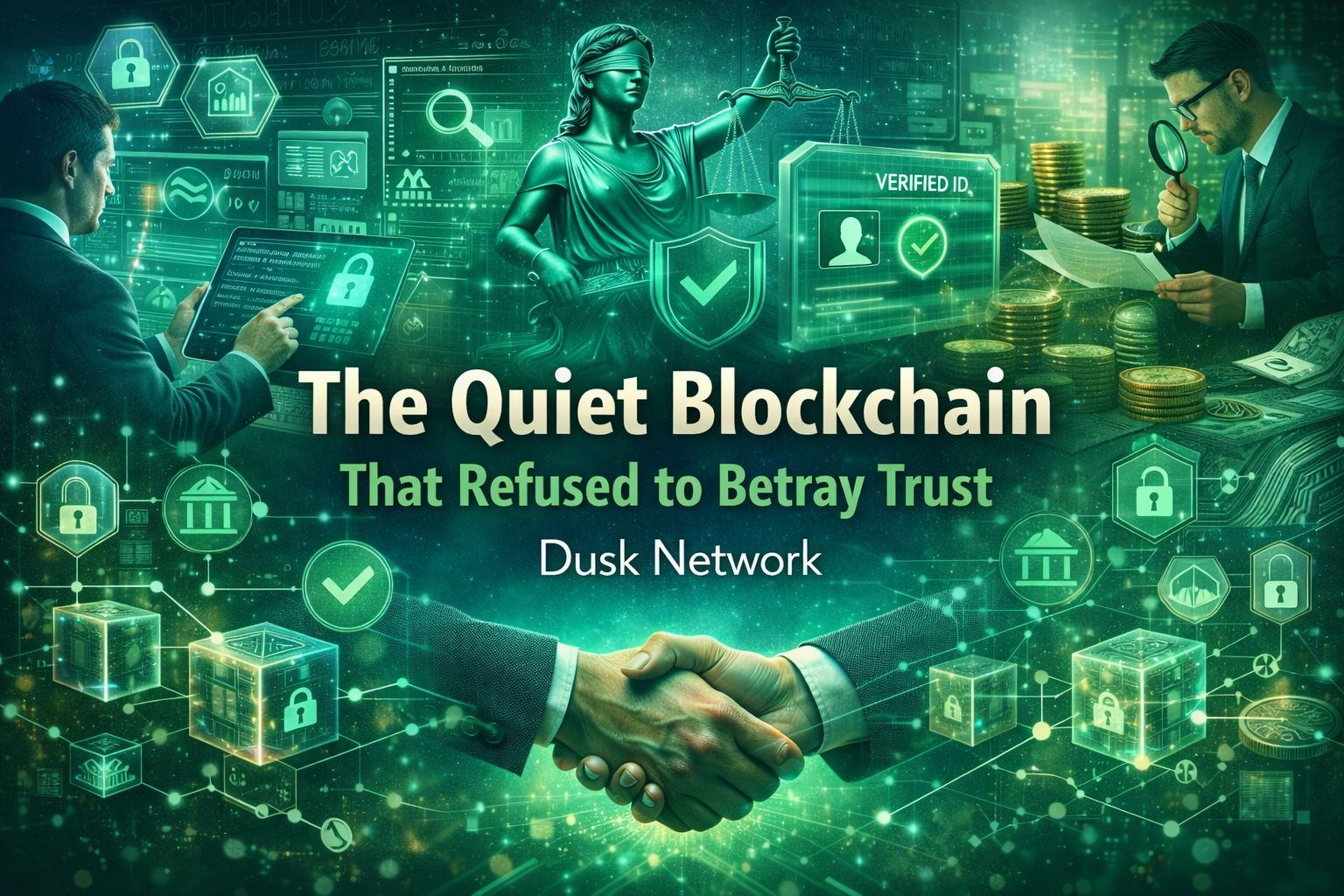
Of course, this path is lonely. Quiet builders are often overlooked. Markets chase excitement, not discipline. Prices fluctuate. Attention drifts. But infrastructure is never glamorous while it’s being built. Bridges are celebrated only after they hold weight. Dusk seems to understand this deeply. It builds anyway.
What makes Dusk emotionally powerful is not what it promises, but what it refuses to compromise. It refuses to treat privacy as suspicious. It refuses to treat regulation as an enemy. It refuses to believe that progress must come at the cost of trust. In doing so, it challenges a deeper assumption—that modern systems must always know everything about us to function.
Dusk suggests another future. One where proof replaces exposure. Where trust is earned through verifiability, not visibility. Where financial systems respect the quiet boundaries that make people feel safe enough to participate honestly.
In a world growing more transparent by force and more fragile by consequence, Dusk stands as a reminder that some revolutions do not arrive with explosions. Some arrive softly, almost invisibly, rebuilding trust piece by piece. And sometimes, the most radical thing technology can do is remember what it means to protect the human beings behind the data.
