
@Plasma is a Layer 1 blockchain designed specifically for stablecoin settlement. Instead of optimizing primarily for speculative trading or generalized smart contract activity, Plasma focuses on a narrower but increasingly important role: moving dollar denominated value reliably, cheaply, and at scale.
At a technical level, Plasma combines full Ethereum Virtual Machine EVM compatibility through Reth with sub second finality via PlasmaBFT, while introducing stablecoin centric mechanisms such as gasless USDT transfers and stablecoin first gas. The network also proposes Bitcoin anchored security to strengthen neutrality and censorship resistance, drawing on the security properties of Bitcoin.
The project targets both retail users in highadoption regions and institutional participants involved in payments, treasury operations, and financial settlement.
This article explores the problem Plasma addresses, why it matters, and how the system is designed to function in practice.
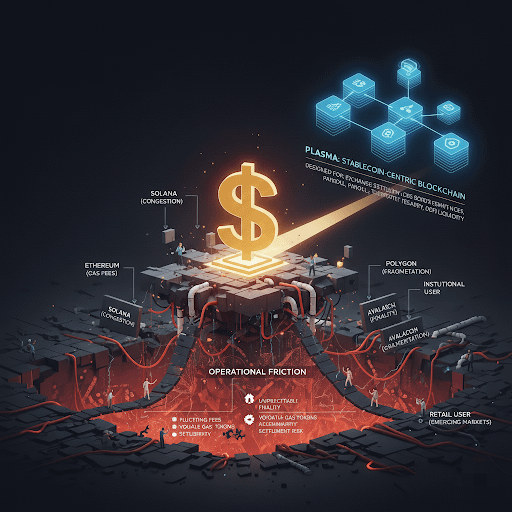
The Core Problem: Stablecoins on Infrastructure Not Built for Them
#Plasma Stablecoins have become one of the dominant forms of on chain value transfer. They are widely used for:
Exchange settlement
Cross border remittances
Payroll and contractor payments
Corporate treasury management
DeFi liquidity and payments
Despite this, most blockchain networks were not designed with stablecoins as their primary workload.
Today’s stablecoin activity is fragmented across many Layer 1s and Layer 2s, each with different assumptions about:
Fee models native gas tokens vs. stable assets
Finality times
Reliability during congestion
Security tradeoffs
User experience
This fragmentation creates operational friction. Fees fluctuate. Finality can be unpredictable. Users must hold volatile native tokens just to move stable value. For institutions, this introduces accounting complexity and settlement risk. For retail users, especially in emerging markets, it adds unnecessary barriers to basic financial activity.
Plasma’s core thesis is that stablecoins have matured into financial infrastructure and deserve a blockchain designed explicitly around their requirements.
Why This Matters for Web3
As blockchains increasingly serve as settlement rails rather than speculative platforms, their success depends on consistency, predictability, and usability.
Stablecoins already function as a digital dollar layer for much of the world. However, without purpose built infrastructure:
Payments remain costly or unreliable during peak usage
Developers must design around gas volatility
Institutions struggle to integrate on chain settlement into existing systems
End users face confusing UX just to send value
A stablecoin first blockchain attempts to treat value transfer as a core primitive, not a secondary feature.
How Plasma Works at a High Level
Plasma operates as a standalone Layer 1 blockchain with full EVM compatibility, meaning existing Ethereum tooling, wallets, and smart contracts can be adapted with minimal changes.
The network introduces three foundational elements:
Fast finality via PlasmaBFT
Transactions reach finality in under a second, enabling near real time settlement.
Stablecoin native economics
Users can pay gas fees in stablecoins, and some transfers, such as USDT, can be gasless from the user’s perspective
Bitcoin anchored security design
Plasma is designed to periodically anchor state to Bitcoin, aiming to increase neutrality and censorship resistance by leveraging Bitcoin’s long established security model.
Together, these components position Plasma less as a general experimentation chain and more as a financial settlement layer.
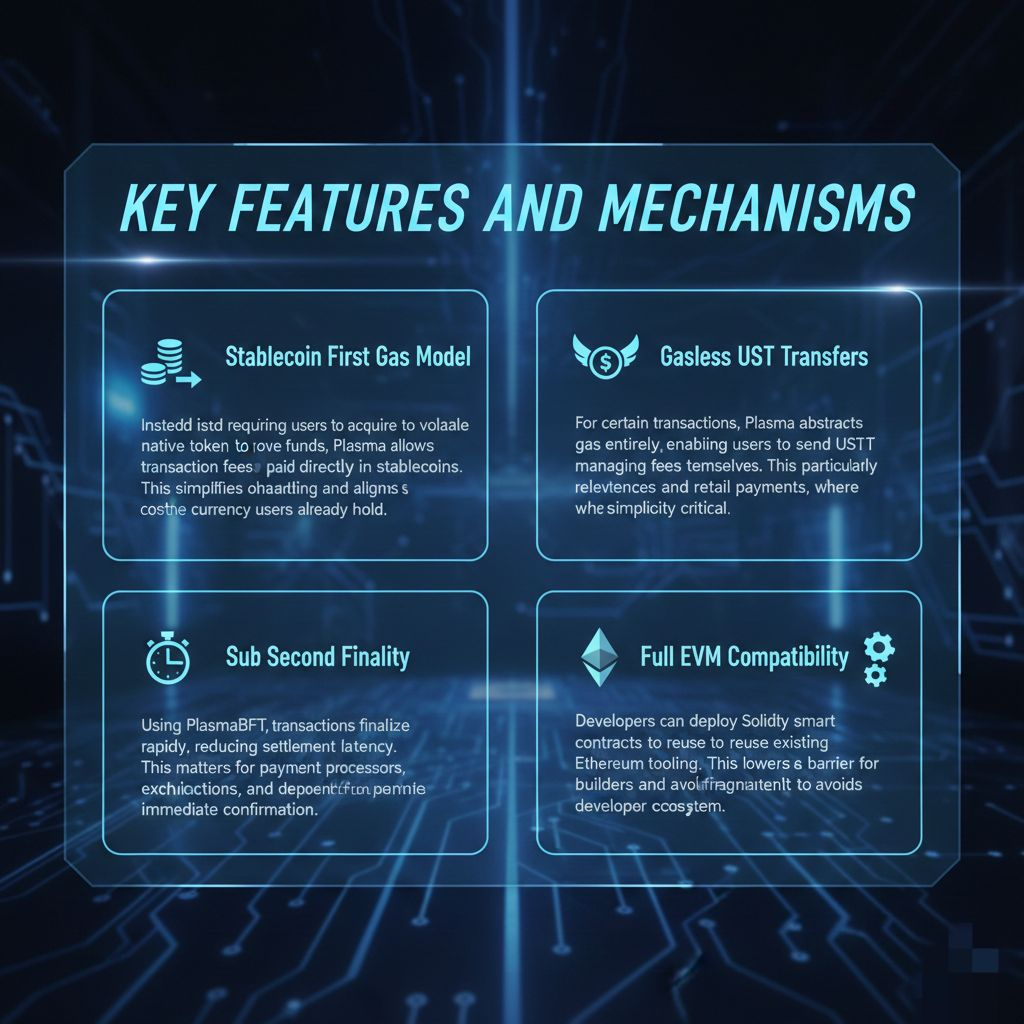
Key Features and Mechanisms
#PlasmaXPL Stablecoin First Gas Model
Instead of requiring users to acquire a volatile native token just to move funds, Plasma allows transaction fees to be paid directly in stablecoins. This simplifies onboarding and aligns costs with the currency users already hold.
Gasless USDT Transfers
For certain transactions, Plasma abstracts gas entirely, enabling users to send USDT without managing fees themselves. This is particularly relevant for remittances and retail payments, where simplicity is critical.
Sub Second Finality
Using PlasmaBFT, transactions finalize rapidly, reducing settlement latency. This matters for payment processors, exchanges, and applications that depend on immediate confirmation.
Full EVM Compatibility Reth
Developers can deploy Solidity smart contracts and reuse existing Ethereum tooling. This lowers the barrier for builders and avoids fragmenting the developer ecosystem.
Architecture and System Design
Plasma’s architecture centers on three layers:
Execution Layer EVM compatible, handling smart contracts and transaction logic
Consensus Layer PlasmaBFT provides fast block finality and validator coordination
Security Anchoring Periodic anchoring to Bitcoin for external verification and resilience
This design separates application logic from settlement assurance, allowing Plasma to optimize for speed while still referencing a highly secure base layer.
Use Cases Across Industries
Plasma is built to support a range of real world applications:
Payments and Remittances
Low latency, stablecoin transfers enable cross border payments without traditional intermediaries.
Exchanges and Market Infrastructure
Fast finality improves internal settlement and reduces counterparty risk.
Corporate Treasury
Businesses can move and manage stablecoin balances with predictable costs and confirmation times.
Fintech Applications
Wallets, payroll platforms, and neobanks can integrate blockchain settlement without exposing users to crypto native complexity.
On Chain Finance
DeFi protocols benefit from stable fee structures and reliable transaction execution.
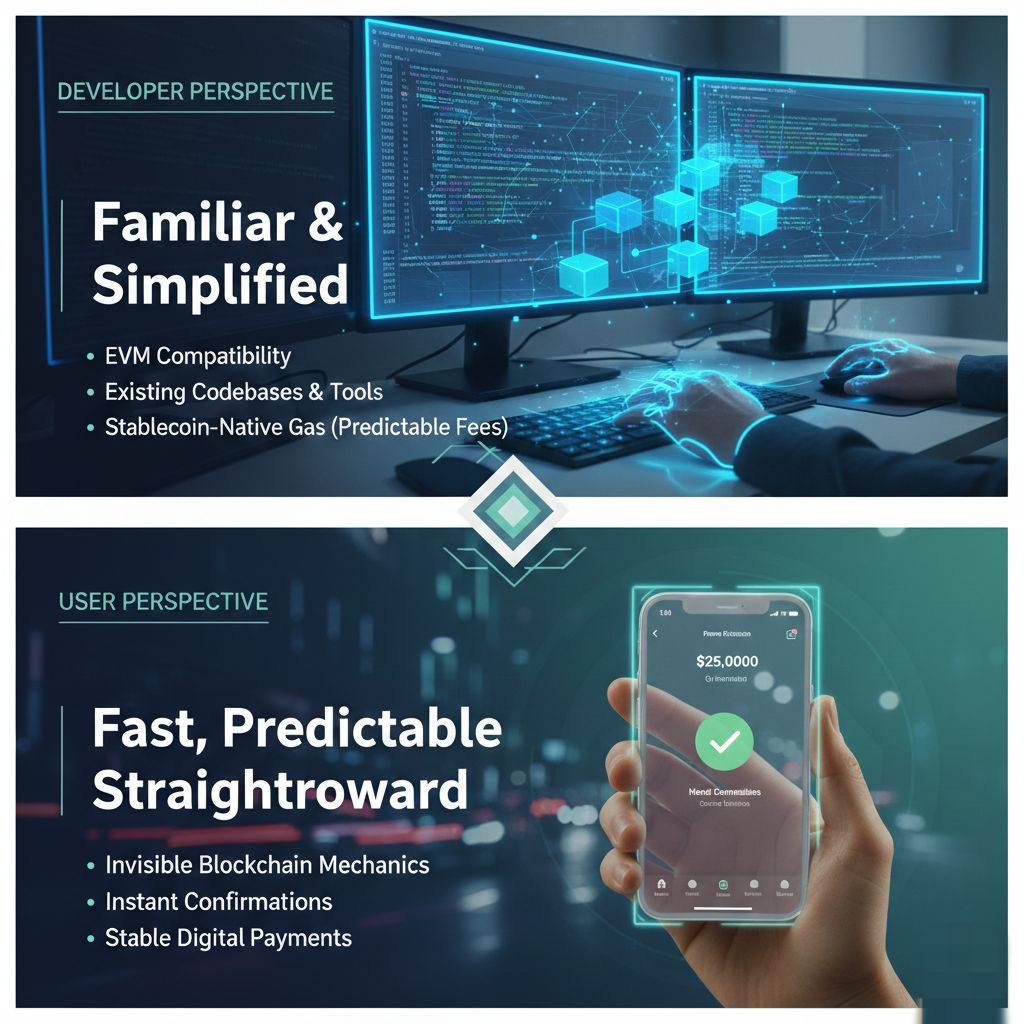
Developer and User Perspective
From a developer standpoint, Plasma aims to be familiar. EVM compatibility means existing codebases and tools remain usable. The stablecoin native gas model also simplifies application design, as developers no longer need to account for volatile fee tokens.
For users, many of Plasma’s features are intentionally invisible. The goal is not to expose blockchain mechanics, but to make stablecoin transactions feel closer to traditional digital payments: fast, predictable, and straightforward.
Security, Reliability, and Trust
Plasma’s Bitcoin anchoring strategy is designed to enhance censorship resistance and provide an external reference point for network state. Combined with BFT consensus, this creates a layered security approach:
Local validators provide speed and availability
Bitcoin anchoring offers long term integrity guarantees
This hybrid model attempts to balance performance with robustness.
Scalability and Compatibility
As a Layer 1 with EVM support, Plasma can scale independently while remaining interoperable with the broader Ethereum ecosystem. Developers can bridge assets and applications, and infrastructure providers can reuse existing tooling.
The network is optimized for high volume stablecoin flows, focusing on throughput and consistent performance rather than maximum generality.
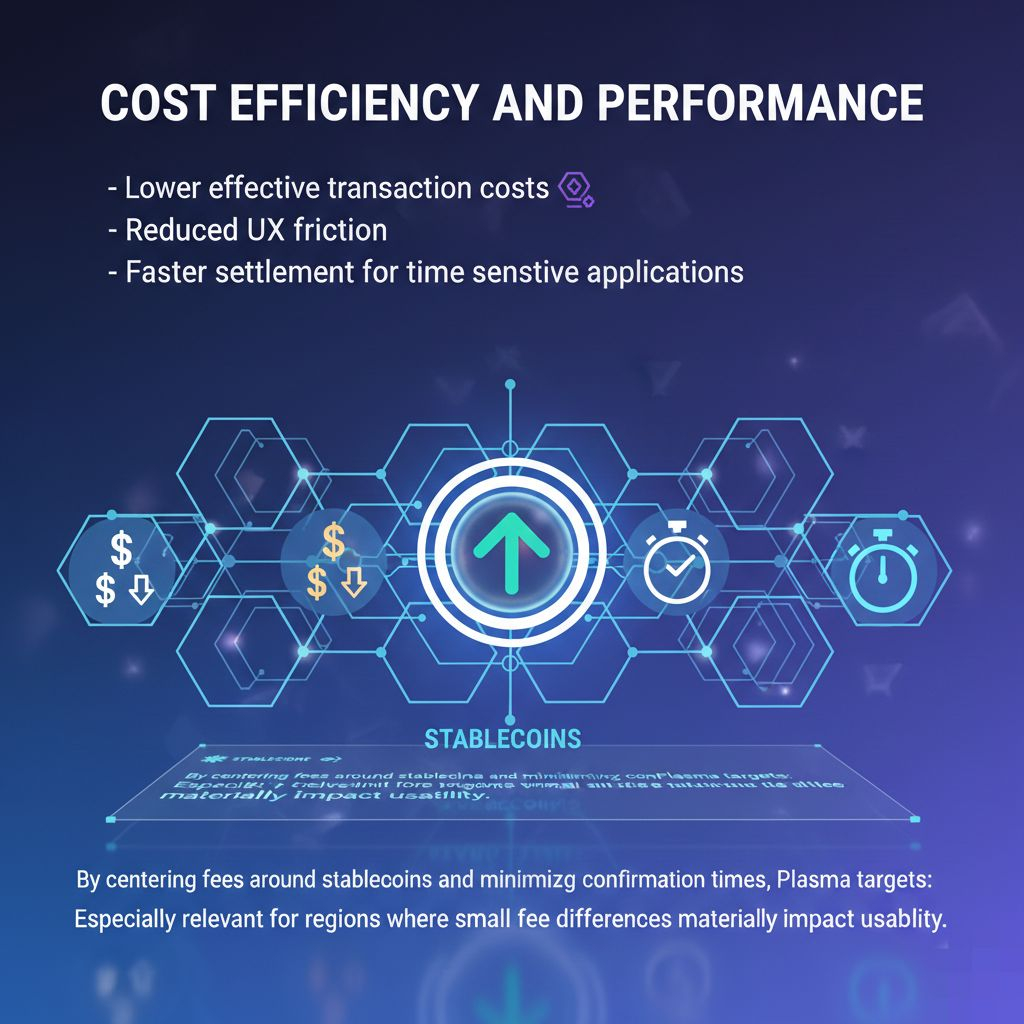
Cost Efficiency and Performance
By centering fees around stablecoins and minimizing confirmation times, Plasma targets:
Lower effective transaction costs
Reduced UX friction
Faster settlement for time sensitive applications
These characteristics are especially relevant for regions where small fee differences materially impact usability.
Long Term Relevance and Competitive Challenges
Plasma enters a competitive field that includes established Layer 1s, Layer 2 rollups, and specialized payment networks. Its differentiation lies in its narrow focus: stablecoin settlement as primary infrastructure.
Long term success depends on:
Real adoption by payment platforms and institutions
Maintaining decentralization while scaling
Proving the value of Bitcoin anchoring in practice
Building liquidity and developer ecosystems
Unlike general purpose chains, Plasma’s future is tied directly to the continued growth of stablecoins as a global financial primitive.
Conclusion
Plasma represents a shift in blockchain design philosophy. Instead of optimizing for speculative activity, it treats stablecoins as foundational infrastructure. By combining EVM compatibility, fast finality, stablecoin native fees, and Bitcoin-anchored security, Plasma aims to provide a purpose built settlement layer for the digital dollar economy.
Whether this model becomes a standard will depend on execution and adoption, but the underlying premise is clear: as stablecoins move deeper into everyday finance, blockchains must evolve from experimental platforms into reliable settlement systems.

