
There is a particular kind of anxiety that comes from waiting for money. It sits low in the chest, heavier at night. It shows up when rent is due, when a parent needs medicine, when a business day is ending and the balance still hasn’t cleared. It’s not greed or ambition—it’s survival. For most of human history, money has never been abstract. It has always been emotional. It has always carried fear, relief, shame, hope. And yet, somewhere along the way, the systems that move money forgot the people who depend on it.
Digital finance promised freedom. Instead, it gave us new kinds of waiting. Transactions that say “successful” but aren’t final. Transfers that require owning a second asset just to move the first. Fees that feel small to engineers but enormous to someone sending fifty dollars home. The technology advanced, but the feeling didn’t. Money still made people nervous. Money still made people wait.
Plasma is born from that discomfort. Not from hype, not from a desire to dominate a narrative, but from a quiet, almost empathetic question: what if money didn’t have to feel like this?
Imagine a woman working abroad, sending money back to her family. She doesn’t think in tokens or gas or networks. She thinks in groceries. In school fees. In whether the transfer will arrive tonight or tomorrow. With Plasma, when she sends stablecoins, the money moves immediately. There is no extra step. No invisible toll gate. No moment of doubt where she wonders if she did something wrong. The money leaves her phone and arrives where it needs to be, final and settled, before anxiety has time to bloom.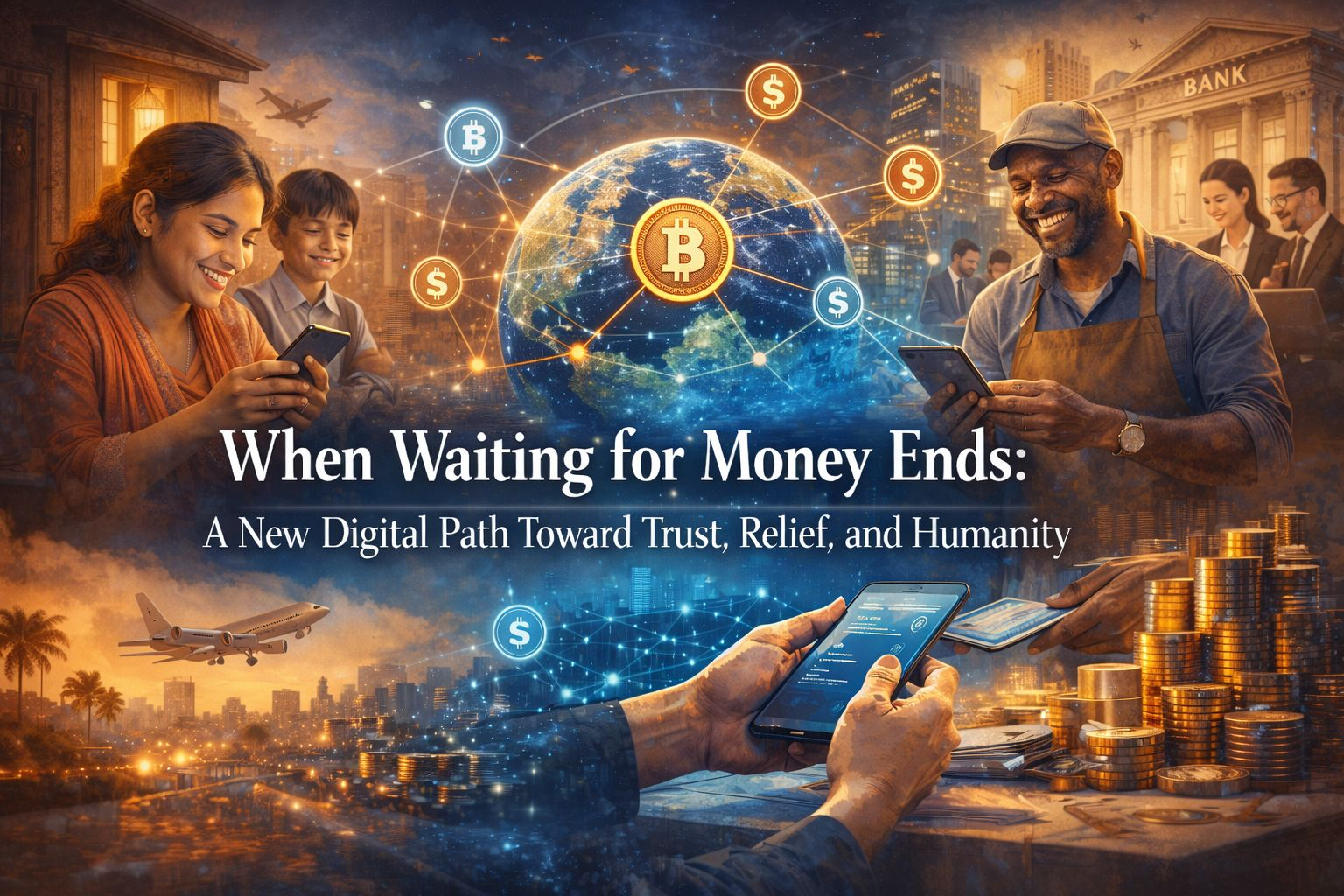
That immediacy matters more than most people in finance want to admit. Speed is not just a technical metric. Speed is emotional. A fast payment calms the nervous system. It allows people to plan, to trust, to breathe. Plasma’s near-instant finality isn’t just an engineering achievement—it’s a psychological one. It replaces uncertainty with closure. Once the transaction is done, it’s done. No reversals lurking in the shadows. No “just wait a few more blocks.” Just certainty.
Then there’s the quiet miracle of not needing to hold something extra just to move your own money. For years, people have been told that this friction is normal, that complexity is the price of decentralization. Plasma rejects that resignation. It absorbs the complexity on behalf of the user. Gasless stablecoin transfers are not a gimmick—they are a statement that the burden should not fall on the person who can least afford it. When fees disappear from the user experience, dignity reappears.
But trust is not built on speed alone. A system can be fast and still feel fragile. That’s why Plasma’s decision to anchor its security to Bitcoin carries emotional weight. Bitcoin represents something rare in modern systems: neutrality that has survived time, politics, and pressure. By tying itself to that gravity, Plasma is saying, quietly but firmly, that it does not want to be the kind of system that can be rewritten when power shifts. For people living in uncertain political or economic environments, that promise is not abstract. It is safety.
Underneath it all, Plasma doesn’t ask the world to start over. It doesn’t demand new languages, new habits, new identities. It works with what already exists. Developers don’t have to abandon their tools. Institutions don’t have to leap into the unknown. This familiarity is not a lack of ambition—it’s respect for the fact that people already carry enough cognitive weight. Innovation, here, is about subtraction. About removing the things that make money stressful instead of piling on more.
The most telling thing about Plasma is who it seems to be built for. Not traders chasing yield. Not narratives chasing attention. But people who depend on money behaving predictably. Small merchants who can’t wait days for settlement. Payroll systems that need certainty, not probability. Families who feel every delay as a personal cost. Plasma doesn’t market itself as a revolution. It behaves like infrastructure. And infrastructure, when done right, fades into the background of life while quietly holding it together.
Of course, nothing this ambitious is free from risk. Gasless systems must guard against abuse. Fast consensus demands careful governance. Serving both individuals and institutions means walking a narrow line between openness and compliance. Plasma does not escape these challenges. But it faces them with a kind of seriousness that suggests it understands what’s at stake. When you build systems that move money, mistakes don’t just break code—they disrupt lives.
What makes this moment different is not the technology alone. It’s the intention behind it. Plasma feels like an attempt to remember that money is not neutral to the people who use it. That every transaction carries a story. That reducing friction is not about efficiency for its own sake, but about reducing stress, restoring trust, and giving people back a sense of control.
If Plasma succeeds, no one will celebrate the protocol. No one will praise the consensus algorithm at dinner. They will simply notice that money arrived when it was needed. That sending it didn’t require a tutorial. That using digital dollars felt less like navigating a system and more like holding something solid.
And maybe that’s the real goal—not to make finance exciting, but to make it humane again. To let money move without fear attached to it. To turn waiting rooms back into open doors.

