
Most people are taught that decentralization is about spreading compute and storage across many machines. That story works until real financial markets enter the picture. When I look at how institutions actually operate, data credibility matters far more than raw decentralization. Markets do not survive on prices alone. They rely on official information that is validated, auditable, and defensible in front of regulators. During 2025 and 2026, Dusk Network has quietly become one of the few places where regulated financial data is being published on chain as core infrastructure. That detail changes everything about how on chain markets can function.
Turning Official Market Information Into Programmable Reality
On most blockchains, oracles are treated like external helpers. They pull prices from many places and average them. That works when I am dealing with casual trading or experimental finance. It breaks down the moment institutions are involved. Banks and exchanges need high integrity feeds that come directly from authorized venues and can survive audits.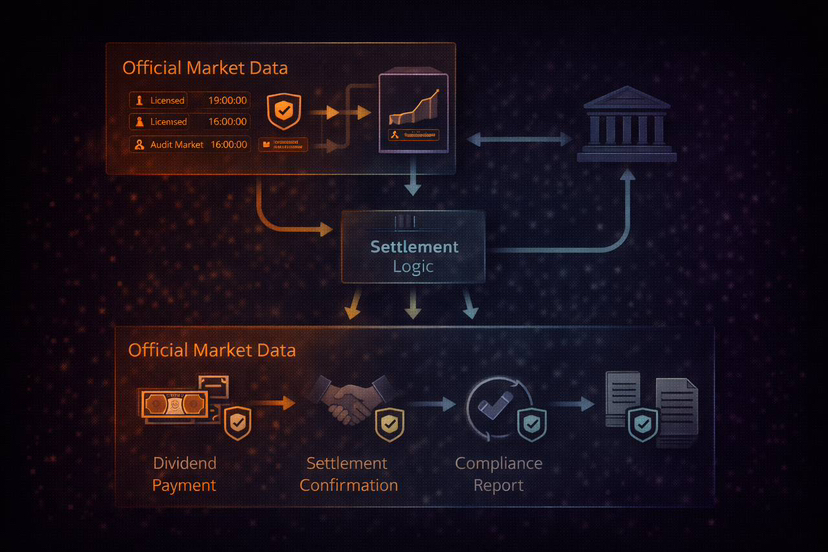
This is where Dusk made a very deliberate move. By working with NPEX, a licensed trading venue, Dusk moved beyond generic price oracles. Using standards like Chainlink DataLink and Data Streams, exchange grade data is being published on chain in real time. What matters to me is not speed or novelty. It is the fact that smart contracts can now reference official trade data with the same confidence that traditional settlement systems rely on.
That means a contract on Dusk can act on verified market information that is authoritative, auditable, and tied directly to a regulated source. This is not crypto guessing. This is programmable finance that mirrors how real markets operate.
Why Official Data Is Non Negotiable in Institutional Finance
If I imagine an institutional investor redeeming a bond on chain, the problem becomes obvious. The contract cannot rely on an approximate price. It needs the official closing value from a regulated exchange. Anything else risks compliance failures or legal disputes.
Because Dusk integrates institutional grade data standards, several things become possible at once. Exchange level prices with low latency are available on chain. Regulatory provenance is preserved end to end. Smart contracts can operate with the same confidence institutions expect from off chain systems.
At that point, the blockchain stops being just a settlement rail. It becomes a trusted data surface. Derivatives settlement, audit ready trade execution, and verifiable transaction histories can all live in one place without relying on intermediaries.
How This Differs From Traditional Oracle Models
In most ecosystems, oracles aggregate prices from many exchanges. That is fine for decentralized markets where rough accuracy is acceptable. In regulated environments, mistakes are expensive. A wrong price can trigger legal exposure or incorrect valuations.
Dusk takes a different stance. Official exchange data is treated as a first class asset. The network is not only consuming data but also acting as a publisher of certified information. With NPEX publishing regulated market data directly on chain using Chainlink standards, the exchange itself becomes an authoritative source inside the blockchain.
From my perspective, that is the protecting detail. The data smart contracts consume is the same data institutions already trust in their internal systems. There is no translation gap and no downgrade in credibility.
Why Tokenized Assets Need This Level of Data Integrity
Regulated assets like tokenized bonds and securities depend on precise information. Settlement values must be exact. Dividends and yields must be calculated correctly. Compliance reporting must be traceable and defensible.
By embedding official data streams directly into the protocol, Dusk allows contracts to handle these tasks automatically. Regulators can inspect the process instead of reconstructing it later. Settlement becomes jurisdictionally valid by design. Audit trails are coded into execution. Prices can be traced back to licensed exchanges without ambiguity.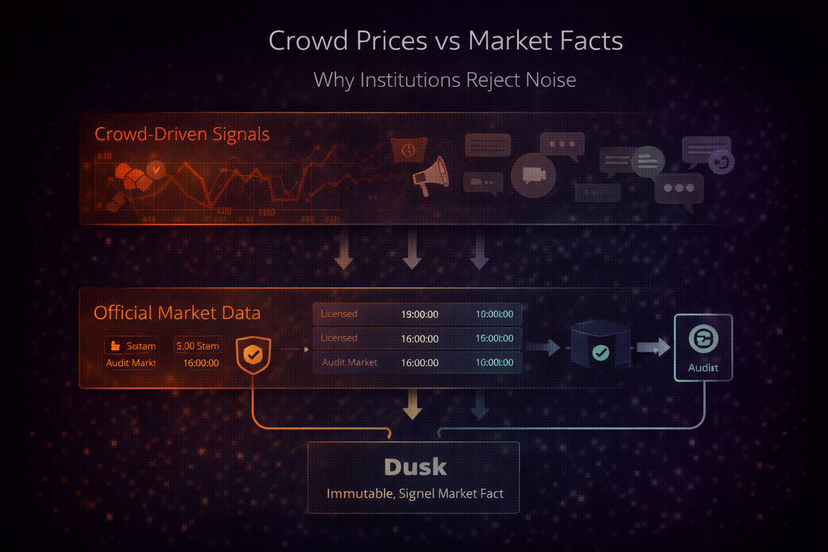
To me, this closes a credibility gap that has kept traditional finance and blockchains apart for years.
Moving Past Hype Toward Institutional Confidence
Many institutions hesitate to use blockchain data because it often lacks defensible provenance. When data originates from a licensed exchange and is published on chain with clear standards, it carries legal weight. That distinction matters.
Most oracle systems emphasize decentralization and redundancy. Dusk emphasizes source integrity, auditability, and accountability. Those are the same criteria auditors and custodians already use. This is why Dusk feels less like a niche privacy chain and more like a protocol designed for serious markets.
Interoperable Markets and Data That Travels With Assets
Another piece that stands out to me is cross chain distribution. By combining DataLink with Chainlink CCIP, official prices published on Dusk can be propagated to other chains while keeping their regulatory signature intact.
That means a tokenized security issued on Dusk can rely on the same verified data even if it interacts with Ethereum or Solana. The data moves with the asset, not as a downgraded copy but as the same authoritative feed. This is how interoperable regulated markets start to make sense.
How This Redefines the Role of Oracles
Traditionally, oracles act as bridges between chains and external data. In regulated markets, that role has to evolve. Data must reflect the authority of exchanges and clearing venues, not just aggregated signals.
With Dusk and Chainlink working together, the oracle becomes an on chain publisher of official truth. This is not a technical trick. It is the foundation for legally defensible automation. If a contract settles a trade, the data behind that settlement must stand up in court.
A New Kind of Blockchain Infrastructure Emerging
What I see forming here is a different model of infrastructure. Official information is not an add on. Smart contracts operate on data that the law recognizes as valid. Regulators and market participants can reference the same on chain source of truth.
For years, the debate focused on custody and settlement. In reality, data confidence has been the bottleneck. Without trusted information, automation cannot fully replace legacy systems. Dusk appears to be addressing that gap directly.
Final Thoughts on Data as Core Infrastructure
The first phase of blockchains decentralized computation and custody. The next phase is decentralizing truth itself. That means verifiable and official data that institutions can rely on.
Dusk is positioning official market data as a protocol level resource, not a convenience feature. That opens the door to regulated on chain finance that is auditable, defensible, and credible beyond crypto circles.
For me, that is the shift that makes real markets start paying attention.
