
As 2026 unfolds, building a diversified crypto portfolio is more important than ever. With Bitcoin's dominance around 55% but altcoins delivering huge upside during bulls, diversification is a way to manage volatility, capture growth, and protect against market drops.
This guide breaks down basics, strategies, allocation examples, portfolio management techniques, and practical tools to help you build a portfolio aligned with your risk tolerance and market cycles.
𝟭. 𝗗𝗶𝘃𝗲𝗿𝘀𝗶𝗳𝗶𝗰𝗮𝘁𝗶𝗼𝗻 𝗕𝗮𝘀𝗶𝗰𝘀: 𝗪𝗵𝘆 𝗜𝘁 𝗠𝗮𝘁𝘁𝗲𝗿𝘀 𝗶𝗻 𝗖𝗿𝘆𝗽𝘁𝗼
Diversification reduces risk by spreading investments across assets. In crypto, correlations can spike during dumps (e.g., 2022’s 80% market wipeout), so a balanced mix cushions losses while capturing gains from diverse sectors.
Key pillars of crypto diversification include:
📍𝗔𝘀𝘀𝗲𝘁 𝗰𝗹𝗮𝘀𝘀𝗲𝘀:
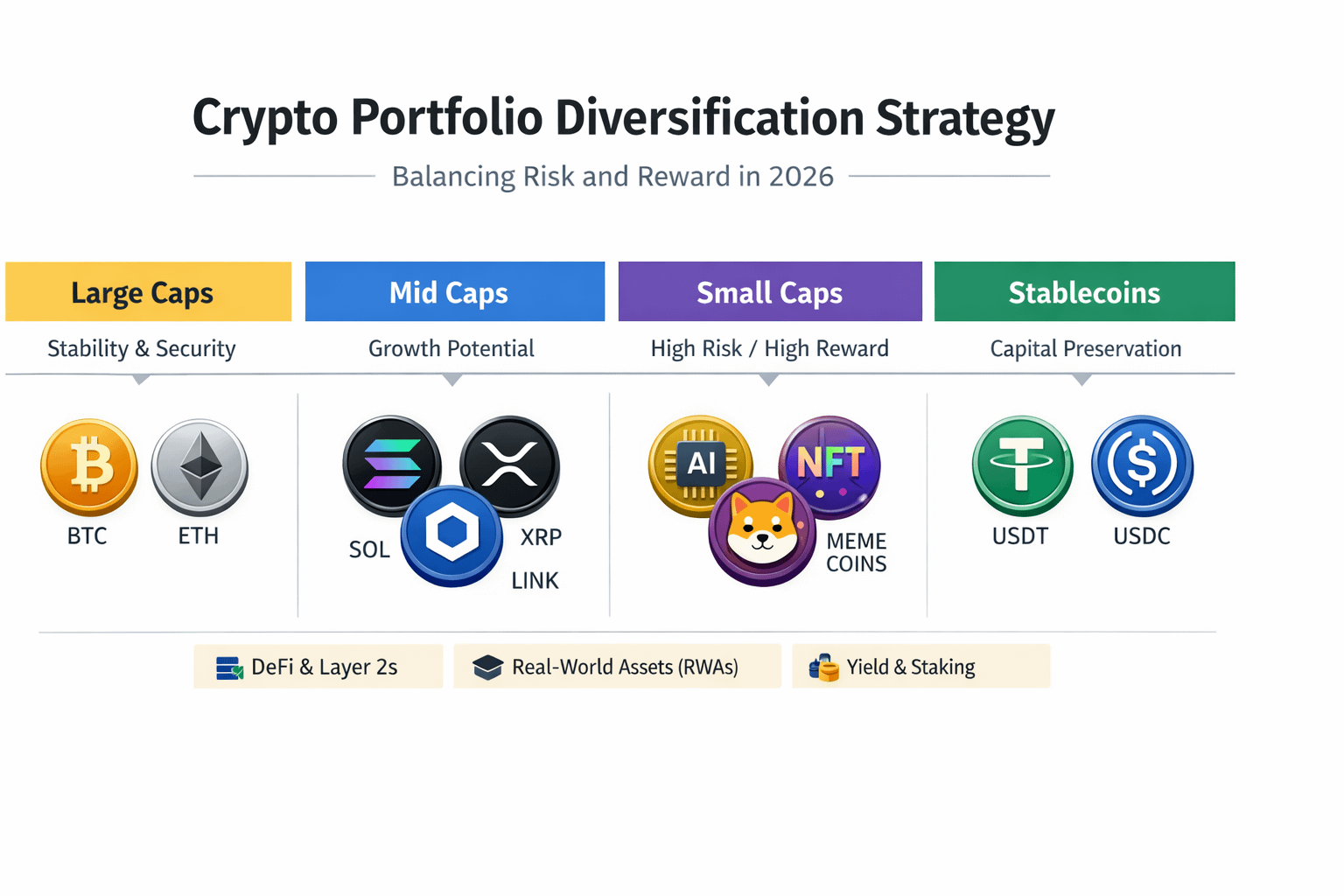
• Large caps (BTC, ETH) for stability
• Mid caps (SOL, XRP, LINK) for growth
• Small caps for asymmetric upside
• Stablecoins for capital preservation and flexibility
📍𝗦𝗲𝗰𝘁𝗼𝗿 𝗲𝘅𝗽𝗼𝘀𝘂𝗿𝗲:
DeFi, infrastructure, Layer-2s, RWAs, AI-related crypto, and selective high-risk segments help reduce reliance on one narrative.
BTC and ETH often show high correlation (≈0.8). True diversification requires exposure to assets with different risk drivers not just more tokens.
𝟮. 𝗖𝗼𝗿𝗲 𝗦𝘁𝗿𝗮𝘁𝗲𝗴𝗶𝗲𝘀 𝗳𝗼𝗿 𝗗𝗶𝘃𝗲𝗿𝘀𝗶𝗳𝘆𝗶𝗻𝗴 𝗮 𝗖𝗿𝘆𝗽𝘁𝗼 𝗣𝗼𝗿𝘁𝗳𝗼𝗹𝗶𝗼
Effective diversification is intentional and rule-based, not reactive. A balanced structure can typically includes:
2.1 - 𝗔𝗹𝗹𝗼𝗰𝗮𝘁𝗶𝗼𝗻 𝗯𝘆 𝗠𝗮𝗿𝗸𝗲𝘁 𝗖𝗮𝗽𝗶𝘁𝗮𝗹𝗶𝘇𝗮𝘁𝗶𝗼𝗻
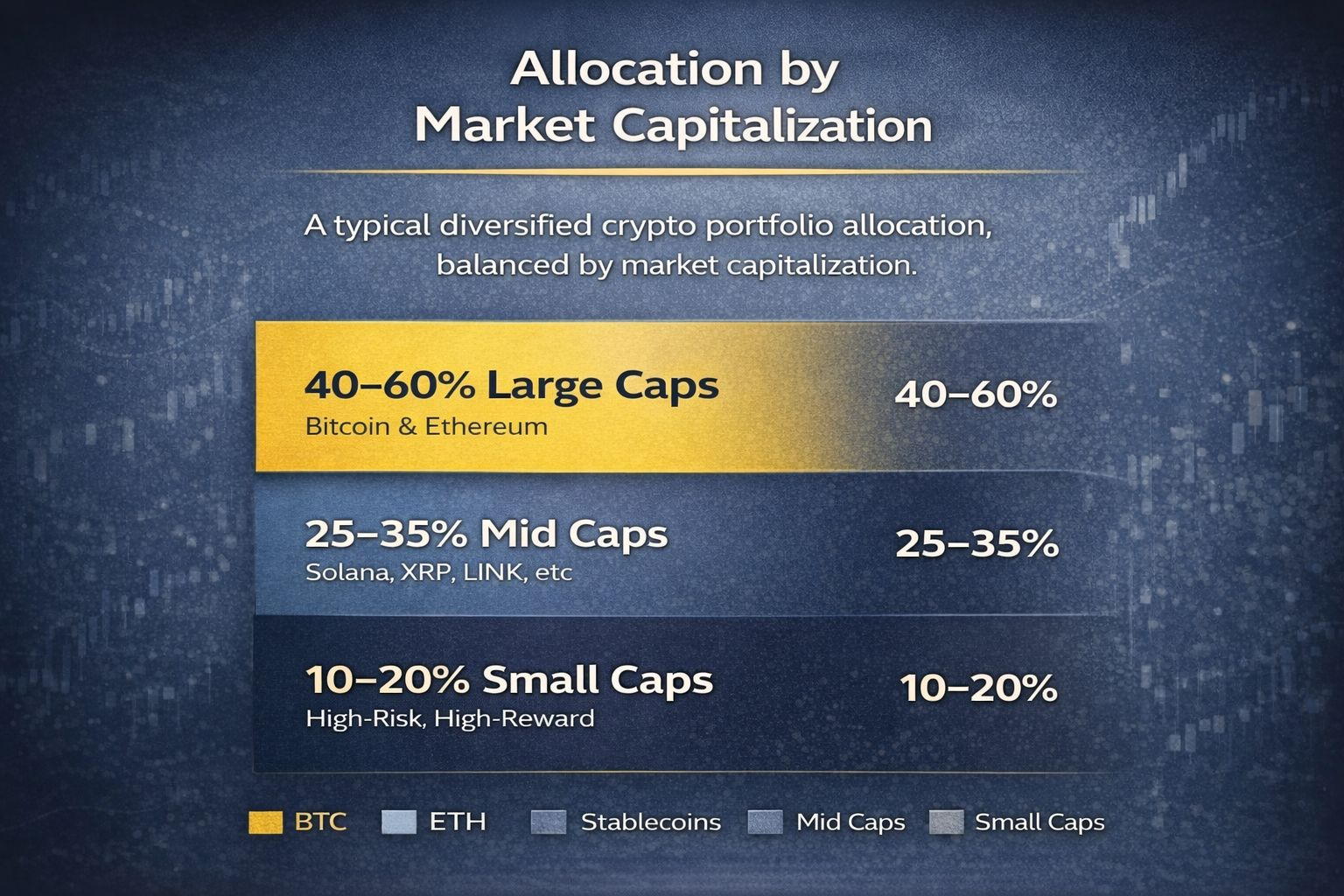
● 40–60% large caps for foundation and liquidity
● 25–35% mid caps for growth potential
● 10–20% small caps for high-risk, high-reward exposure
This structure helps smooth volatility while still capturing upside during bullish phases.
2.2 - 𝗦𝗲𝗰𝘁𝗼𝗿-𝗕𝗮𝘀𝗲𝗱 𝗗𝗶𝘃𝗲𝗿𝘀𝗶𝗳𝗶𝗰𝗮𝘁𝗶𝗼𝗻
Instead of holding many tokens from the same category, allocate across sectors:
● DeFi (lending, staking, yields)
● Infrastructure (Layer-2s, oracles)
● RWAs (tokenized bonds, commodities)
● Emerging narratives (AI, data, modular blockchains)
2.3 - 𝗥𝗶𝘀𝗸-𝗣𝗿𝗼𝗳𝗶𝗹𝗲 𝗠𝗼𝗱𝗲𝗹𝘀
● Conservative: 80% BTC/ETH, 15% stablecoins, 5% alts
● Moderate: 70% core, 20% growth assets, 10% speculative
● Aggressive: 60% core, 25% growth, 15% high-risk
𝟯. 𝗣𝗿𝗮𝗰𝘁𝗶𝗰𝗮𝗹 𝗣𝗼𝗿𝘁𝗳𝗼𝗹𝗶𝗼 𝗗𝗶𝘃𝗲𝗿𝘀𝗶𝗳𝗶𝗰𝗮𝘁𝗶𝗼𝗻: 𝗥𝗲𝗮𝗹-𝗪𝗼𝗿𝗹𝗱 𝗘𝘅𝗮𝗺𝗽𝗹𝗲𝘀
This section focuses on how diversification works in practice, independent of any platform.
📍𝗘𝘅𝗮𝗺𝗽𝗹𝗲 𝟭: 𝗖𝗼𝗻𝘀𝗲𝗿𝘃𝗮𝘁𝗶𝘃𝗲 𝗣𝗼𝗿𝘁𝗳𝗼𝗹𝗶𝗼 ($𝟭𝟬,𝟬𝟬𝟬 𝗕𝘂𝗱𝗴𝗲𝘁)
● 50% BTC ($5,000): Acts as the portfolio anchor and long-term value store.
● 30% ETH ($3,000): Exposure to smart contracts, DeFi, and infrastructure growth.
● 10% Stablecoins ($1,000): Liquidity buffer for volatility and future opportunities.
● 10% Mid Caps ($1,000): Selected growth assets to enhance returns without excessive risk.
👉 Objective: Capital preservation with moderate upside.
📍𝗘𝘅𝗮𝗺𝗽𝗹𝗲 𝟮: 𝗠𝗼𝗱𝗲𝗿𝗮𝘁𝗲 𝗣𝗼𝗿𝘁𝗳𝗼𝗹𝗶𝗼 ($𝟭𝟬,𝟬𝟬𝟬 𝗕𝘂𝗱𝗴𝗲𝘁)
● 40% BTC ($4,000)
● 25% ETH ($2,500)
● 15% Mid Caps ($1,500)
● 10% Small Caps, like AI tokens ($1,000)
● 10% Yield Strategies ($1,000)
👉 Objective: Balance between stability and growth, suitable for most long-term investors.
📍𝗘𝘅𝗮𝗺𝗽𝗹𝗲 𝟯: 𝗔𝗴𝗴𝗿𝗲𝘀𝘀𝗶𝘃𝗲 𝗣𝗼𝗿𝘁𝗳𝗼𝗹𝗶𝗼 ($𝟭𝟬,𝟬𝟬𝟬 𝗕𝘂𝗱𝗴𝗲𝘁)
● 30% BTC ($3,000)
● 20% ETH ($2,000)
● 20% Mid Caps ($2,000)
● 20% Small Caps / Emerging Narratives ($2,000)
● 10% High-Risk Segment ($1,000)
👉 Objective: Capture strong upside during bull markets while accepting higher drawdowns
Position sizes matter more than token selection. A strong asset at 5% allocation protects you more than a “perfect pick” at 40%.
𝟰. 𝗛𝗼𝘄 𝘁𝗼 𝗠𝗮𝗻𝗮𝗴𝗲 𝗮𝗻𝗱 𝗔𝗱𝗷𝘂𝘀𝘁 𝗮 𝗗𝗶𝘃𝗲𝗿𝘀𝗶𝗳𝗶𝗲𝗱 𝗣𝗼𝗿𝘁𝗳𝗼𝗹𝗶𝗼 𝗔𝗰𝗿𝗼𝘀𝘀 𝗠𝗮𝗿𝗸𝗲𝘁 𝗖𝘆𝗰𝗹𝗲𝘀
Building a portfolio is just the start—managing it over time is key. Crypto markets swing between bulls, corrections, and recoveries, and your portfolio should adapt.
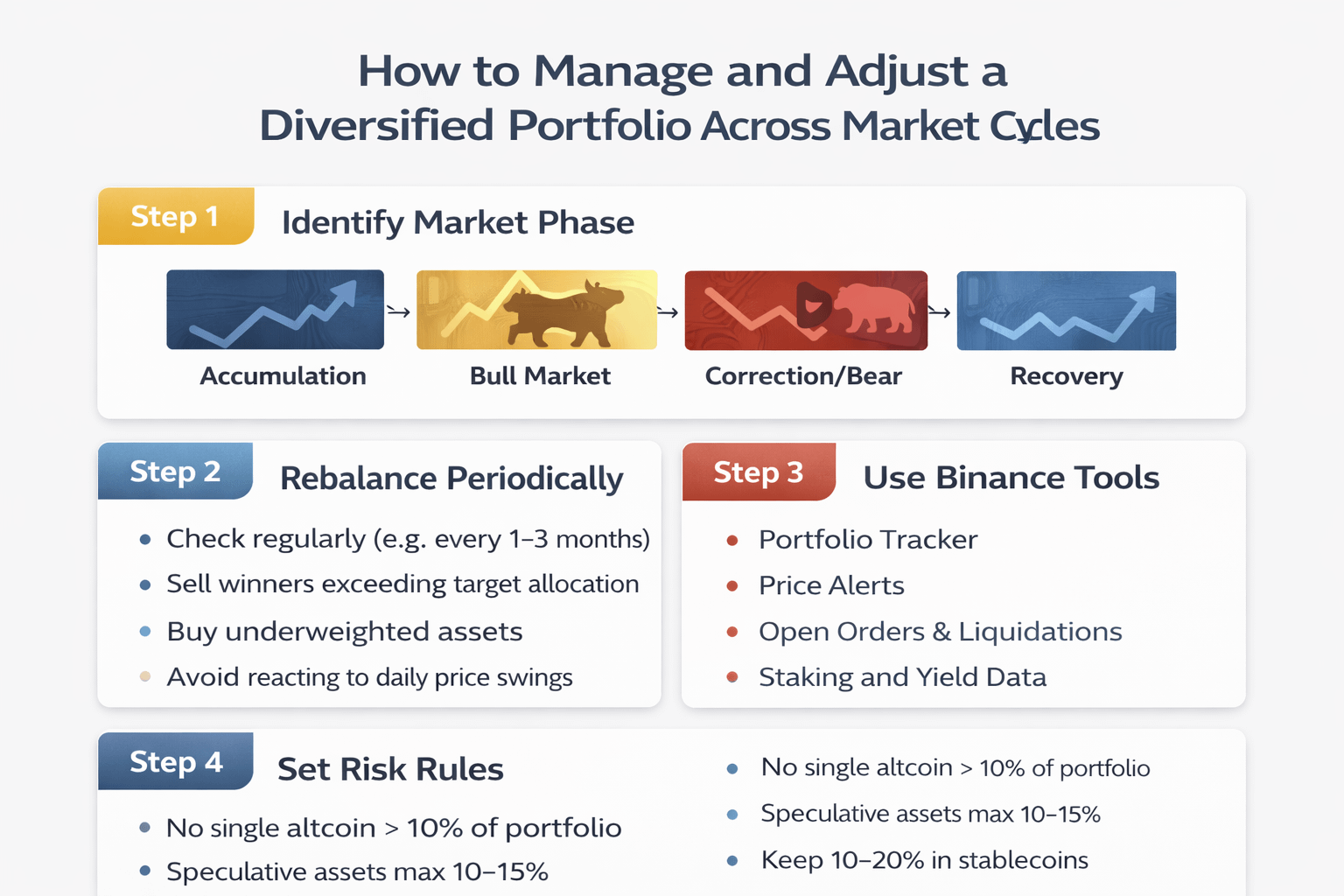
𝗦𝘁𝗲𝗽 𝟭: 𝗜𝗱𝗲𝗻𝘁𝗶𝗳𝘆 𝗠𝗮𝗿𝗸𝗲𝘁 𝗣𝗵𝗮𝘀𝗲
● Accumulation: Stable or slowly rising → focus on core assets
● Bull Market: Prices rally → gradually increase mid/small-cap exposure
● Correction/Bear: Prices drop → secure profits, increase stablecoins
● Recovery: Prices stabilize → buy undervalued assets, long-term hold
𝗦𝘁𝗲𝗽 𝟮: 𝗥𝗲𝗯𝗮𝗹𝗮𝗻𝗰𝗲 𝗣𝗲𝗿𝗶𝗼𝗱𝗶𝗰𝗮𝗹𝗹𝘆
● Check regularly your portfolio
● Sell winners exceeding target allocation
● Buy underweighted assets
● Avoid reacting to daily price swings
Example: BTC grows to 40% in an aggressive portfolio → sell some to restore allocation. ETH drops to 15% → buy more to reach target.
𝗦𝘁𝗲𝗽 𝟯: 𝗨𝘀𝗲 𝗕𝗶𝗻𝗮𝗻𝗰𝗲 𝗧𝗼𝗼𝗹𝘀
● Portfolio Tracker: It help you see allocation per token in % and USD
● Price Alerts: Help you set buy/sell triggers
● Open Orders & Liquidations: Monitor stress in derivatives markets
● Staking and Yield Data: Allocate idle stablecoins to earn interest
𝗦𝘁𝗲𝗽 𝟰: 𝗦𝗲𝘁 𝗥𝗶𝘀𝗸 𝗥𝘂𝗹𝗲𝘀
● No single altcoin > 10% of portfolio
● Speculative assets max 10–15%
● Keep 10–20% in stablecoins
● Avoid high-leverage trades during volatile periods
𝗦𝘁𝗲𝗽 𝟱: 𝗥𝗲𝗽𝗲𝗮𝘁 𝘁𝗵𝗲 𝗣𝗿𝗼𝗰𝗲𝘀𝘀
● Identify market phase → adjust allocations
● Rebalance quarterly → maintain targets
● Use tools → monitor without emotion
● Stick to risk rules → avoid panic decisions
To summarize, building a diversified crypto portfolio is about preparing for both growth and uncertainty. By balancing large-caps, mid-caps, small-caps, and stablecoins, and by managing allocations based on market cycles, you can capture upside without being blindsided by volatility. Use tools, follow clear rules, and stay disciplined over time, your portfolio adapts to market swings, protects capital, and maximizes growth potential.