
There is a quiet ache most of us don’t talk about.
It lives in the hours we’ve poured into games, in the skins we’ve unlocked, in the characters we’ve built, in the digital art we’ve admired but never truly owned. We’ve invested time, emotion, identity — and yet, at the end of the day, so much of it belongs to someone else. A server. A company. A closed system that can disappear with a single policy change.
That unspoken ache is where Vanar Chain begins.
Not with hype. Not with noise. But with a simple question: what if the digital world finally respected your presence in it?
For years, blockchain promised freedom. Ownership. Decentralization. Big words. Powerful words. But for most people, it felt distant. Complicated. Technical. A world built for those fluent in wallets, seed phrases, and gas fees — not for the everyday gamer, the brand enthusiast, the casual collector.
Vanar feels different because it doesn’t begin with technology. It begins with people.
The team behind it comes from gaming, entertainment, and global brand ecosystems — industries where emotion is currency. In those spaces, you learn something quickly: if it isn’t intuitive, it fails. If it interrupts the experience, it’s rejected. If it doesn’t feel good, it doesn’t matter how advanced it is.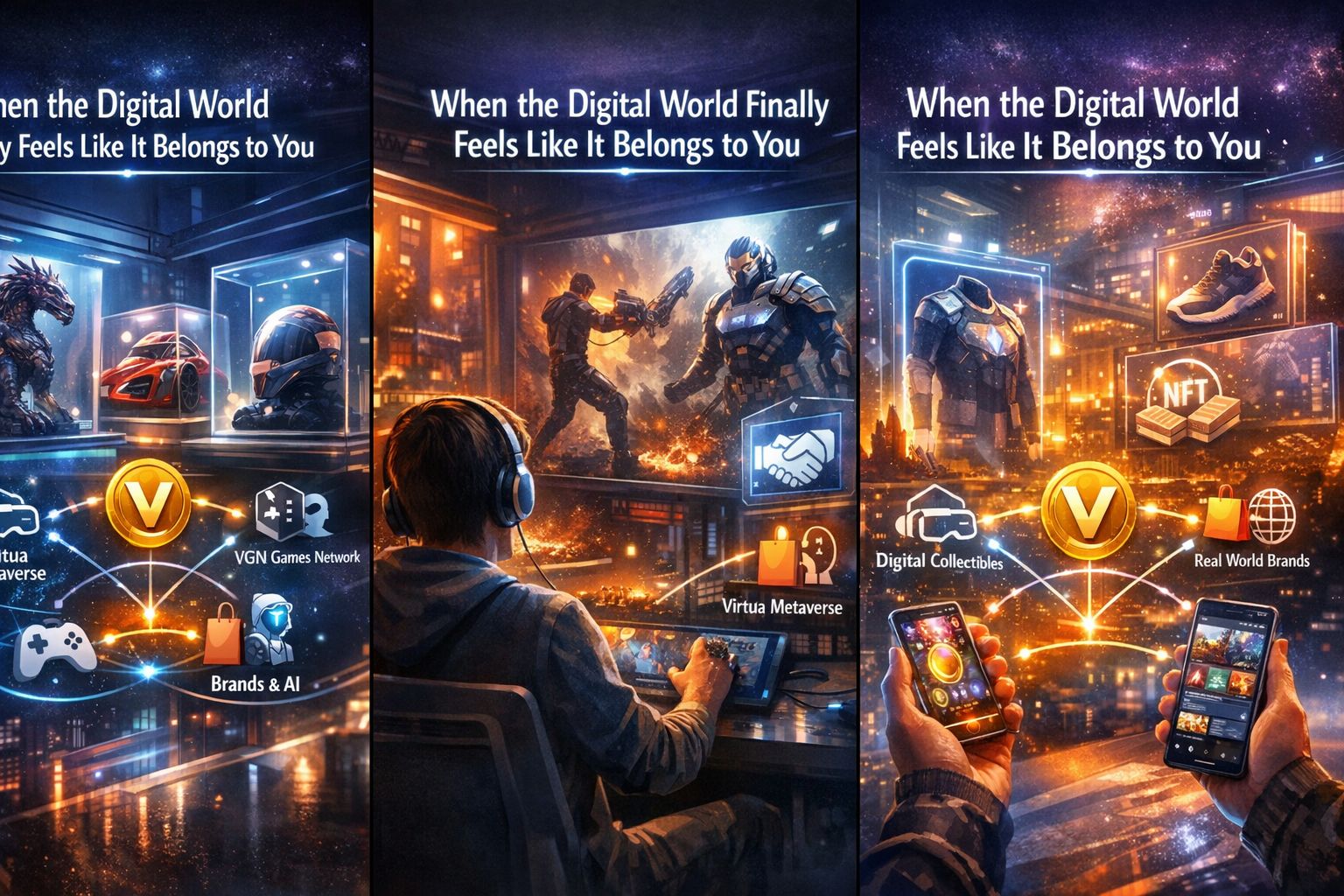
So instead of building a blockchain and hoping people adapt to it, they built one designed to adapt to people.
Think about walking through a digital space that feels alive — a place where your collectibles aren’t flat thumbnails buried in a wallet, but displayed like treasured pieces in a gallery you can explore. That’s the kind of experience platforms like Virtua Metaverse have been shaping. Not just ownership, but expression. Not just transactions, but presence.
There is something powerful about seeing what you own in a space that feels real. It transforms a digital asset into part of your story.
And then there’s play — the heartbeat of everything.
Inside the VGN games network, blockchain doesn’t scream for attention. It hums quietly in the background. You complete a quest. You earn a reward. You trade, showcase, compete. The magic happens underneath, invisible but undeniable. Transactions settle. Ownership is recorded. Value moves — and you don’t have to wrestle with complexity to make it happen.
That subtlety is intentional.
Because the truth is, most people don’t want to “use blockchain.” They want to play. To connect. To collect. To belong.
The VANRY token powers this ecosystem, but it’s more than a utility mechanism. It represents participation. It’s that small moment of confirmation when you realize something is now yours — not rented, not borrowed, not dependent on a centralized database.
That moment changes how digital interaction feels.
For some, it’s subtle. For others, it’s emotional. It’s the shift from consuming to owning. From temporary to permanent.
Vanar talks about bringing the next three billion people into Web3, but that vision isn’t about numbers. It’s about accessibility. It’s about designing systems where your grandmother could claim a digital collectible without fear, where a teenager could earn something meaningful in a game without needing a crypto tutorial first, where a global brand could create an interactive campaign that doesn’t feel like a gimmick but a genuine extension of identity.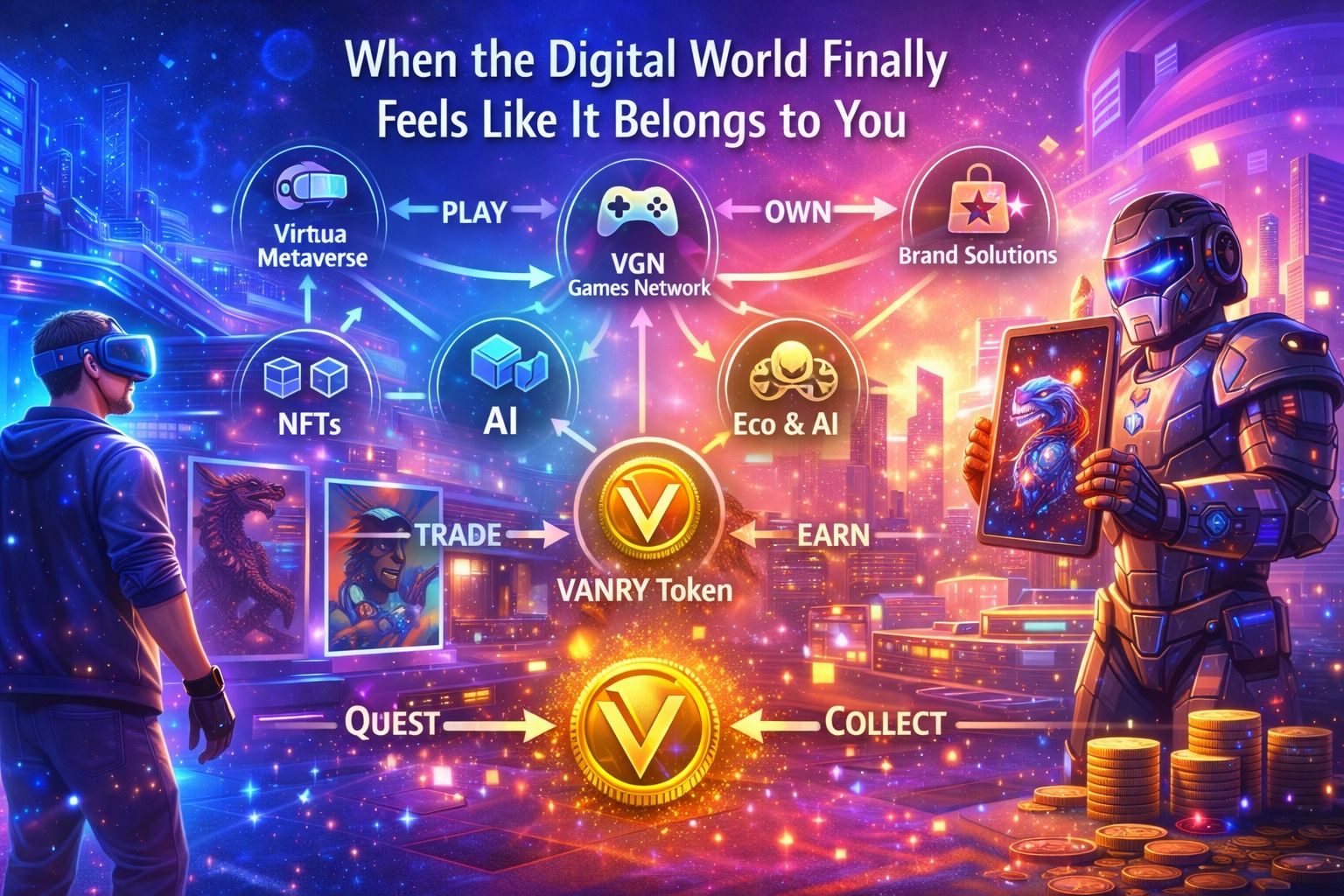
It’s about removing intimidation from innovation.
Technically, Vanar is an EVM-compatible Layer 1. It incorporates AI-focused infrastructure, cross-chain functionality, staking mechanisms, and tokenized economics through VANRY. Those are critical foundations. They ensure developers can build confidently. They ensure scalability and interoperability aren’t afterthoughts.
But the deeper architecture is emotional.
It’s the architecture of trust.
Trust that your digital asset won’t vanish overnight. Trust that your effort translates into real ownership. Trust that the technology supporting your experience is secure and sustainable.
Of course, no ecosystem is without challenges. Security audits matter. Token volatility is real. Bridges must be protected. Adoption must be earned, not assumed. The blockchain space is competitive and unforgiving. Skepticism isn’t weakness — it’s wisdom.
Yet what makes Vanar compelling is not the absence of risk, but the clarity of intention.
It doesn’t chase trends. It doesn’t market exclusivity. It doesn’t frame itself as a rebellion against the old world. Instead, it quietly integrates with it.
It meets gamers where they are. It meets brands where they operate. It meets users where they feel comfortable.
And then it gently expands what’s possible.
Imagine a world where the digital items you collect today can move with you tomorrow. Where your achievements aren’t locked inside one platform. Where brands collaborate with communities not just as audiences, but as participants. Where artificial intelligence enhances personalization without stripping ownership away.
That’s the direction Vanar gestures toward.
Not a loud revolution. A gradual awakening.
If it succeeds, most users may never think about consensus mechanisms or validator nodes. They won’t debate token standards. They won’t analyze protocol layers. They will simply feel something different.
They will feel that the digital spaces they inhabit recognize them.
And perhaps that is the true shift Web3 was always meant to deliver — not complexity, not speculation, not exclusivity, but dignity.
The dignity of ownership. The dignity of participation. The dignity of knowing that what you build in the digital world can, finally, belong to you.
