

Most retail traders chase noise. Smart money watches what gets built when nobody is looking. Every cycle in crypto has a moment where attention shifts from hype to infrastructure. It does not happen loudly. It happens quietly while timelines are filled with memes and short term narratives. Under the surface, the foundations for the next wave of adoption are laid. That is usually where long term positioning begins. Right now, one of the most interesting places to watch is where real users meet real infrastructure. That intersection is exactly where Vanar is positioning itself.
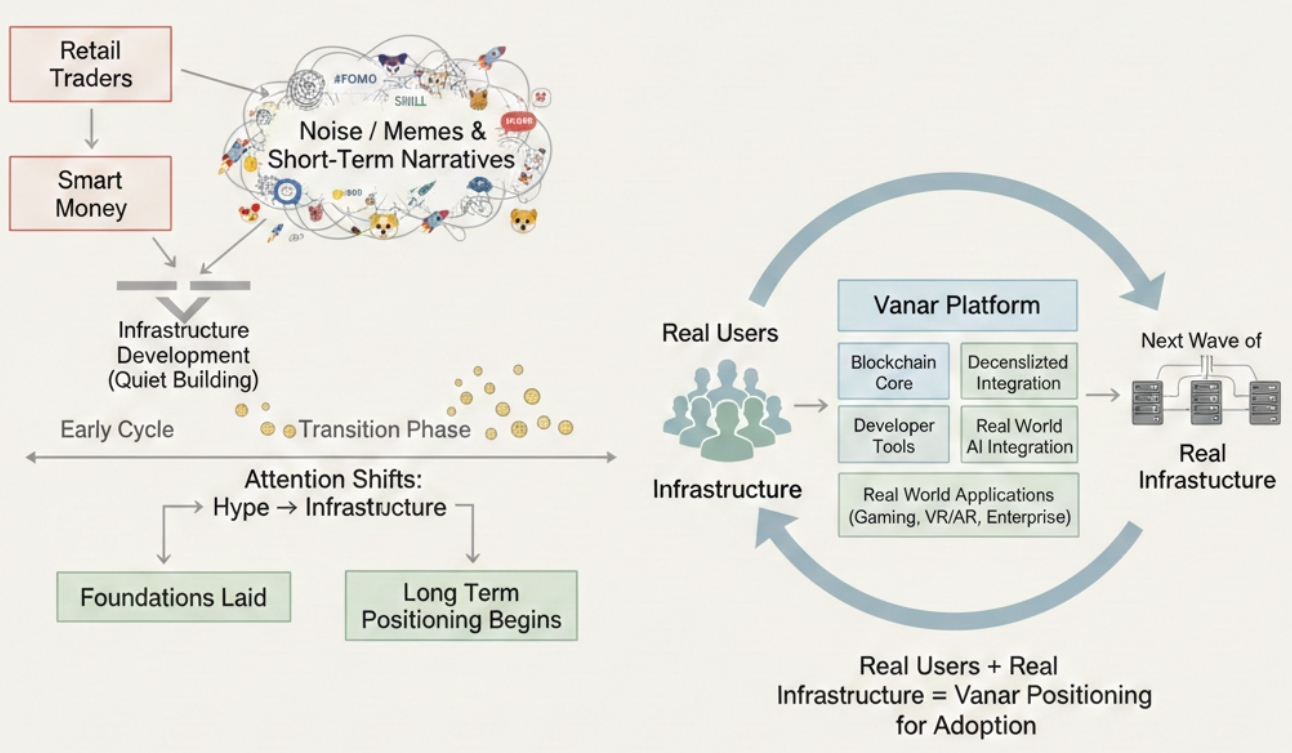
The truth is simple. Web3 does not have a user problem. It has a distribution problem. Billions of people already spend hours inside digital environments every day. They play games. They engage with brands. They interact with AI systems. They build digital identities without ever thinking about wallets or chains. These users are not waiting to be convinced about blockchain. They are waiting for blockchain to fit naturally into the experiences they already enjoy. When infrastructure aligns with behavior instead of forcing new behavior, adoption stops being theoretical and starts becoming inevitable.
Vanar is built around that idea. Instead of focusing only on traders or short term activity, the network is designed for environments where people return daily. Gaming ecosystems. Entertainment platforms. Brand driven digital spaces. AI powered interactions. These are not occasional touchpoints. They are habits. And habits create consistency. Consistency creates engagement. Engagement creates value. When that value is captured and settled on chain without adding friction, participation becomes economic activity.
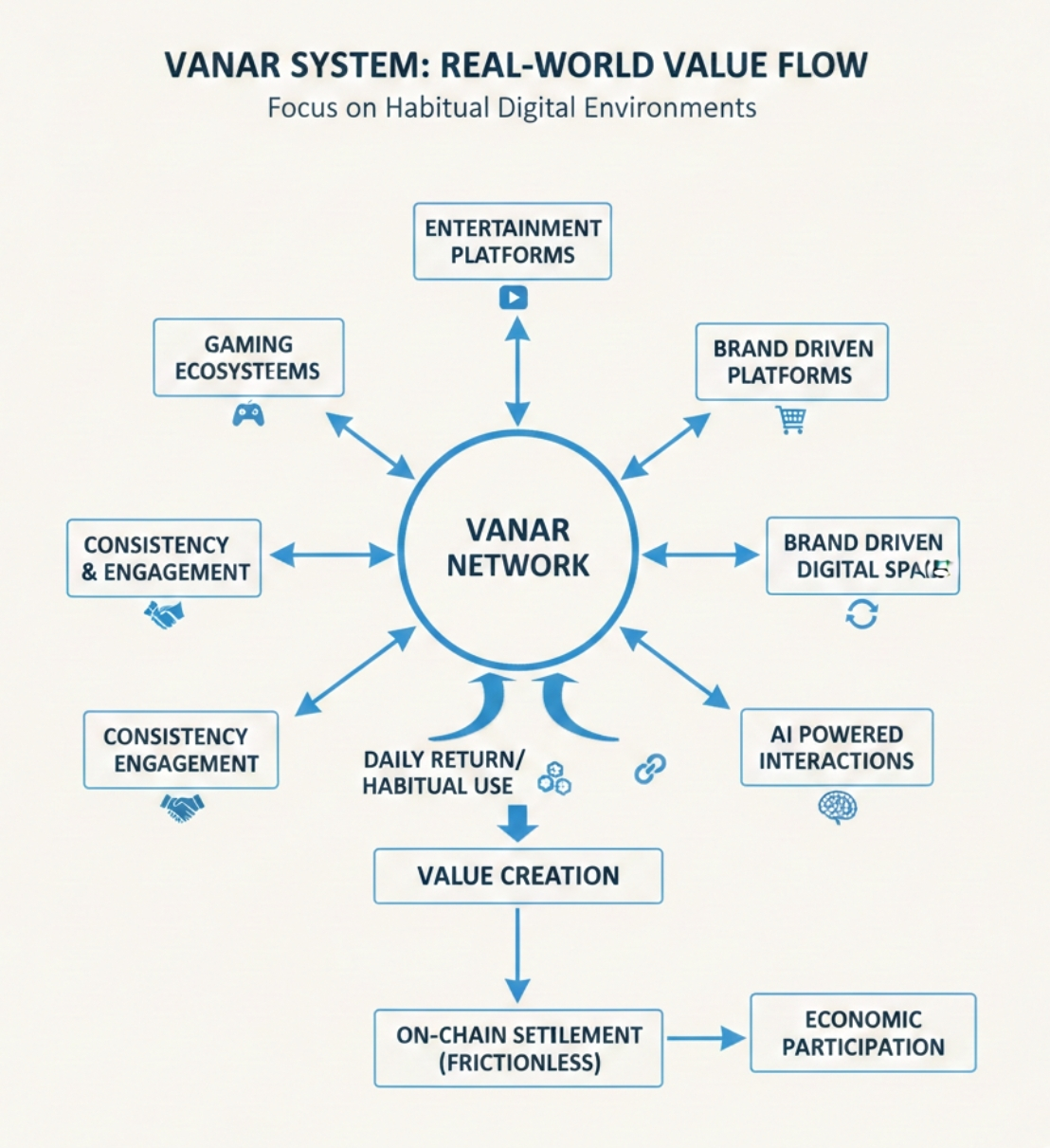
Smart money understands that the next phase of growth in crypto will not come from louder speculation. It will come from quieter integration. The biggest opportunities often sit beneath the surface while attention is elsewhere. Infrastructure that supports real usage rarely trends immediately. It grows slowly. It integrates deeply. And once it becomes embedded in daily behavior, it becomes difficult to replace. This is why serious investors track networks that focus on usability and integration rather than just speed or narrative.
Vanar’s background in gaming and entertainment gives it access to industries where user engagement is already strong. These industries operate on routine. Players log in daily. Fans engage with content consistently. Users build digital presence across platforms over time. The value generated by these interactions has always been real, but it has not always been shared. A blockchain designed for mainstream adoption can change that dynamic. If daily engagement becomes on chain activity, users are no longer just participants. They become contributors to a network that recognizes their presence.
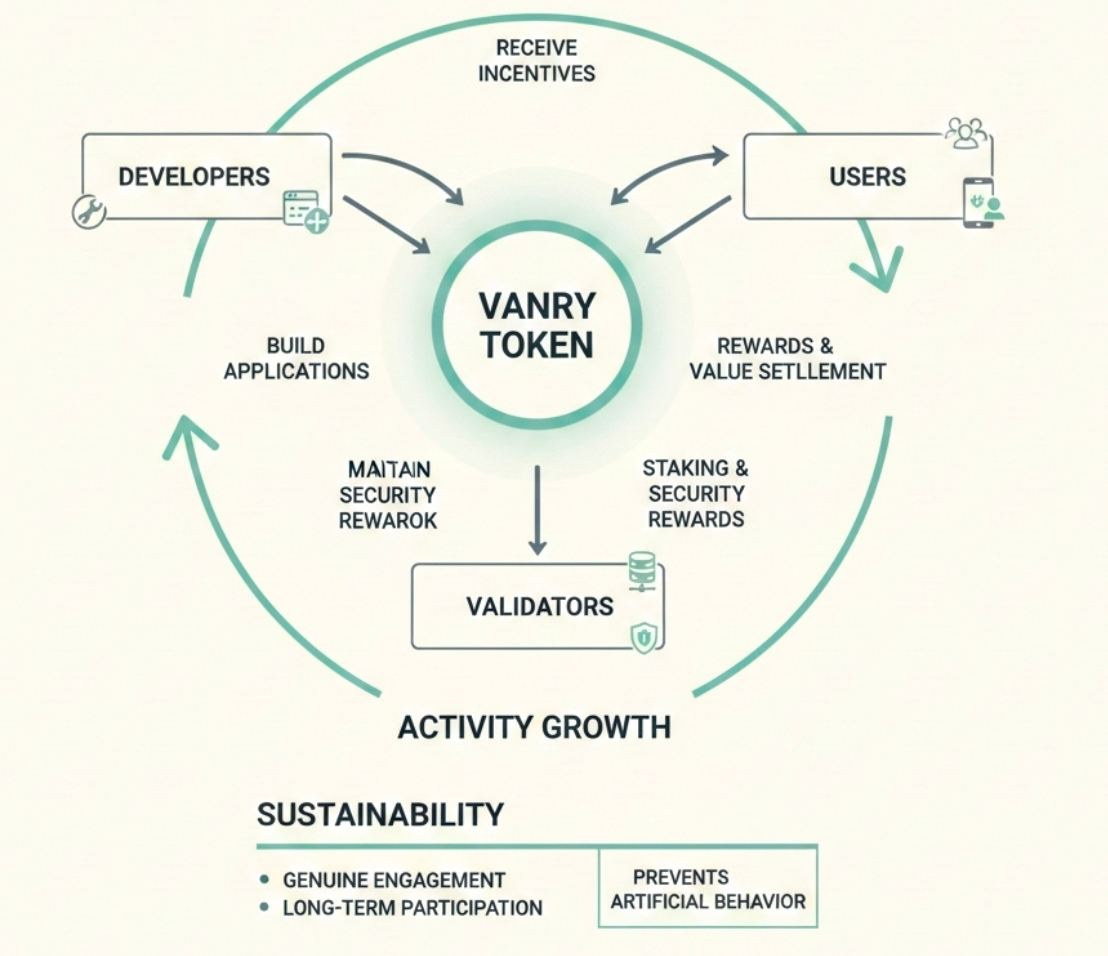
The role of the VANRY token becomes clearer within this context. In a habit driven ecosystem, the native token is not only a speculative instrument. It acts as a coordination layer. It connects developers building applications, users engaging with those applications, and validators maintaining the network. As activity grows, the token helps settle value and align incentives. The key is sustainability. Incentives must support genuine engagement rather than artificial behavior. Networks that reward meaningful participation tend to last longer than those driven purely by short term emissions.
From a market perspective, infrastructure plays a different game than hype. Hype attracts attention quickly. Infrastructure attracts users gradually. When investors focus only on short term narratives, they often miss the slower build happening underneath. The smart money approach is to identify where real usage is likely to emerge and position early. This does not guarantee immediate returns. It creates exposure to long term growth if the network successfully embeds itself into daily digital life.
There is also a psychological shift happening in the broader market. After multiple cycles driven by speculation, attention is moving toward real world use cases. Investors are asking where the next billion users will come from. The answer is unlikely to be found in trading interfaces alone. It will come from applications that people use regardless of market conditions. Games, entertainment platforms, AI tools, and brand ecosystems do not stop operating during downturns. They continue attracting users because they provide value beyond financial speculation. Infrastructure that supports these environments can capture consistent activity over time.
Timing matters. The best infrastructure plays often look quiet in the early stages. They gain traction slowly. Partnerships form. Integrations deepen. User activity builds steadily. Eventually the network reaches a point where its presence becomes obvious. By then, early positioning becomes valuable. This pattern has repeated across multiple cycles in technology and crypto alike. Networks that focus on usability and real adoption tend to create durable ecosystems.
That does not mean the path is risk free. Building infrastructure for real users requires patience. Adoption can take time. Market sentiment can shift. Competition can emerge. Investors and participants should watch actual usage metrics rather than relying solely on narrative. Growth in daily engagement, meaningful integrations, and sustained activity across applications are stronger indicators than short term price movement. Real adoption leaves traces. It appears in consistent user behavior and expanding ecosystems.
What makes this moment interesting is the broader shift in how people interact with digital environments. Users are becoming more comfortable living parts of their lives online. Digital identity, digital ownership, and digital economies are becoming normalized. If blockchain infrastructure can support these experiences without adding complexity, the transition into Web3 becomes smoother. People will not join because they want to use blockchain. They will join because they want to use applications that happen to run on it. Infrastructure that enables this transition stands to benefit.
Vanar’s positioning reflects this long term view. By focusing on real user environments and building infrastructure that integrates quietly, it aligns with where adoption is likely to emerge. The network is not trying to force users into new behaviors. It is adapting to behaviors that already exist. Over time, this approach could create a base layer of activity that feels organic rather than speculative. That kind of activity tends to be more resilient across market cycles.
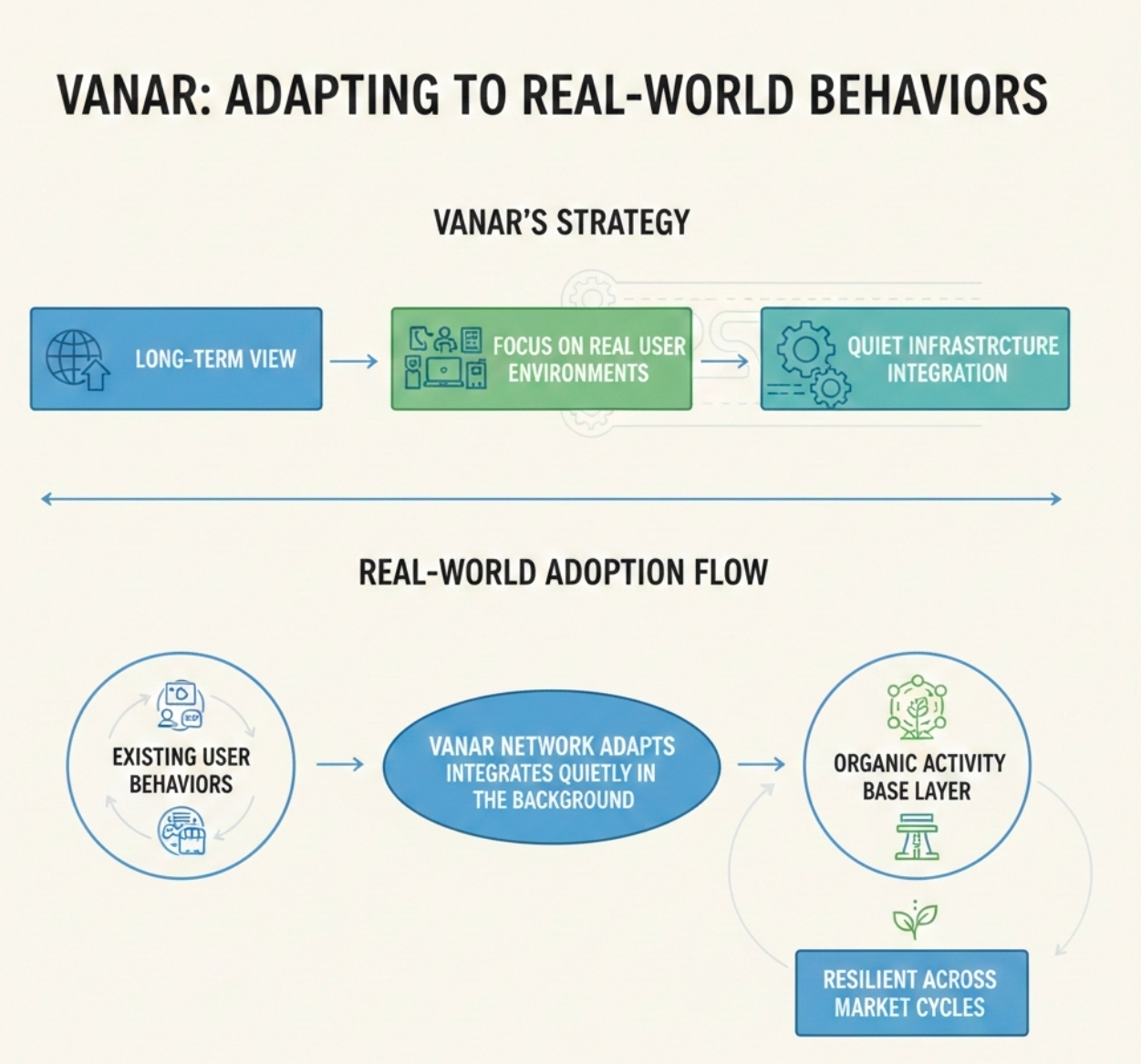
The smart money approach in crypto has always been about looking beyond immediate noise. It is about identifying where real value is being built and understanding how that value might compound over time. Infrastructure that connects existing users to on chain economies represents one of the clearest long term opportunities. As the market matures, attention will likely move toward networks that support everyday digital life rather than just trading activity.
Vanar is positioning itself within that shift. Quietly. Strategically. Focused on real users rather than temporary narratives. Whether this positioning translates into sustained growth will depend on execution and adoption. But the underlying thesis is clear. The next major wave of Web3 will be driven by infrastructure that supports real behavior. And the investors watching that infrastructure today may be the ones best positioned for tomorrow.