


Hey everyone, if you're like me, you've probably spent the last couple of years watching the crypto space evolve from clunky transactions to something that feels almost alive. But in early 2026, as we sit here in the thick of it, one project is standing out not just for its tech, but for how it's weaving AI into the very fabric of blockchain. I'm talking about Vanar Chain and its native token, VANRY. This isn't your typical hype train—it's a thoughtful build toward a world where finance isn't just digital, but truly smart. Let me break it down for you, drawing from what's happening right now and why I think Vanar is poised to make waves this year.
First off, let's get real about what Vanar Chain is. At its heart, it's an AI-native Layer 1 blockchain that's EVM-compatible, meaning it plays nice with Ethereum tools while adding a layer of intelligence that most chains can only dream of. Forget the old-school focus on sheer speed or low fees—though Vanar nails those too with high throughput and cheap transactions. What sets it apart is its five-layer architecture designed to make every app on the network "think" for itself. We're talking about turning passive data into active, queryable knowledge that adapts over time. In a market flooded with copycat projects, Vanar feels like it's actually solving problems for the next billion users, especially in areas like payments and real-world assets.
Take Neutron, their semantic memory layer—it's genius. Instead of storing data as lifeless blobs (think IPFS hashes that break or get outdated), Neutron compresses files into these compact "Seeds" using neural and algorithmic magic. These aren't just stored on-chain; they're understandable by AI. Imagine uploading a property deed, and suddenly it's not just a file—it's a searchable proof that can trigger smart contracts or validate compliance automatically. Or a PDF invoice that becomes an agent-readable memory, ready to automate payments without human intervention. This isn't sci-fi; it's live and kicking as of Vanar's AI integration launch back in January 2026. For creators and businesses dipping into Web3, this means less friction and more trust, all baked into the blockchain.
Then there's Kayon, the contextual AI reasoning engine. This is where Vanar really flexes. Kayon lets dApps analyze data on-chain, spotting patterns, predicting outcomes, and making decisions without relying on off-chain oracles or middleware. No more clunky integrations that slow things down or introduce vulnerabilities. For instance, in PayFi—Vanar's big push into programmable finance—Kayon can query live data to enforce rules in real-time, like checking regulatory compliance for tokenized assets. Picture tokenizing a real estate asset: Kayon ensures it's legit, Neutron stores it intelligently, and the whole thing happens seamlessly on Vanar Chain. It's this end-to-end stack that makes Vanar feel like the infrastructure for an "intelligence economy," where assets aren't just owned but actively managed by AI.
Speaking of developments, 2026 is shaping up to be Vanar's activation phase, moving beyond building to real-world rollout. Just last December, they teamed up with Worldpay at Abu Dhabi Finance Week to spotlight agentic payments—think autonomous agents handling transactions intelligently, bridging crypto with traditional finance. And with Saiprasad Raut joining as Head of Payments Infrastructure, Vanar's got the expertise to make this happen. Raut's background in blending fiat, crypto, and AI is a perfect fit, signaling Vanar's serious intent to tackle PayFi head-on. Upcoming layers like Axon for intelligent automations and Flows for industry-specific apps are on the horizon, promising to supercharge sectors from entertainment to finance.
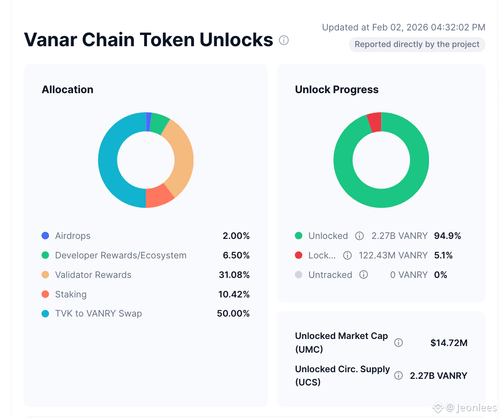
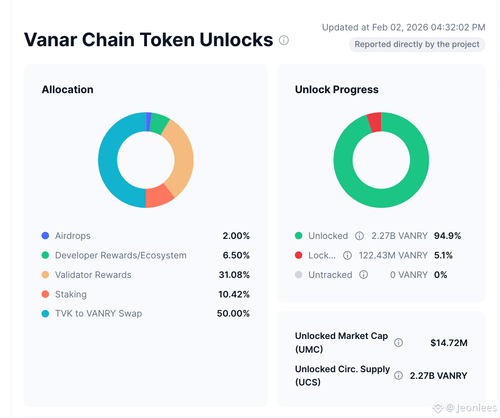
Now, let's talk VANRY—the fuel that powers it all. As the native utility token, it's not just for gas fees; it's integral to staking, governance, and ecosystem interactions. With a circulating supply around 2.29 billion and a market cap that's been hovering in the mid-teens millions USD, VANRY has room to grow. Price predictions vary, but analysts are eyeing averages around $0.013 to $0.016 by year-end, with potential highs if adoption kicks in. What's exciting is how $VANRY ties into the AI features—staking it could unlock priority access to Neutron compressions or Kayon queries, making holders active participants in the network's intelligence. In a volatile market, this utility gives VANRY a edge over pure speculative tokens.
But why does this matter in 2026? The crypto winter of the past is thawing, and with AI booming—think integrations like the one with Fetch.ai's ASI:One for context generation in myNeutron, Vanar's consumer AI product launched late last year—projects like Vanar are leading the charge. myNeutron, for example, lets users interact with AI agents that collaborate on-chain, turning abstract ideas into actionable plans. It's not just tech for tech's sake; it's about making Web3 usable for everyday folks. Whether you're a gamer building in a metaverse, a creator monetizing content via CreatorPad, or a business tokenizing assets, Vanar provides the tools without the headaches.
Of course, no project is without risks. The space is competitive, with big players like Solana or Polygon pushing scalability. But Vanar's niche in AI-native infrastructure feels underserved. Their event lineup this year—from AIBC Eurasia in Dubai to TOKEN2049—shows they're out there building partnerships and community. If they deliver on the roadmap, we could see VANRY breaking out as more dApps go live.
In wrapping this up, Vanar Chain isn't chasing trends; it's creating them. In a world where AI is reshaping everything from art to finance, VANRY and Vanar offer a blockchain that's not just fast, but forward-thinking. If you're investing or building in crypto, keep an eye here—2026 could be the year intelligent chains take over. What do you think? Drop your thoughts below, and let's discuss how Vanar fits into your portfolio.