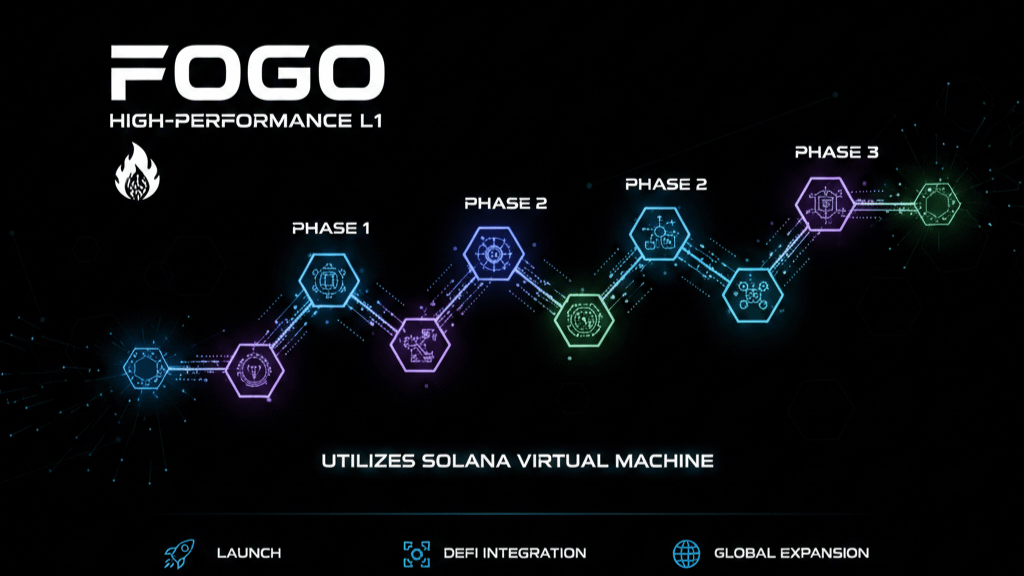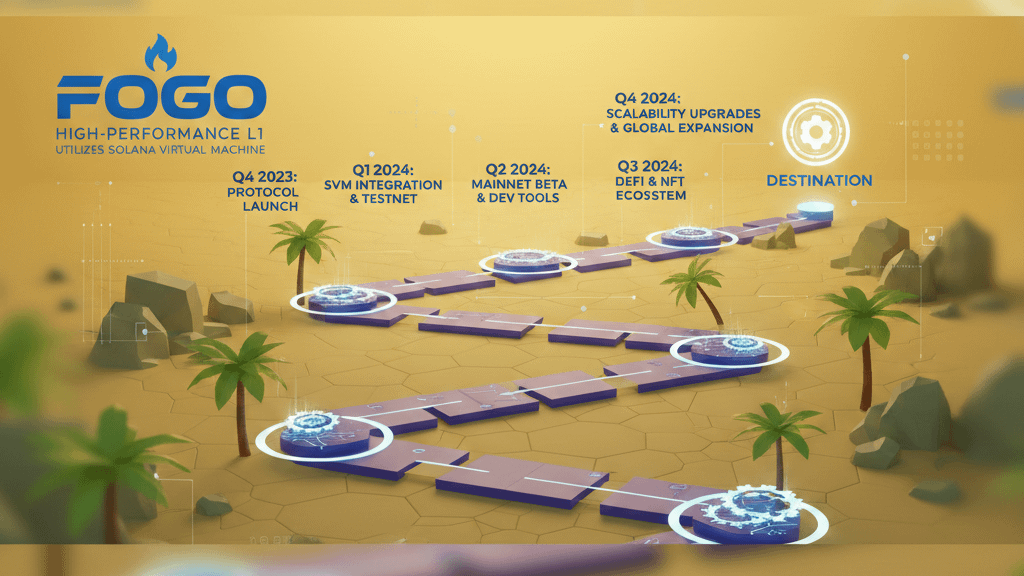
Fogo is a high-performance Layer-1 blockchain designed for traders, builders, and applications that care about reliability more than noise.
It does not try to impress with slogans or inflated promises.
Instead, Fogo focuses on something simpler and harder to achieve: making on-chain activity feel stable, predictable, and human.
This approach quietly separates it from many other blockchains.
At its core, Fogo uses the Solana Virtual Machine, often called the SVM.
This gives it access to a fast, parallel execution environment without reinventing the wheel.
But Fogo is not “just another Solana clone.”
It uses the SVM as a foundation, then builds its own philosophy and execution layer on top.
Most Layer-1s talk about speed.
Fogo talks about consistency.
Speed only matters if the system behaves the same way every time you use it.
Fogo is designed around that belief.
Why the Solana Virtual Machine Matters
The Solana Virtual Machine is known for processing many transactions at the same time.
This parallel execution model allows higher throughput than traditional sequential systems.
Instead of handling transactions one by one, the SVM can process multiple independent actions together.
This is especially useful for trading, gaming, and real-time applications.
Fogo benefits directly from this architecture.
Transactions confirm quickly and do not slow down easily under load.
But raw performance is only one part of the story.
The real advantage comes from how predictable that performance is.
Many chains feel fast when the network is quiet.
They feel very different during volatility.
Fogo is built to behave the same way even when markets get noisy.
That reliability is the real product.
Predictability Over Peak Numbers
In crypto, projects often advertise maximum TPS numbers.
These numbers rarely reflect real usage conditions.
What users and developers actually care about is consistency.
They want to know what will happen before they click a button.
Fogo prioritizes stable execution patterns over theoretical limits.
Blocks arrive on time, confirmations feel regular, and fees behave logically.
This predictability reduces stress for users.
You do not feel like you are racing the network.
For developers, this means fewer edge cases.
Apps behave more like software and less like experiments.
For traders, it means orders settle when expected.
This matters more than extreme speed.
Built for On-Chain Trading First
Fogo is designed with trading as a first-class use case.
Not as an afterthought.
On many chains, trading platforms fight the network during volatility.
Gas spikes, confirmations delay, and users lose trust.
Fogo is engineered to stay calm under pressure.
This makes it especially attractive for on-chain order books and derivatives.
Execution reliability is treated as infrastructure, not marketing.
That changes how the chain feels in real use.
Instead of reacting to congestion, Fogo is designed to absorb it.
This creates a smoother experience for both traders and protocols.
Simple Fees, Clear Behavior
Fee behavior is one of the most frustrating parts of blockchain usage.
Unpredictable fees break user confidence.
Fogo aims to keep fees understandable and stable.
Users should know roughly what they will pay before acting.
This helps applications design better user flows.
It also reduces friction for new users.
When fees behave logically, people trust the system more.
Trust leads to repeat usage.
That repeat usage is what builds real ecosystems.
Not hype cycles.
Deterministic Execution and Clean State
Fogo emphasizes deterministic execution.
This means the same input leads to the same outcome.
For developers, this reduces ambiguity.
For users, it reduces surprises.
State handling is designed to be clear and structured.
This makes integrations cleaner and debugging easier.
Ambiguity in execution is one of the biggest hidden risks in blockchains.
Fogo treats it as a core design problem.
By reducing uncertainty, the chain becomes easier to reason about.
That matters at scale.
Validator Design Focused on Stability
Fogo’s validator design prioritizes reliability over decentralization theater.
This is a deliberate trade-off.
Early networks often need discipline before openness.
Fogo leans into that reality.
Validators are selected to ensure uptime and predictable behavior.
This reduces network shocks during high activity.
Over time, the system is expected to evolve.
But stability comes first.
This approach mirrors how real infrastructure is built.
Foundations before expansion.
A Chain That Feels Calm
One of Fogo’s most unique traits is how it feels to use.
It feels calm.
Transactions do not feel rushed.
Interfaces feel responsive instead of anxious.
This emotional layer matters more than people admit.
Users sense when a system is fragile.
Fogo tries to remove that feeling.
It wants blockchain to feel boring in the best way.
Boring systems tend to last.
Exciting systems tend to break.
Designed for Real Applications, Not Demos
Many blockchains are optimized for demos and announcements.
Fogo is optimized for sustained usage.
Applications that need predictable behavior benefit the most.
This includes trading platforms, games, and financial tools.
Instead of chasing every narrative, Fogo narrows its focus.
Focus creates depth.
Depth creates reliability.
Reliability creates trust.
Developer Experience Matters
Fogo inherits the SVM developer environment.
This lowers the barrier for teams already familiar with Solana tooling.
But it also improves the execution layer around it.
This makes development smoother over time.
Clear documentation and predictable behavior reduce cognitive load.
Developers spend less time fighting the chain.
When builders enjoy working on a network, they stay.
Retention is more important than onboarding spikes.
Security Through Discipline
Security is not only about cryptography.
It is also about behavior.
Predictable systems are easier to secure.
Unexpected behavior creates attack surfaces.
Fogo’s emphasis on determinism and clarity improves its security posture.
Less chaos means fewer blind spots.
This does not eliminate risk.
But it makes risk more manageable.
A Different Philosophy for Layer-1s
Fogo does not try to win the Layer-1 race loudly.
It tries to last quietly.
Its philosophy is closer to infrastructure engineering than marketing.
This makes it less visible, but more solid.
In a market obsessed with narratives, this approach feels unusual.
But unusual does not mean wrong.
Many of the most important systems in the world are invisible.
Fogo aims to be one of them.
Long-Term Vision Over Short-Term Attention
Fogo’s design choices suggest long-term thinking.
They sacrifice short-term hype for structural soundness.
This may slow initial growth.
But it improves sustainability.
Sustainable chains outlive trends.
They become boring utilities.
That is often the highest compliment in infrastructure.
Fogo seems comfortable with that goal.
Final Thoughts
Fogo is not trying to change crypto overnight.
It is trying to make it behave better.
By using the Solana Virtual Machine and focusing on predictability,
it creates a calmer, more reliable Layer-1 experience.
In a space full of noise, Fogo chooses discipline.
That choice may define its future.