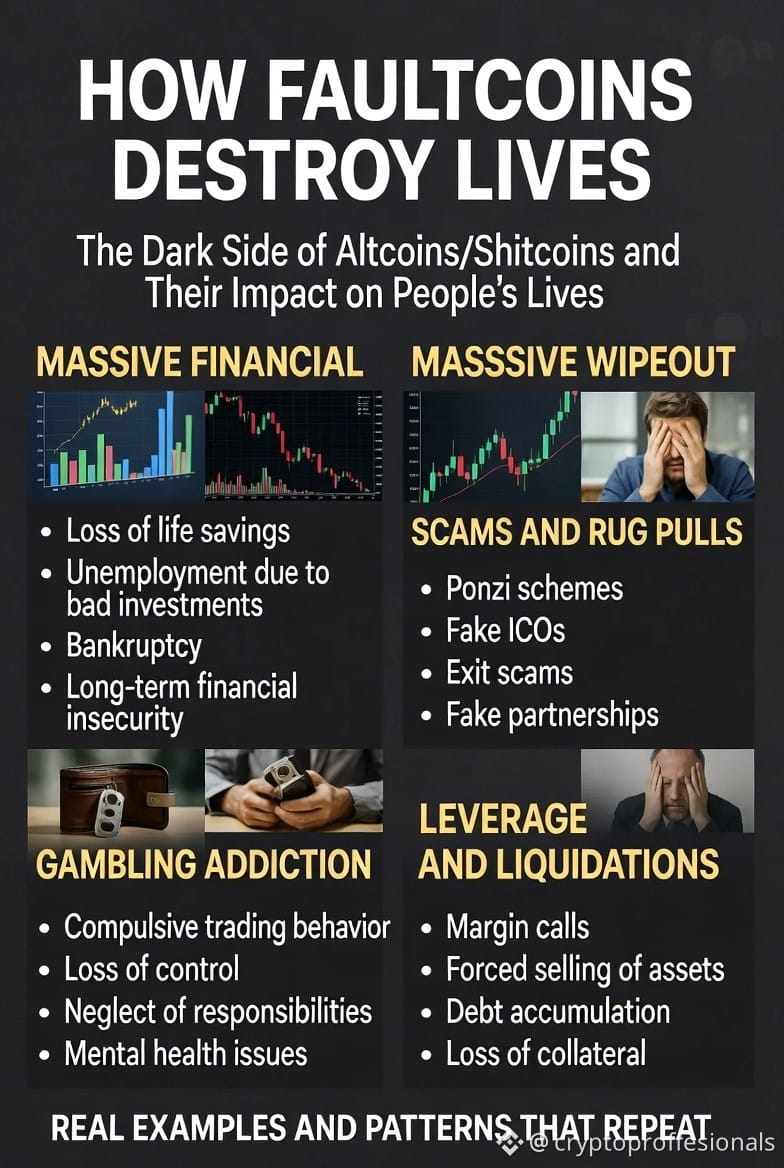
$BTC **"Faultcoins"** is slang in crypto communities for **altcoins** (any cryptocurrency other than Bitcoin) or **shitcoins** — low-quality, highly speculative tokens that critics call "faulty" because most are riddled with problems, scams, or destined to crash to near-zero.
People use the term to highlight how these coins (especially meme coins, new launches, or overhyped projects) promise massive gains but often deliver total losses, unlike Bitcoin, which has survived multiple cycles.
### How Faultcoins (Altcoins/Shitcoins) Destroy Lives
They don’t “destroy lives” on their own — people destroy their own lives by chasing them with bad decisions, greed, FOMO, or addiction. Here’s how it happens in practice:
1. **Massive, permanent financial wipeouts**
Most altcoins fail hard. Studies and market data show ~99% of altcoins either go to zero or never recover their all-time highs. In crashes, altcoins get obliterated far worse than Bitcoin (e.g., one recent bloodbath wiped ~$131 billion from the altcoin ecosystem alone).
Real examples: People put life savings, retirement money, or borrowed funds into “the next 100x” coin → it rugs, dumps 90-99%, or slowly bleeds to nothing. One viral post described someone who turned $10,000 into $1,000 in six months. In India, thousands of families have been hit by similar scams.
2. **Scams and rug pulls are extremely common**
The altcoin space is full of fraud: developers raise millions then abandon the project (rug pull), pump-and-dump schemes, fake volume on exchanges, meme coins created just to fleece retail. Up to 90% of new crypto projects have been called outright scams in some analyses.
In India alone, crypto scams have reached billions of dollars — fake apps, “guaranteed high returns” schemes, hacked wallets, and international fraud rings (e.g., Gujarat cases linked to overseas wallets). Victims lose homes, businesses, or entire savings.
3. **Gambling addiction disguised as “investing”**
Constant price checking, Twitter hype, Discord pumps → it becomes compulsive. Studies link heavy crypto trading (especially volatile altcoins) to higher depression, anxiety, loneliness, poor sleep, and financial ruin. Some treatment centers now handle “crypto addiction” alongside drugs/alcohol because the dopamine hits are similar to gambling.
Real stories: People quit jobs, ignore families, borrow heavily, then spiral into depression when the portfolio collapses. Gambling addiction has one of the highest suicide rates of any addiction — and crypto trading can trigger the same cycle.
4. **Leverage, liquidations, and debt**
Many trade altcoins on margin or futures. A 10-20% drop wipes out leveraged positions. Record liquidations (billions in a single day) hit altcoin traders hardest. People end up in debt, selling assets, or worse.
5. **Life disruption and opportunity cost**
- Quitting stable jobs to “trade full-time.”
- Family fights over lost money.
- Mental health collapse from watching numbers 24/7.
- Missing out on real investments (stocks, property, skills) while chasing moonshots.
### The Pattern That Repeats
Bull market → FOMO into hyped altcoins/meme coins → prices pump on hype and leverage → insiders/early buyers dump → retail left holding bags → bear market → most coins go to zero or near-zero → repeat next cycle. Bitcoin usually survives and recovers; “faultcoins” usually don’t.
### Bottom Line (Especially for India)
If you or someone you know got burned by altcoins, it’s painfully common. The coins themselves aren’t magic — they’re high-risk speculation in a largely unregulated space full of predators. The destruction comes from treating them like a get-rich-quick scheme instead of gambling with money you can afford to lose entirely.
**Protect yourself**:
- Stick mostly to Bitcoin (proven survivor).
- Never invest more than you can lose.
- Avoid leverage on altcoins.
- Ignore hype, Telegram groups, and “guaranteed returns.”
- If it’s already destroying your mental health or finances — stop, seek help (there are crypto addiction resources now), and focus on real income.
Crypto has created millionaires, but “faultcoins” have also created far more broke, depressed, and regretful people. The difference is almost always risk management and not falling for the fantasy.