
Fogo is easiest to understand if you stop looking at it as “another chain” and instead look at how it handles execution. After spending time reading through its architecture and observing how developers interact with it, what stands out is not branding or narrative, but the emphasis on stable performance under load. That focus shapes almost everything around @Fogo Official and its design decisions.
At its core, Fogo is a Layer 1 built around the Solana Virtual Machine. The choice is practical. SVM already has a developer base, tooling, and a known execution model. By building around it, Fogo avoids reinventing the programming environment and instead concentrates on how transactions are processed and finalized. If you think of execution layers like highways, SVM is the vehicle standard, while Fogo tries to widen and manage the road so traffic flows more predictably during peak hours.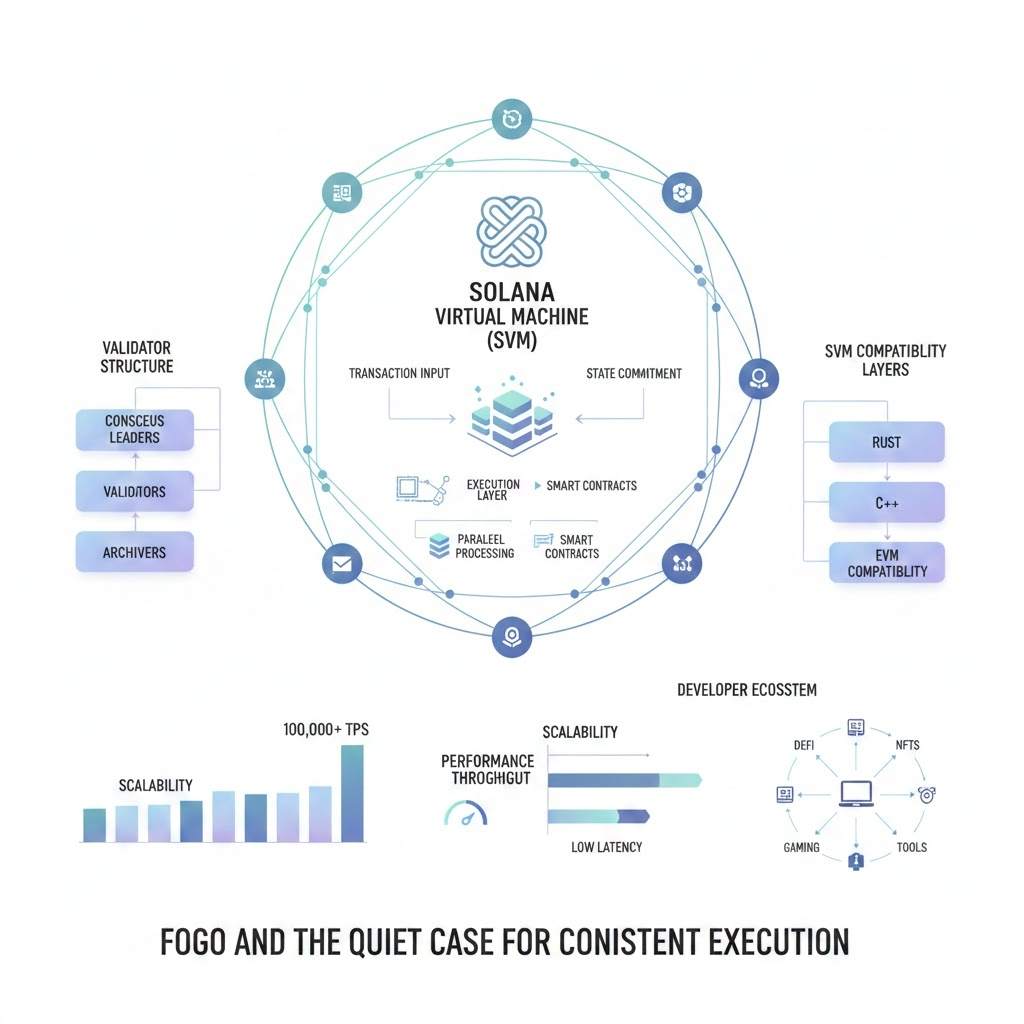
The goal appears less about maximum theoretical throughput and more about reducing variance. Applications that depend on timing, such as trading systems or onchain games, care not just about speed but about consistency. Sudden congestion is often more damaging than slightly lower top speeds. Fogo’s architecture leans into that idea, attempting to provide smoother execution patterns rather than headline numbers.
Compatibility with existing SVM tools also matters. Developers can port applications with fewer adjustments, which lowers friction. That practical approach gives $FOGO a clearer role in the broader ecosystem: it is infrastructure optimized for execution, not a narrative experiment.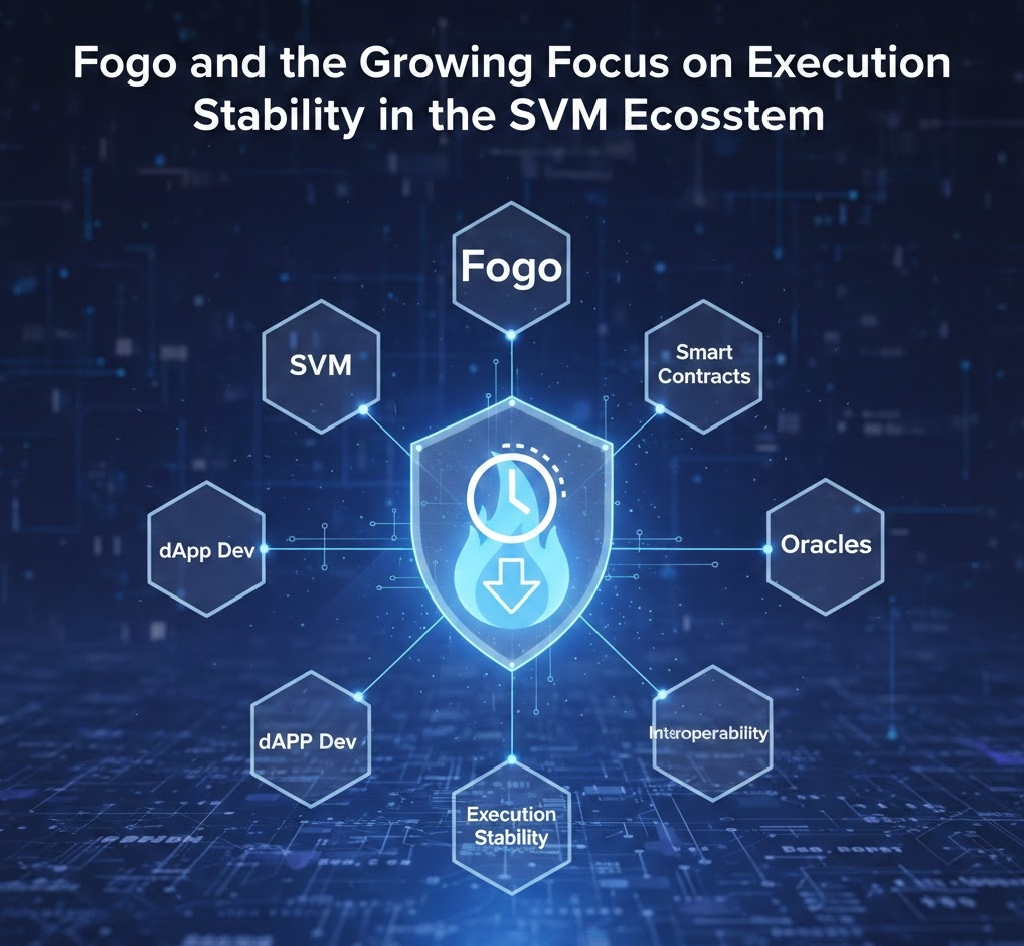
Still, competition among SVM-based chains is real. Differentiation becomes subtle, and validator distribution over time will shape long-term resilience. Ecosystem depth also takes time to mature.
For now, #Fogo sits in an interesting position, not loud, but deliberate. Sometimes infrastructure is most valuable when it simply works.
