

Here is something that nobody who is, into cryptocurrency wants to admit: your favorite Layer-1 is not slow because the people who made it did a job. It is slow because it acts like the world is smaller than it really is. Your favorite Layer-1 is not slow because of code it is slow because it pretends the planet is smaller than it actually is.
The speed of light does not have a plan. It just keeps going and going. The speed of light is really fast. It does not need a roadmap to tell it where to go. The speed of light is, like that because it is a part of the universe and it just moves quickly. The speed of light has no roadmap because it does not need one. The speed of light is fine the way it is.
I worked on L1 architectures for weeks before I found Fogo and the difference was really clear away. Most other projects focus on making the software better. They try to make the compilers better run things at the time and redesign the mempool.. Fogo does things differently. It starts with a question that most teams do not think about: how fast can information actually move between the machines that keep this network safe? Fogo is, about this question. I mean Fogo really makes you think about how fast information can travel between these machines.
That question changes everything. Light that goes through a fiber optic cable moves really fast 200,000 kilometers per second. Now imagine a computer in Tokyo talking to another computer in New York. It takes least 67 milliseconds for the message to go back and forth. This happens before the computer even starts to run the code that makes sure everyone agrees. Most other systems do not think about this delay. They write about their systems as if the computers are just floating in space and do not have any weight. Fogo thinks about the computers as machines that are attached to the ground in specific places, on the earth.
Why Averages Are the Enemy of Finality
This is where things get really interesting. The final decision is not made by the validator that works the fastest. It is actually controlled by the one. Every chain that is used around the world has a problem that is not immediately obvious. The difference, between how well it usually works and how badly it works when it is really busy. When the networks get very busy this problem does not get better. The Bitcoin. Other globally distributed chains like it have this issue. The problem actually gets much worse.
Fogos Multi-Local Consensus is a deal because it makes the group of validators that are actually working much smaller. This means that of having validators all, over the world Fogos Multi-Local Consensus puts them in special areas where they can talk to each other really fast. We are talking about messages being sent in a few milliseconds.
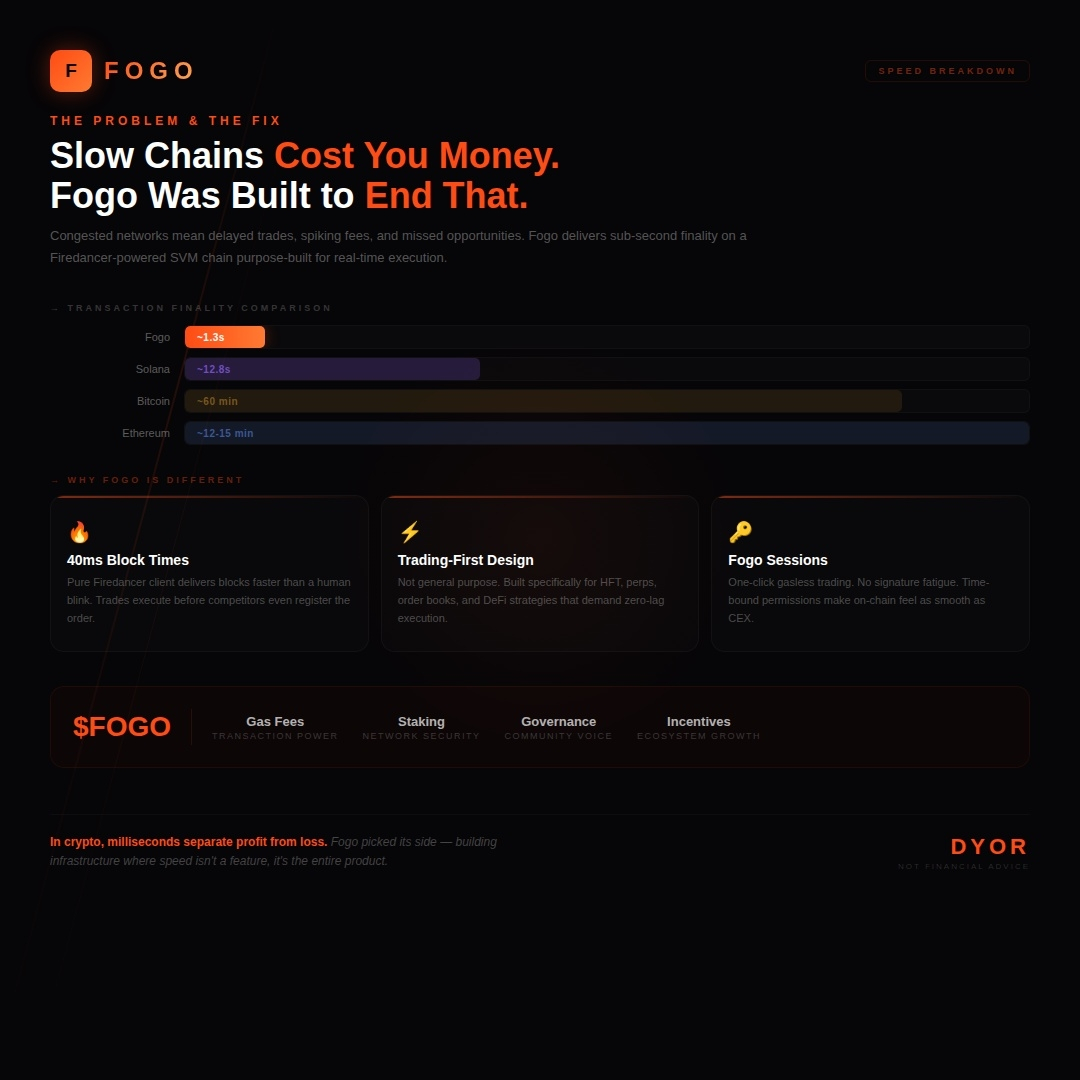
The result of this is not some number that sounds good on a presentation. It is actually a 40ms time to create a new block.. The best part is that this time does not get slower even when a lot of people are using Fogos Multi-Local Consensus at the same time. Fogos Multi-Local Consensus really does make a difference.
The tradeoff that nobody wants to talk about is a tough thing. People do not like to think about it. The tradeoff is something that we all have to deal with at some point. We have to make choices. The tradeoff is what we get in return. The tradeoff that nobody wants to discuss is very important because it affects our lives in ways. We have to consider the tradeoff when we make decisions, about the tradeoff. The tradeoff is not always easy to accept. It is a part of life and we have to learn to live with the tradeoff.
People who do not like this idea will say that it is a problem that the validatorsre all in one place and they are right to say that. It is a problem that the validators are concentrated in one area.. The critics are missing something important: a group of validators all over the world that can not make decisions quickly is not better than a smaller group of validators that can make decisions very quickly. Just saying that something is decentralized does not help the people who are using it. What really helps people is when the system works well and is reliable. The validators being, in one place is a problem. It is also important that the system is reliable and works quickly. Decentralization of the validators is not what matters most what matters most is that the validators can deliver results quickly and that the system is reliable.
Fogo is very clear about the tradeoffs it makes. It has a system where every part of the network has to meet standards for how fast it works. If a part is too slow it gets replaced. This is not against the idea of decentralization it is just making sure that the important parts of the network work well. Fogo is like a team that makes sure everything runs smoothly. You would not want the internet connection to determine how fast everyone elses connection is. So why would you accept that for something important as financial transactions with Fogo? Fogo is about making sure that financial settlement, with Fogo works quickly and reliably.
SVM Compatibility Without the Congestion Inheritance
Running on the Solana Virtual Machine gives Fogo access to the Solana developer ecosystem. This includes things like contracts and tooling and liquidity pathways.. Fogo is a fully independent network. So when Solana has congestion events Fogo does not have these problems. For example when a lot of people are trying to mint something on Solana the Solana network can get very busy.. Fogo keeps making new blocks every 40 milliseconds. This is because the Fogo network is separate from Solana. Fogo has its state space. This means that Fogo is not affected by Solanas problems. They use the language but they have separate infrastructure. This separation is very important. It is worth more than most people think. Fogo and Solana are, like two systems. Fogo can keep running even when Solana is having trouble.
What Changed My Framework
I used to think that my framework was the way to do things.. Then something happened and it completely changed my framework. My framework used to be about following the rules and doing what I was told.. Now my framework is different.
My framework is about being open to ideas and trying new things. This new framework of mine is really helping me to grow and learn. I am so glad that my framework changed. My framework is still. I am excited to see where it takes me.
Some things that helped to change my framework include:
* Meeting people who had different perspectives on life
* Reading books that challenged my way of thinking
* Having experiences that forced me to adapt and grow
My framework is not the same as it used to be and I am really happy, about that. My framework is now more flexible and open to change. I feel like my framework is helping me to become a person. I am looking forward to seeing how my framework continues to evolve and change over time.
Now that I have done this research I think about L1s in a way. I do not ask about how fast the execution engine of the L1's. Instead I want to know how apart the validators of the L1 are and what happens to the finality of the L1 when the network is really busy. The thing is, most L1 projects cannot give an answer to the second question, about the L1.
Fogo is really something. It is not because Fogo figured out physics because nobody can really figure out physics.. Fogo stopped acting like physics is not a problem. A lot of companies make promises that're just not possible. So it is really great that Fogo is being honest about physics. This honesty, from Fogo is a good sign. I think it is the sign I have seen in a long time. Fogo is being truthful. That is what matters.
When we build things with rules in mind they last longer. This always happens with infrastructure that respects constraints. Infrastructure that respects constraints is better, than infrastructure that ignores them. Every single time, infrastructure that respects constraints outlasts infrastructure that ignores them.
$FOGO #Fogo #fogo @Fogo Official