Rethinking the Narrative, Let’s stop worshipping silent blockchains.
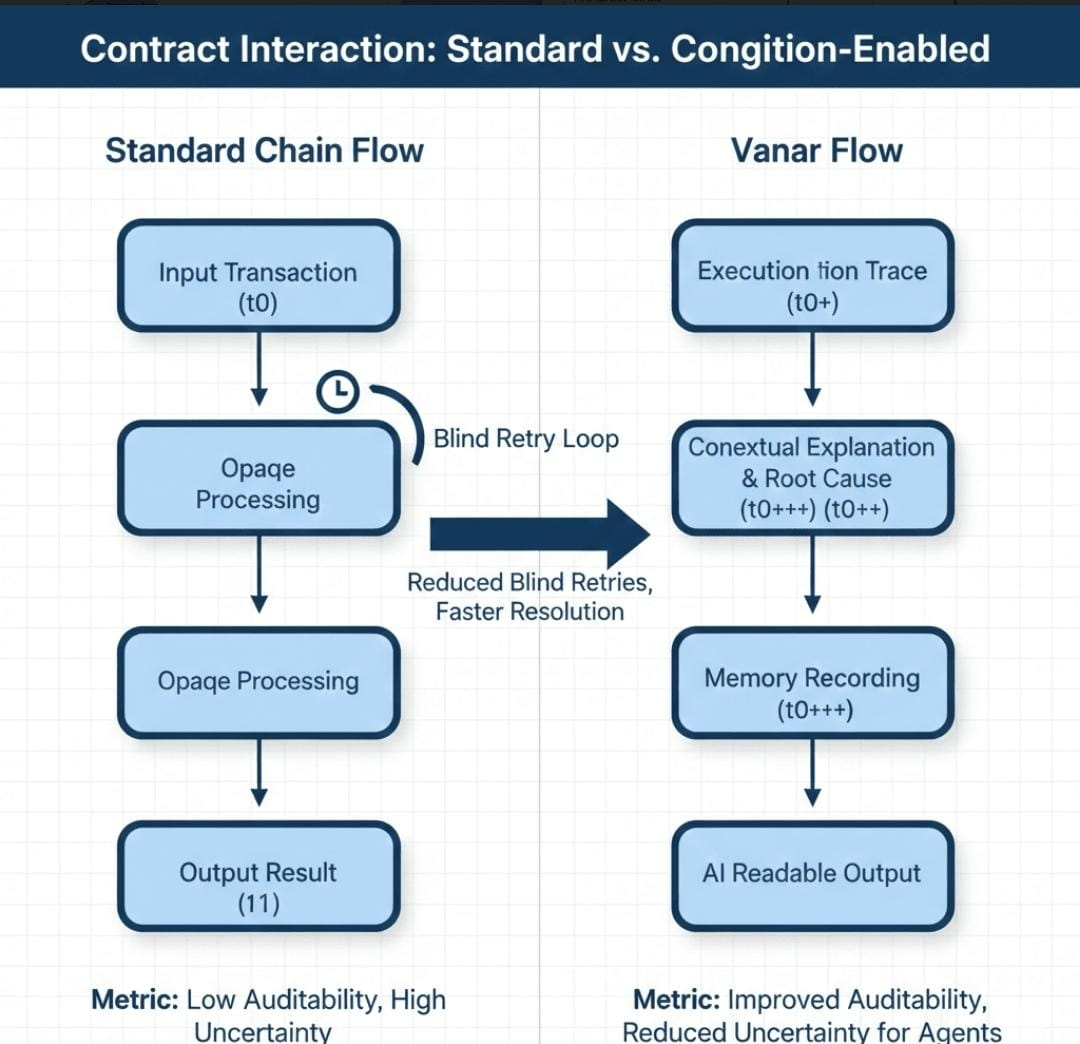
Vanar Chain isn’t flexing speed metrics anymore it’s asking a sharper question: If a chain can’t explain the contracts it runs, how can it support AI?
Most blockchains operate like black boxes. Inputs go in, outputs come out, but the reasoning in between is invisible. For humans, that’s inefficient. For AI, it’s unusable. Large-scale AI systems require context, memory, and explainability. Without those layers, on-chain intelligence hits a wall.
Vanar’s approach appears different. By embedding memory and reasoning closer to the protocol layer, the goal isn’t just execution — it’s explanation. A chain that doesn’t just confirm results, but can contextualize them.
Invisible Infrastructure
The bigger question isn’t whether Vanar can onboard the “next 3 billion.”
It’s whether those users will even realize they’re using Web3.
Normal users don’t want wallets, gas calculations, or token management. They want seamless logins, digital ownership, and predictable costs. If blockchain becomes background infrastructure like cloud hosting adoption stops feeling technical and starts feeling natural.
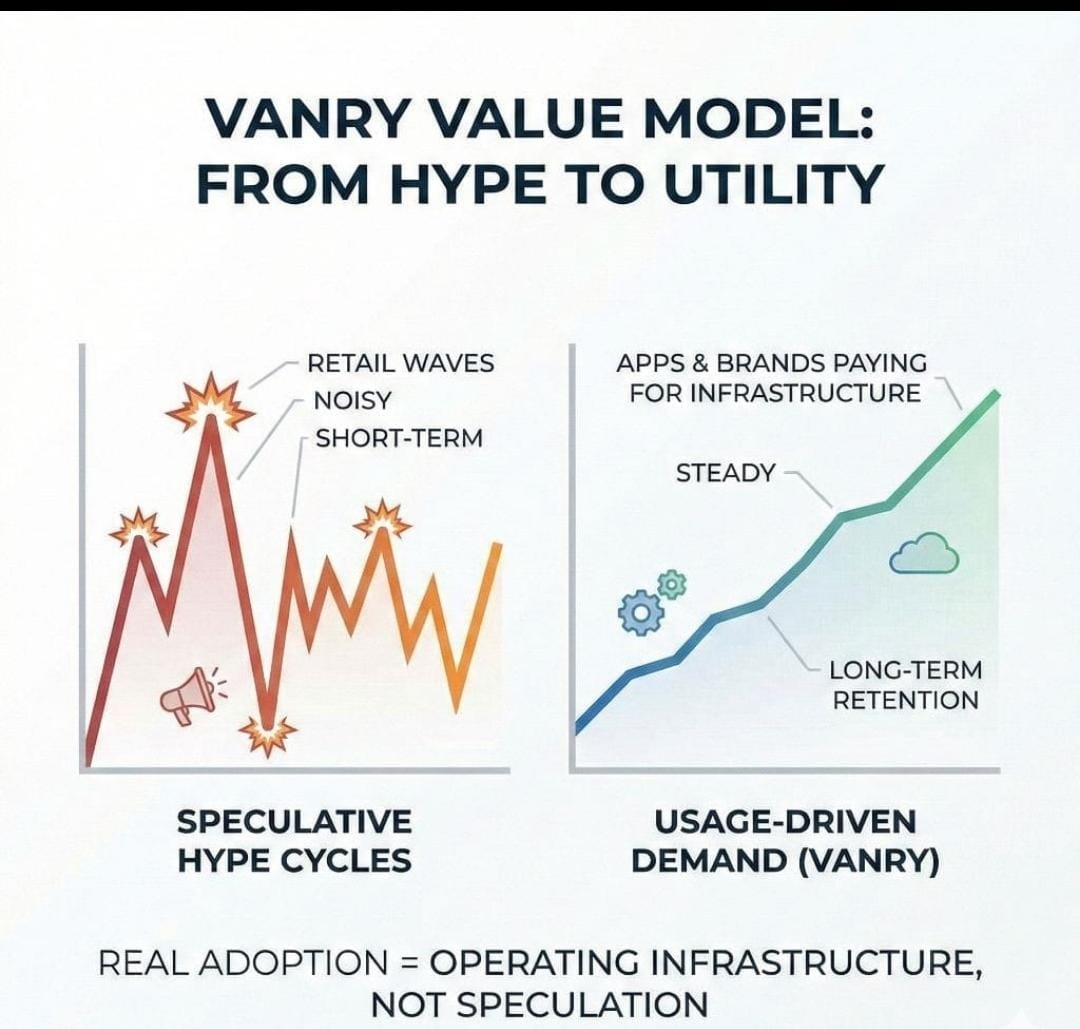
That shifts how $VANRY is evaluated. Not as hype fuel, but as operating infrastructure powering real applications.
Interoperability as Risk Discipline
Bridging $VANRY across EVM ecosystems isn’t expansion theater. It’s risk management. Execution compatibility reduces friction, but consensus predictability, validator discipline, and observability determine resilience.
True interoperability looks uneventful:
• Stable finality under stress
• Transparent monitoring and replay protection
• Controlled, backward-compatible upgrades
If successful, demand won’t be explosive — it will be steady, usage-driven, and infrastructure-backed.
And ironically, that quiet consistency is what real adoption looks like.