

Speed in blockchain discussions is often presented as a property of code. Teams talk about optimizations, better runtimes, clever pipelines, or new validator tricks. Yet when applications begin to rely on a network, a different truth appears. Performance is rarely defeated by software elegance. It is constrained by distance, coordination and the variability of real machines spread across the world.
This is where the direction of @Fogo Official becomes interesting because it starts from the constraint rather than pretending it can be abstracted away.
Every distributed system lives inside geography. Messages must travel through fiber, across oceans, through routers, into hardware owned by people with different budgets and operational standards. Therefore even if computation becomes efficient, agreement still takes time. A block cannot be accepted socially until it has been delivered physically. The slowest participant shapes the real outcome.
Many designs attempt to improve speed higher in the stack. They refine execution or compress communication. However the quorum still spans a planet. The tail still dictates the schedule. Fogo instead reduces how much of the planet is on the critical path at one time. By localizing consensus into zones and rotating responsibility, it narrows the physical distance required for agreement. As a result, fewer milliseconds are lost simply waiting.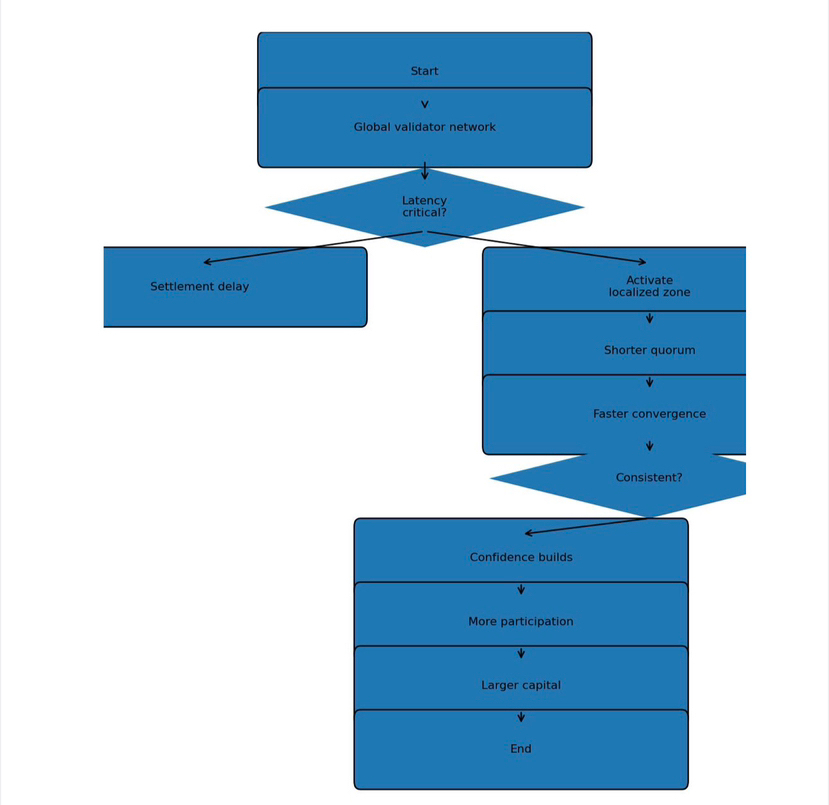
That decision sounds operational, yet its implications are economic.
Traders, market makers, and payment systems do not purchase theoretical throughput. They purchase predictability. They want to know that if they submit an action, settlement will occur inside a window they can model. When latency swings, risk models widen. When variance widens, participation becomes expensive. Therefore stability is often more valuable than peak performance.
Fogo’s relationship with the Solana Virtual Machine reinforces this. Compatibility means developers do not need to relearn the environment. Tools migrate. Programs port. Liquidity strategies can move with minimal translation. Meanwhile the validator architecture, particularly the Firedancer lineage, attempts to minimize jitter and remove inefficiencies that create outliers. If the majority of nodes behave similarly, the quorum path becomes easier to forecast.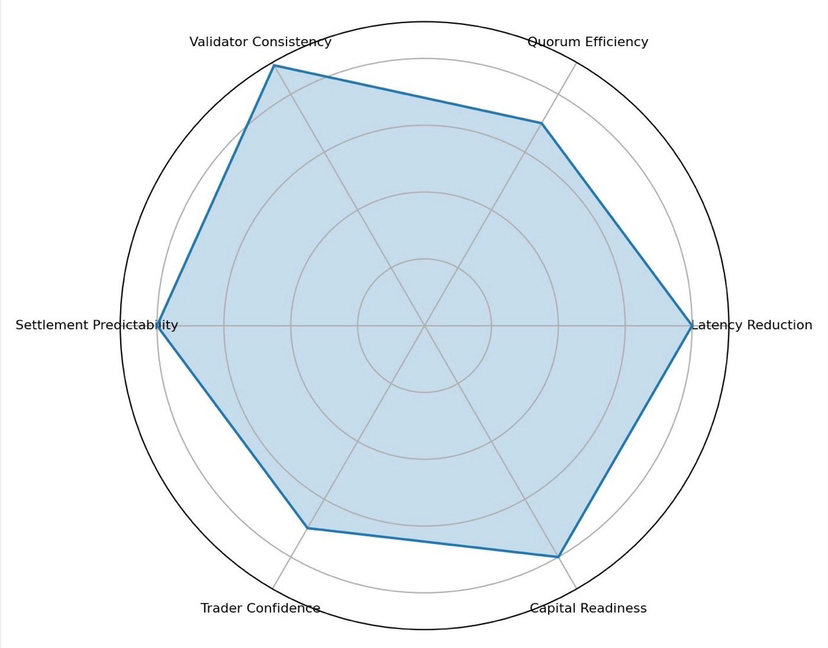
Moreover, zoning changes how we should think about global participation. Instead of every validator competing in every moment, subsets take responsibility while others remain synchronized observers. Security thresholds are preserved, yet propagation time shrinks. In practice this can mean confirmations that feel faster not because mathematics changed but because coordination became more local.
Sessions extend this philosophy toward users. Rather than forcing people to sign every action or manage gas in unfamiliar ways, temporary permissions allow applications to behave more like modern software. The user grants scope once, then interaction continues smoothly. Fees can be abstracted or sponsored. Complexity retreats into infrastructure.
As more activity follows this path, the chain begins to resemble an execution utility rather than an experimental environment.
Another important point concerns incentives. Fogo mirrors fee and inflation structures familiar to Solana participants. Half of base fees burn, half reward validators, and priority fees compensate leaders. A fixed two percent emission supports ongoing security. These numbers may not sound revolutionary, yet familiarity lowers integration friction. Economic actors prefer environments they can already understand.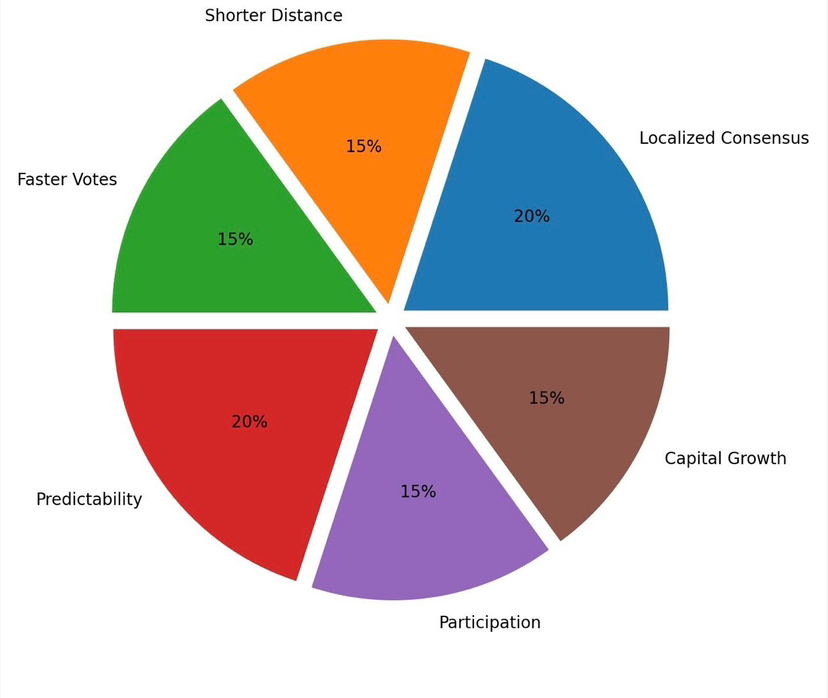
Therefore the strategy seems cumulative. Reduce physical delay. Reduce validator variance. Preserve developer familiarity. Simplify user interaction. Together these pieces attempt to make high performance sustainable rather than episodic.
My take is simple. If tokenization markets truly expand toward multi-trillion territory, capital will concentrate on networks where operational risk is measurable. Ambition alone will not attract them. Repeatable behavior will. Fogo is making a bet that confronting physics and variance directly is the cleaner path to earning that trust.