

Why Consensus Design Beats Chasing Raw Throughput
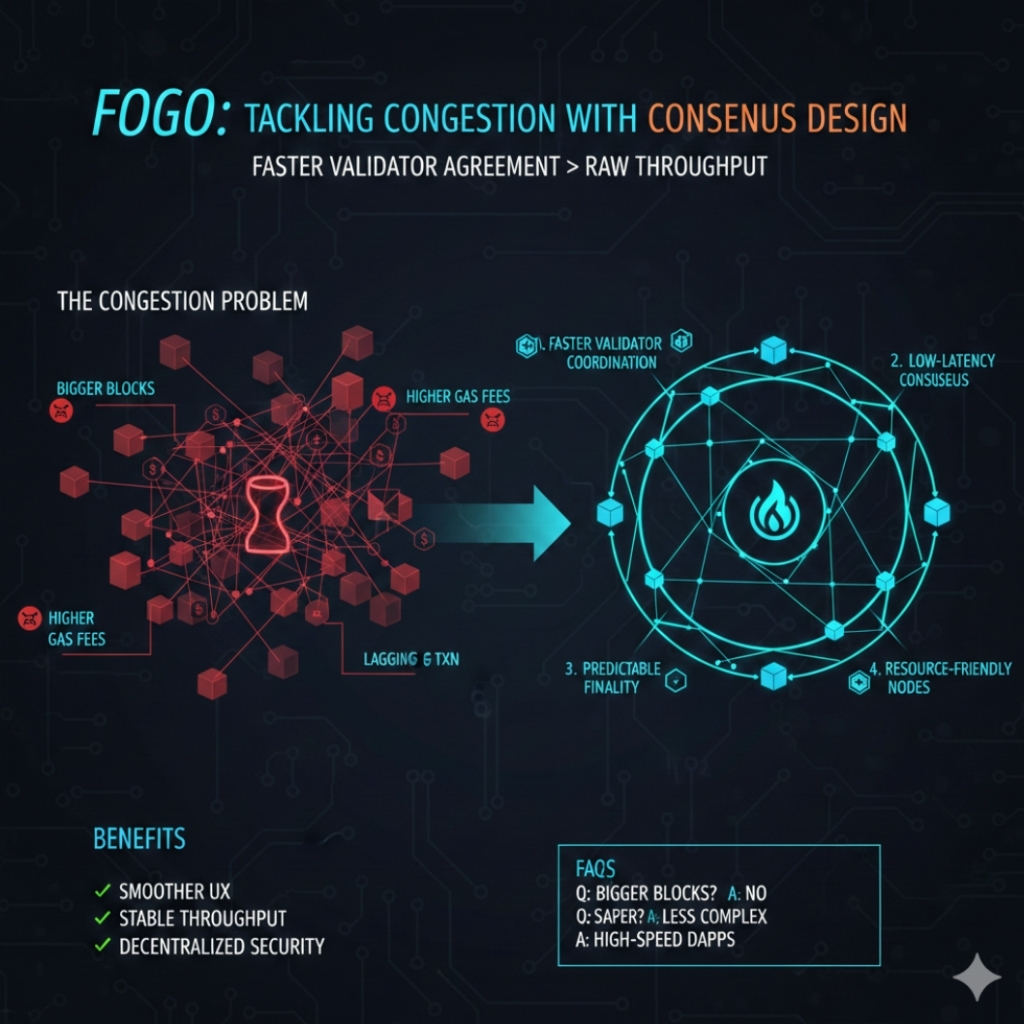
Introduction — The Congestion Problem Never Really Left
When blockchains get busy, everyone feels it. Suddenly, fees shoot up, transactions lag, and users bail on apps. As DeFi, gaming, and payments keep growing, congestion isn’t a rare glitch anymore—it’s something builders have to expect. For developers, that means angry users and money left on the table.
Core Idea — What Fogo Actually Brings
Fogo isn’t chasing bigger blocks or maxing out transaction counts. The real magic is in how it gets validators to agree quickly. Instead of stuffing more into every block, Fogo sharpens the process of reaching consensus. You get lower latency, steadier throughput, and way fewer headaches when the network’s under pressure.
Why Congestion Sticks Around
Most chains fall back on the usual fixes:
- Make blocks bigger
- Raise gas limits
- Tinker with parallel execution
But here’s the catch: bigger blocks slow things down, higher gas limits punish hardware, and parallel execution just adds new headaches. Usually, these “fixes” just move congestion somewhere else.
How Fogo Clears the Bottleneck
1. Faster Validator Coordination
Fogo cuts down on the time validators need to talk and finalize blocks. So, even if demand spikes, transactions don’t get stuck in limbo.
2. Low-Latency Consensus
The network trims the fat from consensus messaging, so there’s less overhead. That means smoother transactions and fewer hiccups.
3. Predictable Finality
Fogo locks in transaction order quickly and clearly. For DeFi and trading apps, that’s huge—no more sweating over late confirmations.
4. Resource-Friendly Nodes
The protocol runs fine without crazy hardware. More people can join as validators, which keeps things decentralized and fast.
Security Still Matters
Speed’s great, but not if you’re cutting corners. Fogo bakes in wide validator participation, clear rules for finality, and solid infrastructure. The goal? Fix congestion without blowing up security or drifting toward centralization.
How Fogo Plans to Grow
Fogo’s not just a science experiment. It’s targeting high-frequency DeFi, payments, and Web3 platforms that need a stable user experience. They’re aiming for real-world adoption, not just a flashy demo.
A Bit of History
Fogo showed up when everyone else was obsessed with “transactions per second.” Its design flips the script: instead of cramming more into each block, it’s about getting everyone to agree faster. This approach comes straight from lessons learned during past congestion meltdowns.
Turns out, congestion isn’t just a block size problem. It’s about how fast the network can agree on what’s true.
What to Watch Next (Next 3–6 Months)
- How stable the testnet stays under heavy load
- Growth in validator numbers and how spread out they are
- New dApps jumping in, especially those hungry for speed
- Real latency improvements compared to older chains
- Partnerships in payments or trading
Fogo’s betting that the next leap in scaling won’t come from raw block size, but from making consensus way more efficient. That means smoother user experiences, all without giving up on decentralization. If it works, expect other chains to follow.
Want to dig deeper? Check out Fogo’s testnet dashboards and see how it holds up under pressure.
FAQs
Q: Does Fogo just make blocks bigger to scale?
Nope. It’s all about faster validator agreement, not bulking up blocks.
Q: Is this safer than parallel execution?
It’s less complex, so it should lower risk. Real-world testing will tell the full story.
Q: Who benefits the most?
Apps that need speed—think trading, payments, and consumer Web3 stuff.
Q: Can congestion still happen?
It can, but Fogo aims to make it less painful and shorter-lived.
Q: What about decentralization?
Lighter node requirements mean more folks can run validators.
How Fogo tackles blockchain congestion by making validator coordination and consensus faster—instead of just cranking up throughput.@Fogo Official