

@Vanarchain 's Cross-Chain Availability on Base Unlocks Scale
There's a fundamental tension at the heart of building AI infrastructure on a single blockchain. You can engineer the most capable system in the world — intelligent data storage, on-chain reasoning engines, autonomous agent execution — and it still won't matter much if it's sitting on an island. And for a long time, that's exactly the problem AI-native chains faced. They were built for the future, but surrounded by emptiness.
Single-chain infrastructure creates a ceiling that's architectural, not technical. It's not that the system can't scale — it's that it's scaling in isolation. The users aren't there yet. The liquidity hasn't shown up. The developers are building somewhere else. And in crypto, where network effects determine almost everything, being brilliant on a chain nobody uses is basically the same as not existing.
This is the underlying problem that cross-chain expansion solves. Not just for #vanar , but for any AI-native protocol that wants to move from a niche experiment into actual infrastructure.
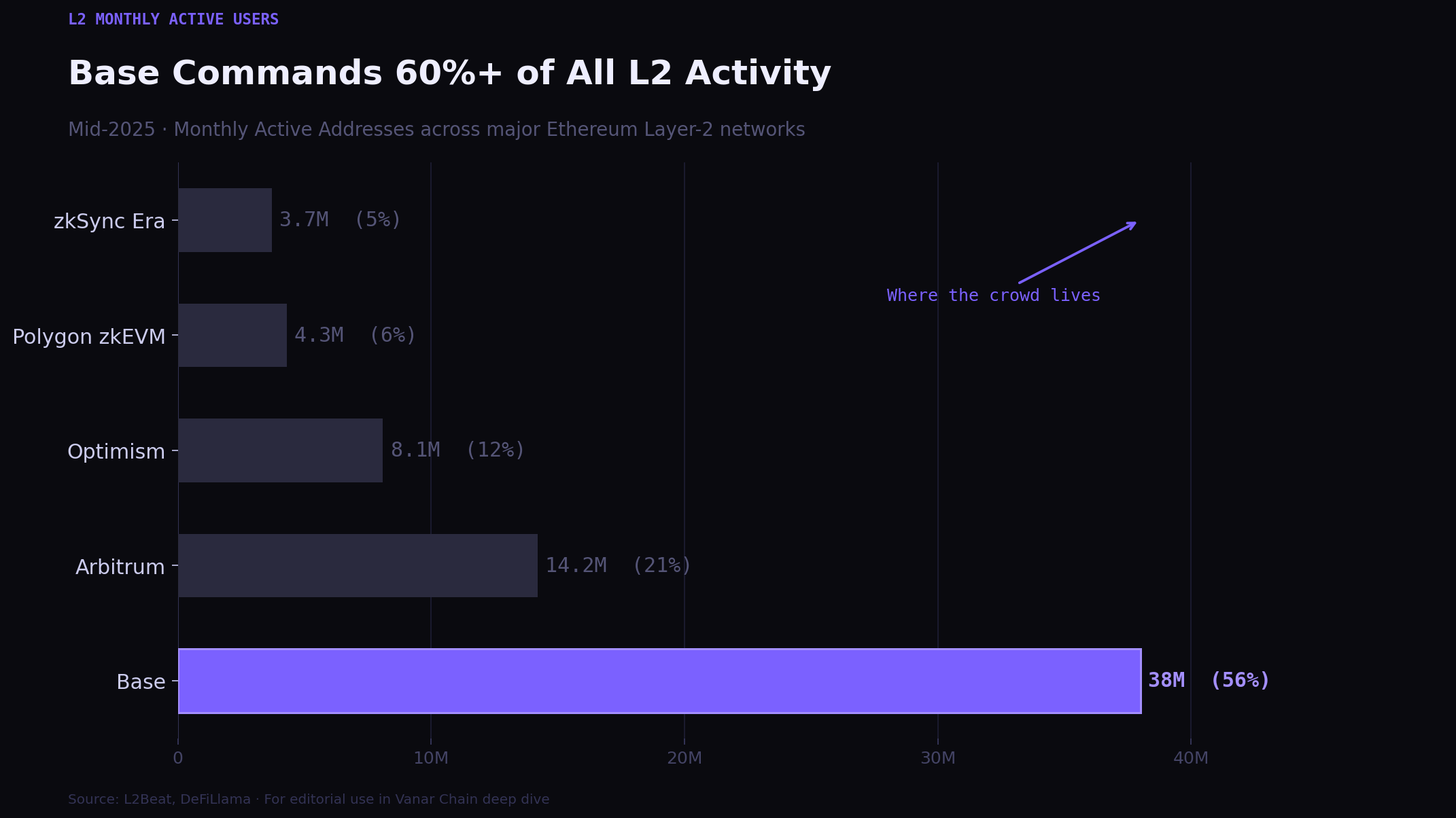
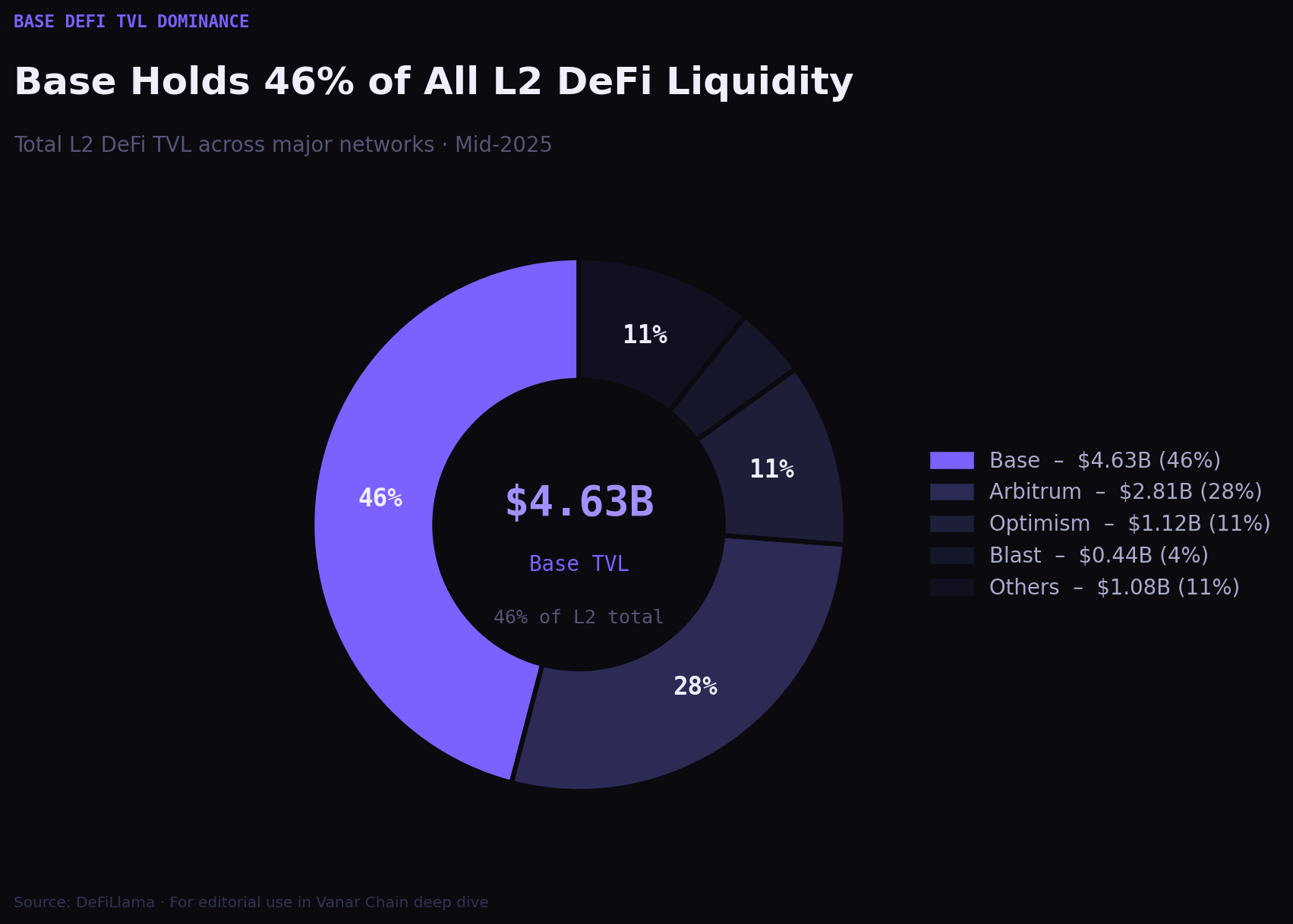
Now consider where the crowd is. Base hit roughly 38 million monthly active addresses by mid-2025, accounting for more than 60% of total Layer-2 user activity. Base's DeFi TVL reached $4.63 billion, representing 46% of the entire L2 market. The Base ecosystem has over 25,000 active developers and processes transactions at a scale that positions it among the fastest-growing Layer-2 networks in Web3. This isn't a speculative hub — it's where capital, builders, and attention have already converged. The liquidity is real. The developer activity is real. The users are real.
AI agents, by their nature, can't respect chain boundaries the way traditional dApps do. A smart contract deployed on a single chain just sits there and waits. An AI agent, on the other hand, is designed to act — to fetch data, execute decisions, trigger transactions, and interact with users wherever they are. If the infrastructure those agents run on only exists in one ecosystem, it severely limits what they can actually do in the world. The intelligence is there, but the reach isn't. It's like having a brilliant analyst who can only operate in one city and is forbidden from making phone calls.
This is exactly why multi-chain expansion starting with Base is a strategic turning point for Vanar — not an upgrade, but a fundamentally different conversation about what the network can become. Vanar has expanded to the Base chain, facilitating a direct connection between its AI-native infrastructure and one of the most active ecosystems in all of Web3.
What this unlocks, practically speaking, is access. Developers who have been building on Base — and there are tens of thousands of them — can now interact with Vanar's AI tooling without having to migrate to an unfamiliar chain. Users who have funds, familiarity, and existing on-chain activity on Base can engage with Vanar's products where they already are. And liquidity, which tends to pool wherever trust and activity are highest, can flow into the Vanar ecosystem through an entry point that's already deeply established.
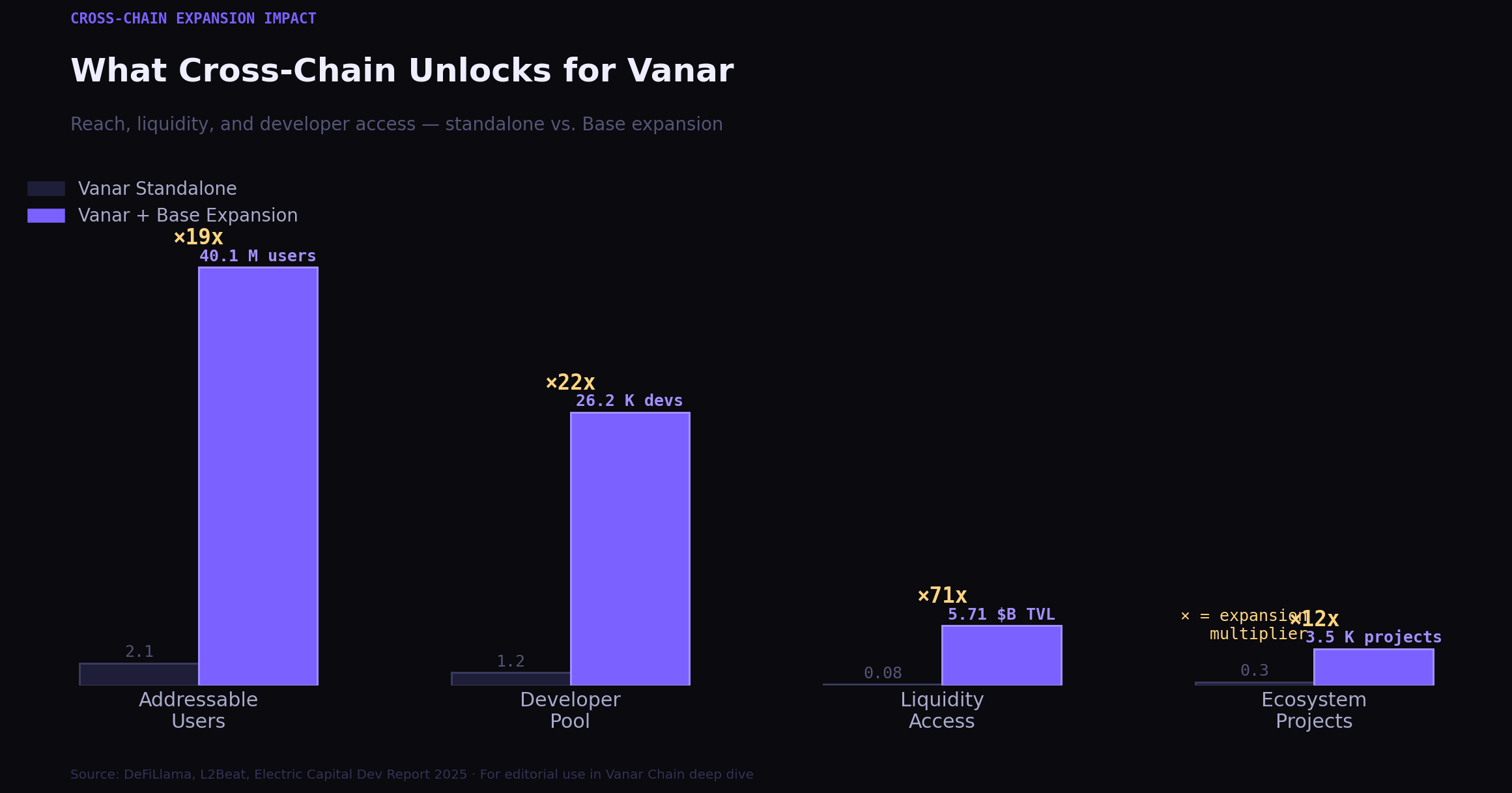
For VANRY specifically, the implications go beyond the technical. A token that only lives on its native chain is, by definition, constrained in how it can circulate, where it can be used, and who can access it. Vanar's CEO has framed the broader cross-chain direction explicitly around this idea — that seamless, global value transfer needs to be as fast and interoperable as the AI systems it powers. Expansion to Base means $VANRY gains exposure to a user base and liquidity environment it couldn't reach before. Every new chain isn't just a technical integration — it's a new population of potential users who can hold the token, pay for AI tools with it, stake it, and participate in the network economy.
The logic compounds when you think about the nature of AI adoption itself. AI tools don't spread the way most crypto protocols do — through token incentives or yield farming. They spread the way useful software spreads: through word of mouth, through embedding into existing workflows, through lowering the barrier to try something new. Being available on Base means Vanar's tools are one step closer to the developer who's already building there, the DeFi user who already has a wallet connected, and the project that's already looking for a way to make its on-chain logic smarter. Proximity to that audience isn't a nice-to-have. It's a distribution strategy.
Cross-chain compatibility expands accessibility and liquidity — and in the context of an AI-native protocol, that translates directly into a wider user base who can benefit from Vanar's tools and contribute to the network's sustainable growth. The intelligence Vanar has built into its stack doesn't change when it crosses chains. But the number of people who can actually reach it, use it, and build on top of it changes dramatically.
A chain that can think is only as powerful as its reach. And right now, Base is where the reach is.
