

I still remember staring at a payments dashboard that wasn’t red, wasn’t flashing, wasn’t technically broken — but was clearly struggling. Transactions were going through, just slower than they should. Customers kept retrying. Operations started double-checking balances manually. Support messages came in waves. That kind of slowdown is worse than a clean outage because it creates doubt. And when I watch stablecoin activity spike onchain, I think about that same tension. Real usage is noisy. People click twice. Bots retry. Volume clusters at awkward times.
Here’s the simple truth: Plasma isn’t interesting because it “supports stablecoins.” It’s interesting because it’s built so stablecoin transfers behave consistently when activity is constant and imperfect. Plasma is a Layer 1 where stablecoin settlement isn’t a side quest. It’s the main job. That changes how you design. It’s closer to hospital triage than a research lab — assume steady inflow, clear priorities, and a fast path to resolution. It’s closer to power grid load balancing than a demo network — expect spikes, smooth them out, keep the lights on.
If you’ve worked around stablecoins long enough, you know most failures are ordinary. Someone has USDT but no gas token. They try to send. It fails. They’re confused because they “have money.” They try again. Now fees moved. Now they’re frustrated. I’ve seen this generate more tickets than contract bugs. Plasma removes that friction with gasless stablecoin transfers. The most common user mistake — not holding gas — just disappears. On top of that, fee abstraction lets users pay fees in approved tokens. They don’t need to manage a second asset just to move dollars. Operationally, that’s huge. Fewer failed sends. Fewer duplicate retries. Fewer messy reconciliation notes at the end of the day.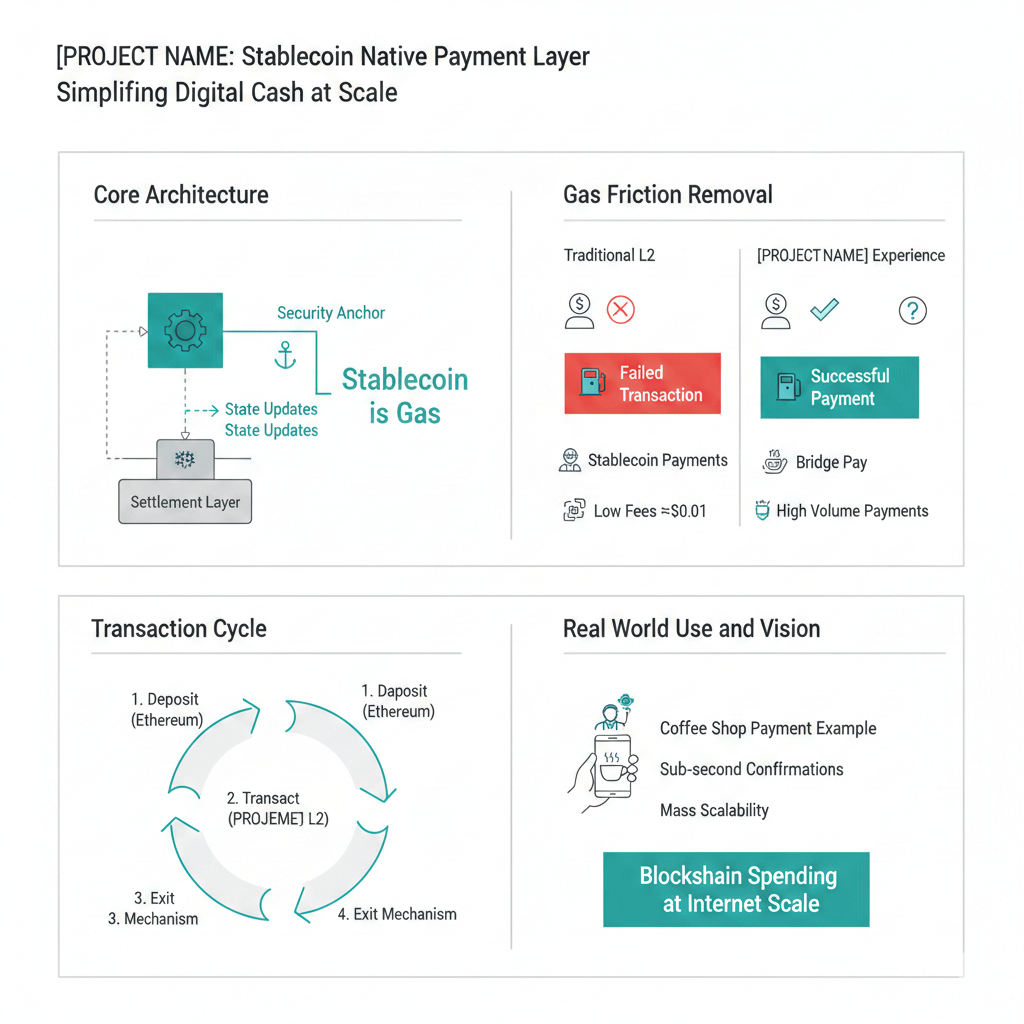
For builders, the experience stays familiar. Plasma is EVM compatible. Solidity still works. Tooling doesn’t need to be reinvented. That’s practical. But the network is tuned for payment traffic, not endless experimentation. When you’re moving value constantly, you care less about novelty and more about consistency. How long until a transfer is final enough to credit a user? How does the system behave when the mempool fills? PlasmaBFT is framed around settlement behavior — the time it takes before you can safely treat a transfer as done in your internal ledger. That timing affects treasury flows, exchange crediting, and compliance reviews. I’ve sat in those meetings. “Probably final” is not a comfortable phrase.
Neutrality matters too. Fogo anchors toward Bitcoin, which signals a commitment to long-term resilience and censorship resistance without pretending to eliminate risk. There’s also a native Bitcoin bridge that uses verifier participation and threshold signing for deposits and withdrawals. No bridge is risk-free. I pay attention to how keys are distributed, what happens if some verifiers go offline, and how incidents would be communicated. Risk doesn’t vanish — it needs to be managed openly.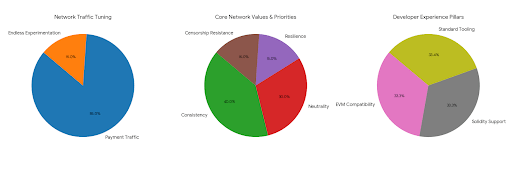
The launch approach also feels grounded. Plasma isn’t just switching on a chain and hoping activity arrives. Liquidity and integrations are part of the starting plan. Support for standardized movement like USDt0 helps reduce fragmentation so stablecoin flows don’t feel brittle across ecosystems. Think of airport baggage systems: they only matter if planes are landing and passengers are moving. A smooth conveyor belt with no traffic proves nothing. Early liquidity and wallet integrations are what turn infrastructure into actual usage.
When I evaluate something like this, I think in 90-day blocks. First, reliability. Are blocks consistent? Does settlement timing stay tight during spikes? Do gasless flows behave safely under stress? Then usage patterns. Are stablecoin transfers clearly the dominant activity? A recent 24-hour snapshot showed strong transaction volume, new addresses coming in, and contracts being deployed and verified. Those numbers are signals — not proof — but they show motion. I also want to see wallets integrating cleanly, support friction staying low, and XPL — the validator incentive token — doing its job quietly in the background. Users moving stablecoins shouldn’t have to think about validator economics at all.
For me, trust doesn’t come from bold claims. It comes from watching a system stay calm when things get busy.