

I’ve developed a reflex when I hear “high-performance Layer 1.”
It’s not excitement.
It’s fatigue.
We’ve been through enough cycles to know how this usually goes. Faster throughput. Lower latency. Cheaper fees. Bigger numbers on dashboards. Every new chain claims to push performance forward, and for a while, they usually do at least under controlled conditions.
Then reality shows up.
Congestion hits. Validators struggle. Fees spike. Or worse, activity just never materializes enough to stress the system in the first place.
So when I first saw Fogo described as a high-performance L1 powered by the Solana Virtual Machine, I didn’t lean in. I mentally filed it under “performance narrative” and moved on.
But something about it lingered.
Maybe it was the choice of architecture. Maybe it was the way it framed performance less as a marketing slogan and more as an execution philosophy. Either way, I ended up taking a closer look.
And that’s where it got interesting.
Most new Layer 1s today default to EVM compatibility. It’s the safe route. You inherit developer familiarity, tooling depth, and a broad ecosystem. It lowers friction and increases the chance that someone, somewhere, will port an existing app.
Fogo didn’t take that route.
Instead, it anchored itself in the Solana Virtual Machine.
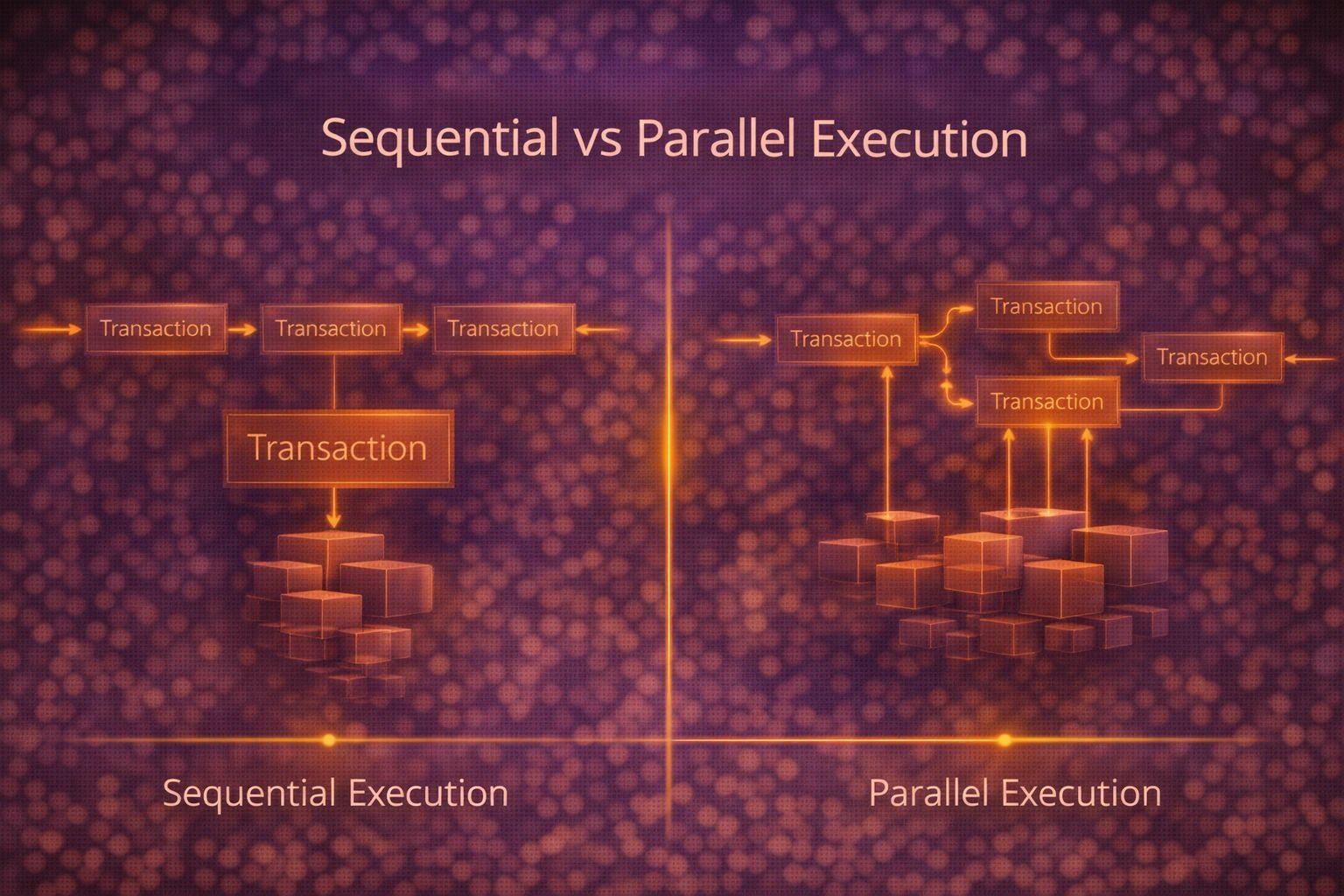
That decision says more than any throughput claim ever could.
The SVM isn’t just a different runtime. It’s built around parallel execution the idea that transactions that don’t conflict can be processed simultaneously. That shifts how performance scales. Block size expansion and gas market optimization are not the only goals. It’s about fundamentally rethinking how work gets done on-chain.
In theory, that enables higher throughput and lower latency under load.
But theory is cheap in crypto.
The real question is whether that architecture translates into a noticeably different experience.
Because performance doesn’t matter if users don’t feel it.
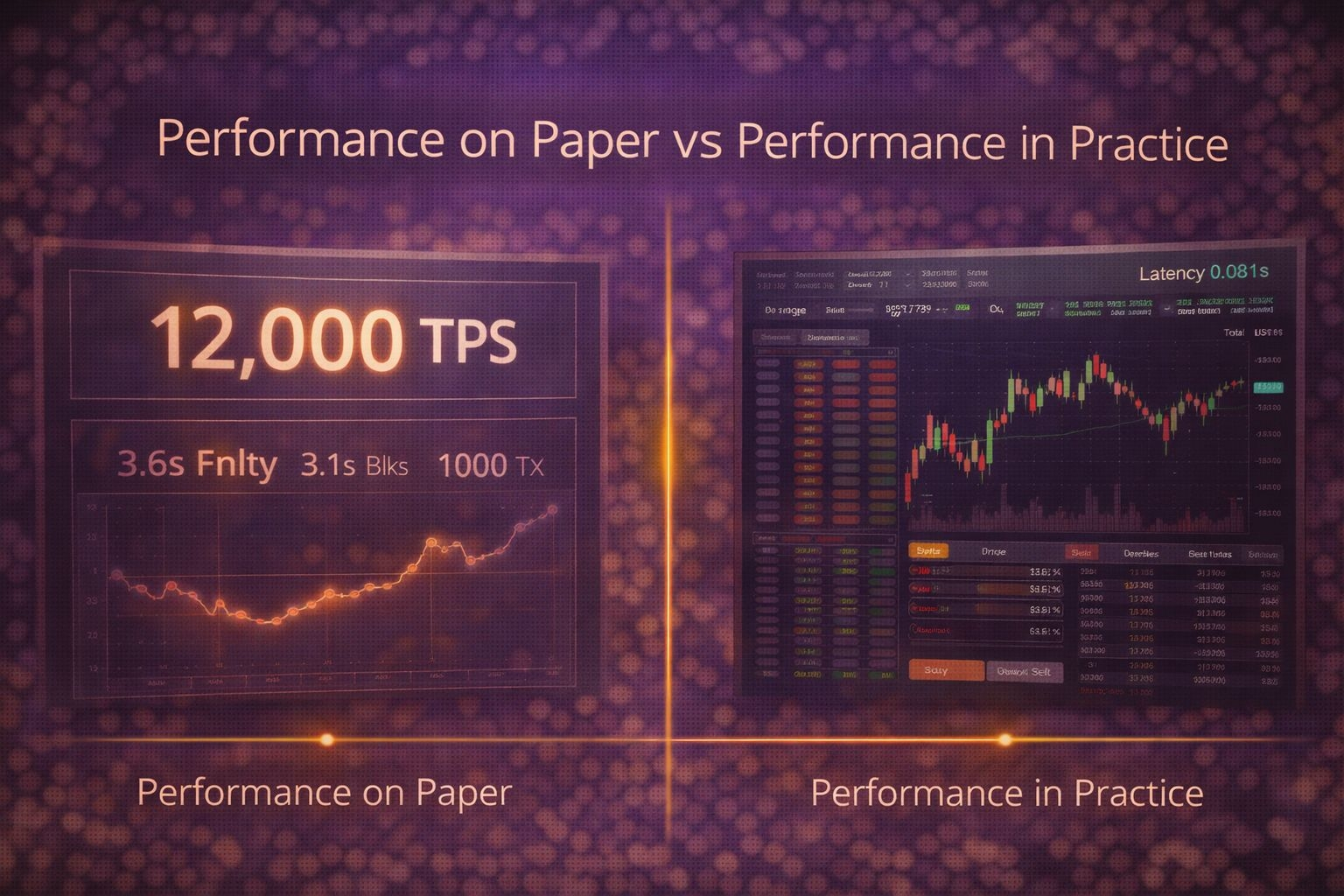
A chain can advertise thousands of transactions per second, but if finality feels inconsistent or fees become unpredictable when activity spikes, the headline numbers stop meaning much.
What stood out to me about Fogo wasn’t just that it could be fast. It was that it seemed built for environments where speed isn’t optional.
Trading infrastructure. Real-time systems. Applications that depend on responsiveness rather than batch-style settlement. Those use cases don’t tolerate jitter. They don’t tolerate slowdowns during volatility.
If Fogo can maintain predictable behavior under those conditions, then “high-performance” stops being decorative and starts being foundational.
There’s also something subtle about not being EVM-first.
Choosing the SVM means Fogo isn’t chasing easy compatibility. It’s prioritizing execution characteristics over immediate ecosystem breadth. That’s a trade-off. It potentially narrows the pool of builders at the start, but it also filters for developers who care specifically about performance architecture.
That can shape the culture of a chain in powerful ways.
Instead of attracting copy-paste deployments from existing EVM apps, Fogo might attract builders who design with parallelism and throughput in mind from day one. That could lead to applications that feel different not just cheaper versions of what already exists.
Of course, it also raises the bar.
High-performance environments have to prove themselves under stress. It’s easy to look good when traffic is light. It’s much harder to maintain deterministic latency and stable fees when demand surges.
That’s where a lot of performance narratives break down.
So far, Fogo’s thesis makes sense. If you believe the next wave of on-chain applications requires infrastructure that behaves more like real-time systems than slow settlement layers, then the Solana Virtual Machine is a logical foundation.
But belief isn’t enough.
Performance is earned through uptime, consistency, and how gracefully a network handles moments when everything moves at once.
Another thing I noticed is that Fogo doesn’t seem obsessed with branding itself as “the fastest.” That restraint is interesting. It suggests an understanding that peak metrics aren’t the same as usable infrastructure.
The chains that survive long term are rarely the ones with the flashiest launch stats. They’re the ones that quietly prove dependable over time.
I still don’t wake up wanting another Layer 1. That hasn’t changed.
The ecosystem is crowded. Liquidity is fragmented. Attention cycles are short. New chains have to justify themselves with more than benchmarks.
But looking at Fogo made me reconsider something.
Maybe the question isn’t whether we need more chains.
Maybe it’s whether we need different execution philosophies.
If most EVM-based systems are optimizing around sequential logic and fee markets, and SVM-based systems are optimizing around parallel execution and latency, that’s not just incremental change. That’s architectural diversity.
And architectural diversity might matter more than incremental speed improvements.
I’m not convinced yet that Fogo will redefine high-performance infrastructure. That kind of credibility takes time and stress testing.
But I no longer dismiss it as just another performance pitch.
It feels like a deliberate bet on how blockchains should execute, not just how fast they can claim to be.
And in a market full of recycled narratives, deliberate architecture is at least worth watching.
I’m not excited.
I’m curious.
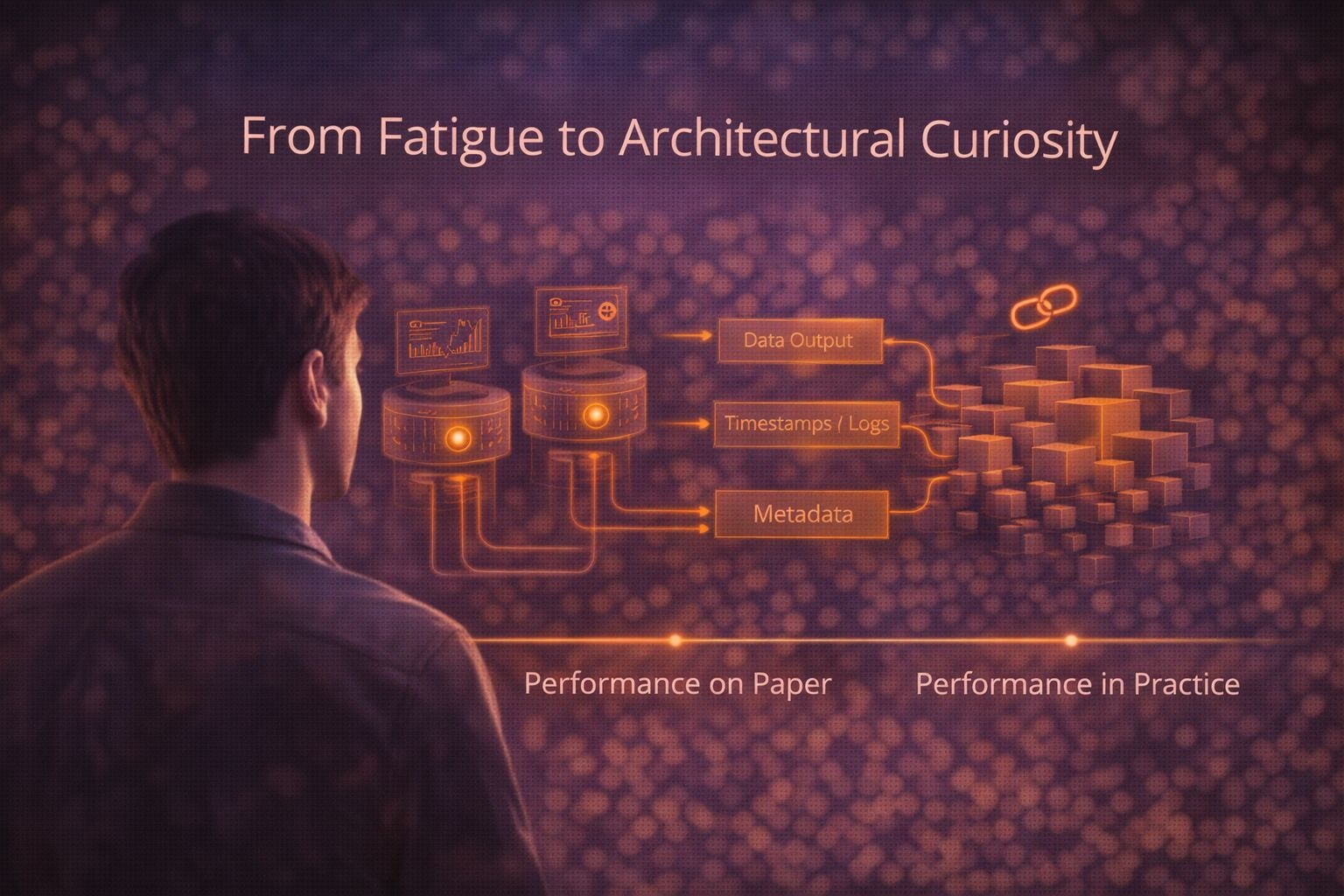
And lately, that’s a stronger signal than hype.