
Last week I tried to pay a contractor from my phone. Simple job. Small amount. And still… the usual mess. Copy this address. Pick the right network. Pay a fee that feels random. Wait. Refresh. Ask “did you get it?” again. It’s 2026 and we still move value like we’re mailing cash in a plain envelope. Now zoom out. People want to run AI apps that pay for data, pay for compute, pay for results, all in tiny chunks, all day. If a chain can’t handle boring payments cleanly, it has no shot at being the rails for AI. Most new L1 chains are still built like they’re hosting a 2019 DeFi demo day. Great for swapping tokens. Weak for constant machine-to-machine work. AI changes the traffic pattern. It’s not “a user signs two big tx a day.” It’s “a service signs thousands of small tx an hour” and those tx are tied to proof, access, usage, and payouts. That’s why “AI-ready” isn’t a slogan. It’s plumbing. Vanar Chain ($VANRY) is interesting here because it’s aiming at the unsexy stuff: payments rails, predictable execution, and a system that can connect on-chain logic with off-chain compute without turning into chaos.
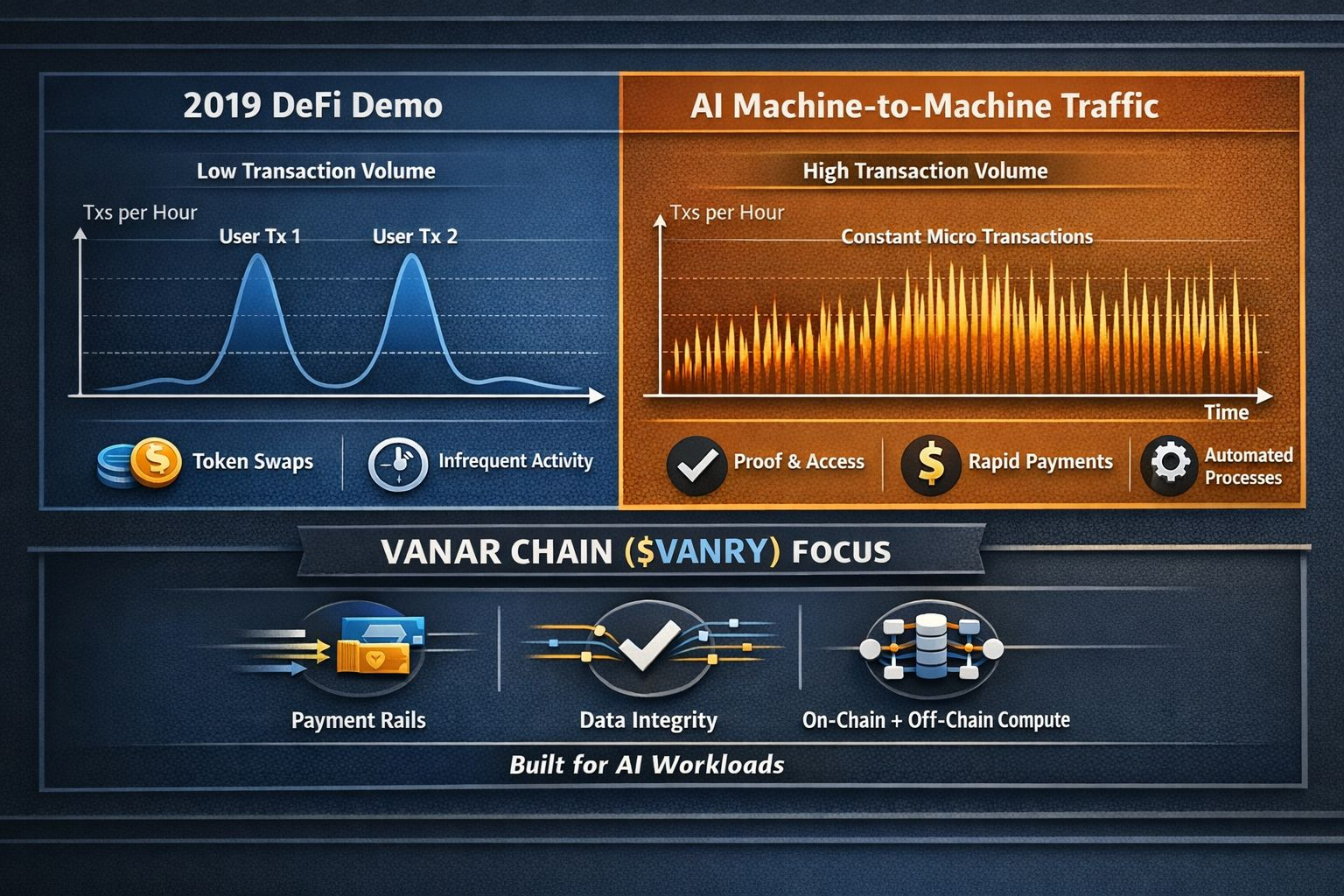
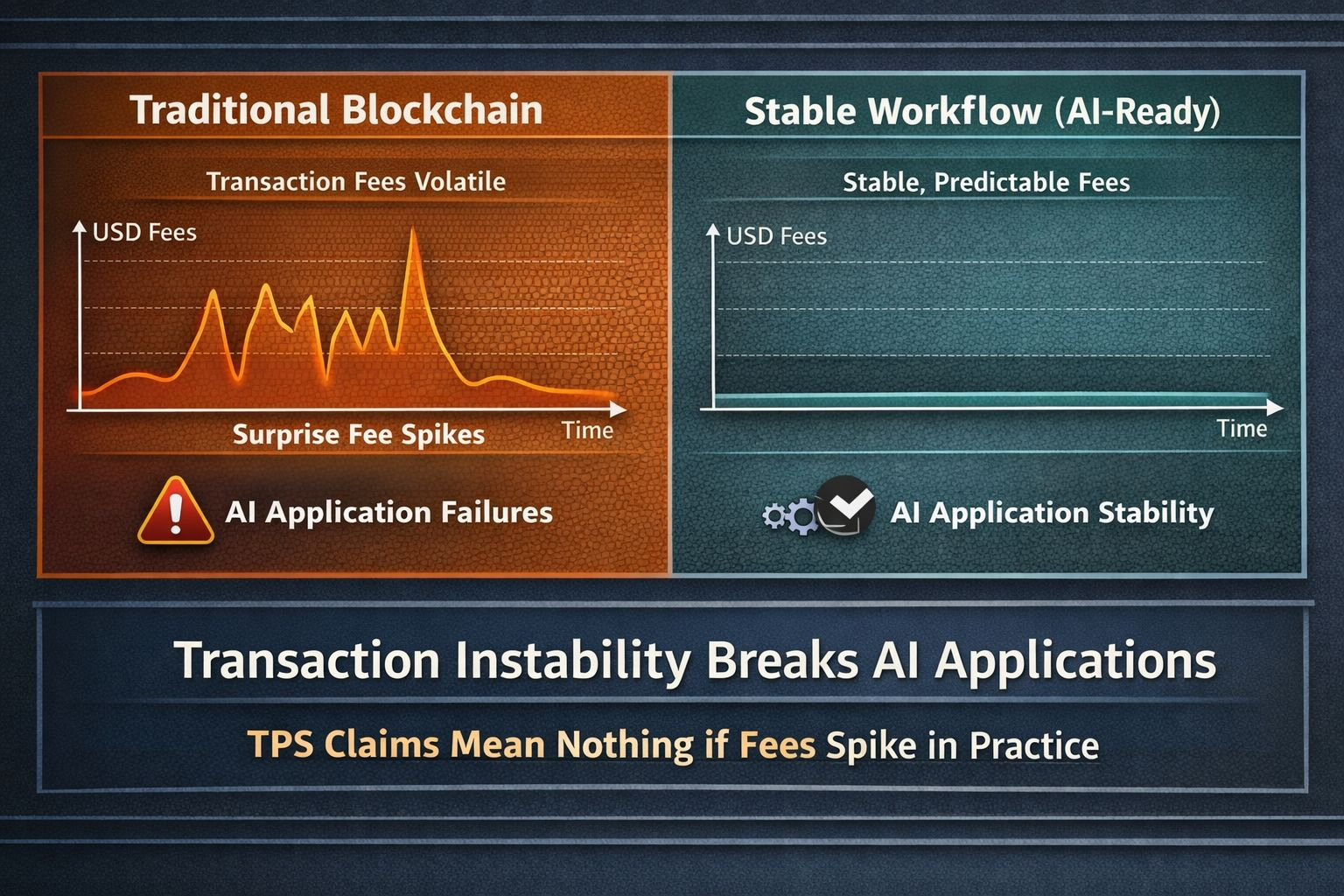
Think of it like running a busy kitchen. DeFi-only chains are good at cooking one fancy dish at a time. AI workloads are a food truck line at lunch. Same menu. Repeat orders. No time for drama. If your stove heats up and cools down at random, you don’t scale. You just burn food faster. Transaction flow and cost need to be boring. AI apps hate surprise. Humans can tolerate “gas spiked, try later.” Machines can’t. A model calling tools, buying data, or paying for inference needs stable fees and stable timing. When fees jump, the machine doesn’t “feel annoyed.” It breaks. Or it reroutes. Or it starts failing users. This is where market structure matters more than marketing. A chain can claim high TPS all day, but if real usage causes fee spikes, it’s not a platform. It’s a stress test.
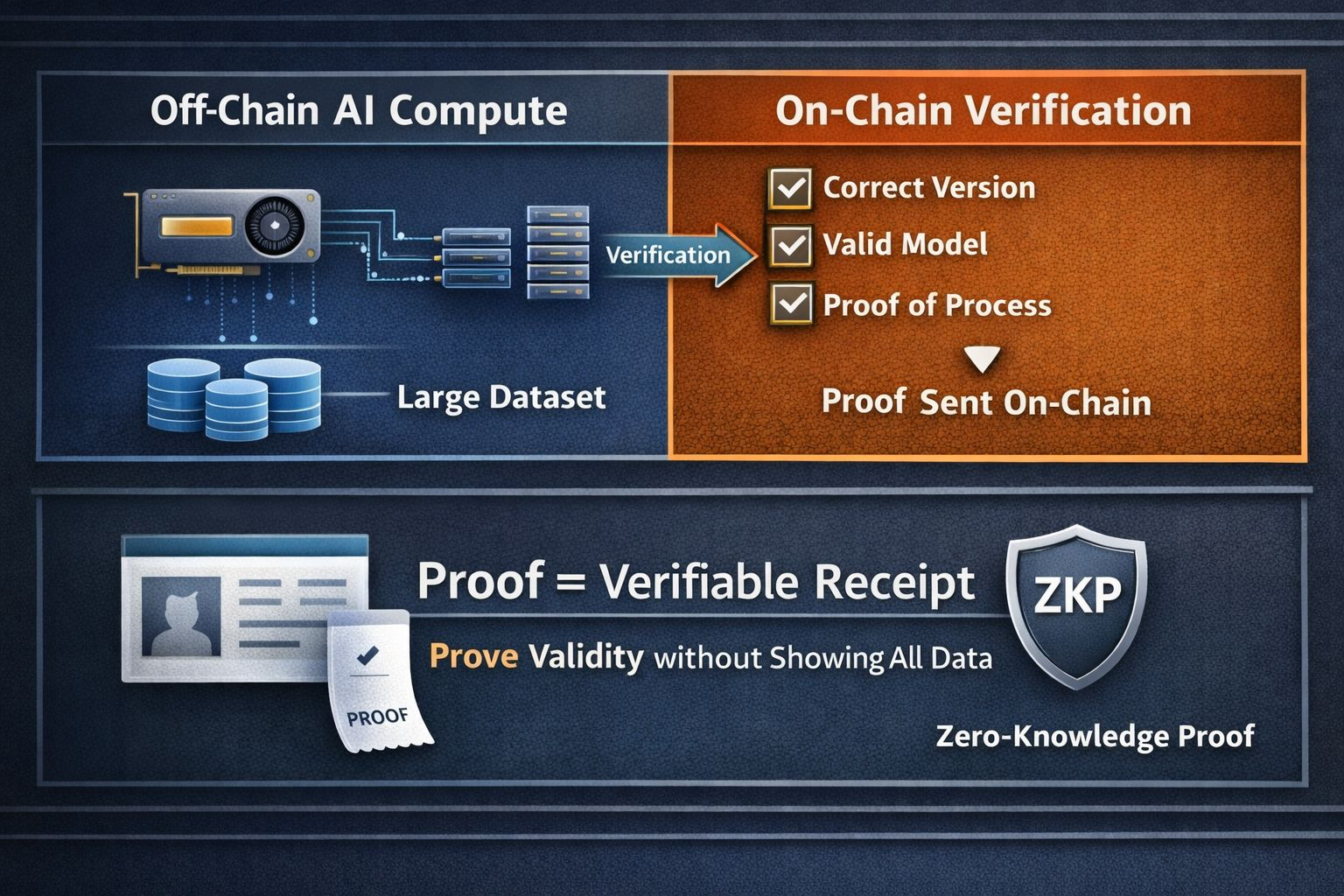
Vanar’s angle, from what I care about, is the payments-first posture. Not just “payments exist.” Payments as a core habit of the network. You want low-friction transfers, but also the ability to attach conditions: pay only if data is delivered, pay only if compute finishes, pay per step. That’s basically automated settlement. Settlement just means “the chain is the referee that says who owns what after the action.” If AI is doing the action, the referee has to be fast, cheap, and consistent. No weird pauses. No random foul calls. AI needs trust signals, not vibes. People throw around “on-chain AI” like it’s magic. Reality: most AI compute is off-chain because GPUs are off-chain. So the real question is: can the chain verify what happened off-chain without swallowing the whole dataset? This is where terms like “proof” show up. A proof is just a receipt. Not a tweet. A receipt. There are different kinds of receipts. The fancy kind is a zero-knowledge proof. That’s a way to prove you followed rules without showing the private inputs. Like proving you’re old enough without handing over your full ID. For AI, it can mean proving a model ran with an allowed version, or that a result matches a committed process, without dumping the raw data on-chain. Hard to build. But it’s the direction serious systems move in.
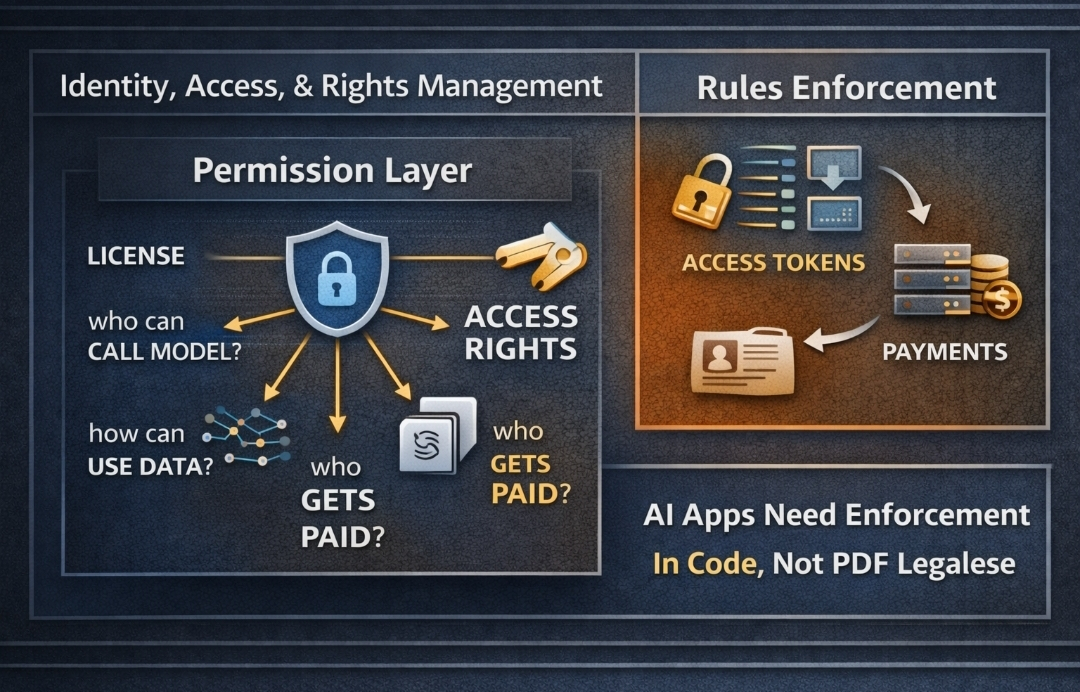
Even without the fancy math, you still need integrity tools: signatures, hashes, and logs. A hash is a fingerprint of data. If the data changes, the fingerprint changes. That lets you anchor “this exact file” or “this exact model version” to the chain, without storing the whole thing on-chain. In AI systems, that matters because data is the asset. Models are the asset. If you can’t anchor and reference them reliably, you can’t build clean markets around them. You get disputes. You get “trust me bro.” And then you get users leaving. This is where Vanar’s ecosystem choices matter. An AI-ready chain isn’t trying to shove gigabytes into blocks. It’s building clean links between on-chain rules and off-chain storage/compute. On-chain: ownership, permissions, payments, and audit trails. Off-chain: the heavy lifting. If the bridge between those worlds is messy, the whole thing feels like duct tape. If it’s clean, devs can ship real products with minimal drama. Identity, access, and rights management. AI apps are not just “run model, get output.” They’re “who can call the model, who can use the data, who gets paid, who can revoke access, what happens if a key is leaked.” This is boring enterprise stuff. Which is exactly why it wins. A chain that’s serious about AI needs a usable permission layer. Permission layer just means rules about who is allowed to do what. Not in a PDF. In code. If I license a dataset for one purpose, I should be able to enforce that license in how keys, access tokens, and payments work. You can’t do this with vibes and a terms-of-service page.
Here token design also stops being a casino chip and becomes a resource tool. I’m not talking price. I’m talking utility. What does $VANRY actually do inside the system? If it’s the unit for fees and settlement, then it becomes the “oil” that keeps the machine running. But the token has to fit the workload. AI workloads are bursty. Spiky. Heavy. If fee design punishes bursts, builders will avoid the chain. If fee design can smooth costs and keep service predictable, builders stick around. That’s the difference between “theoretical decentralization” and “usable infrastructure.” Most new L1s will struggle because they’re still selling performance numbers instead of solving workflow pain. AI doesn’t care about your brand. It cares if the pipeline works at 3 a.m. It cares if payments settle. It cares if access is enforceable. It cares if proofs or receipts exist when things go wrong. AI apps are like factories, not art galleries. If the conveyor belt jams once a day, you don’t call it innovation. You call it downtime. Vanar Chain (VANRY) bet looks closer to what AI builders actually need: payments that feel native, a structure that can anchor data and model integrity, and a path to connect on-chain settlement with off-chain compute in a clean way. That’s not flashy. That’s good. Flashy is for fundraising decks. Infrastructure is for users who don’t want to think about the chain at all.
Not Financial Advice. Just my perspective as someone who cares more about architecture than narratives. If you’re building for AI, the bar is higher now. New L1s can either become boring, reliable plumbing… or they can stay loud. Loud doesn’t ship.
