
When I first started looking into new SVM-based chains, my expectation was simple. Every new project tries to beat Solana on speed. More TPS, lower latency, bigger numbers. The usual race. But the more I read about Fogo, the more I realized something different is happening here. Fogo is not trying to outrun Solana. It is trying to fix the reason most chains slowly stop performing well after launch.
And that reason is incentives.
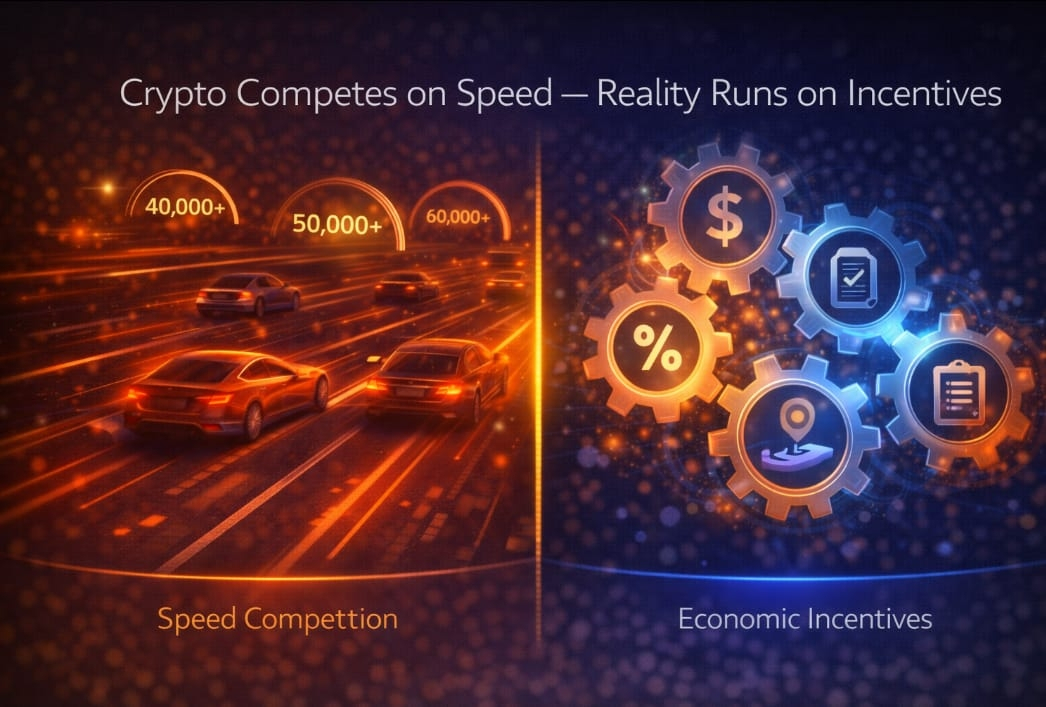
In crypto we often talk about decentralization, throughput, scalability, but rarely about behavioral economics. Yet blockchains are economic systems before they are technical systems. Validators, RPC providers, infrastructure operators — they all respond to rewards. If rewards are misaligned, performance degrades even if the technology is perfect.
I’m starting to see Fogo less as a faster chain and more as a discipline layer placed on top of the SVM design.
The Hidden Problem in High-Performance Chains
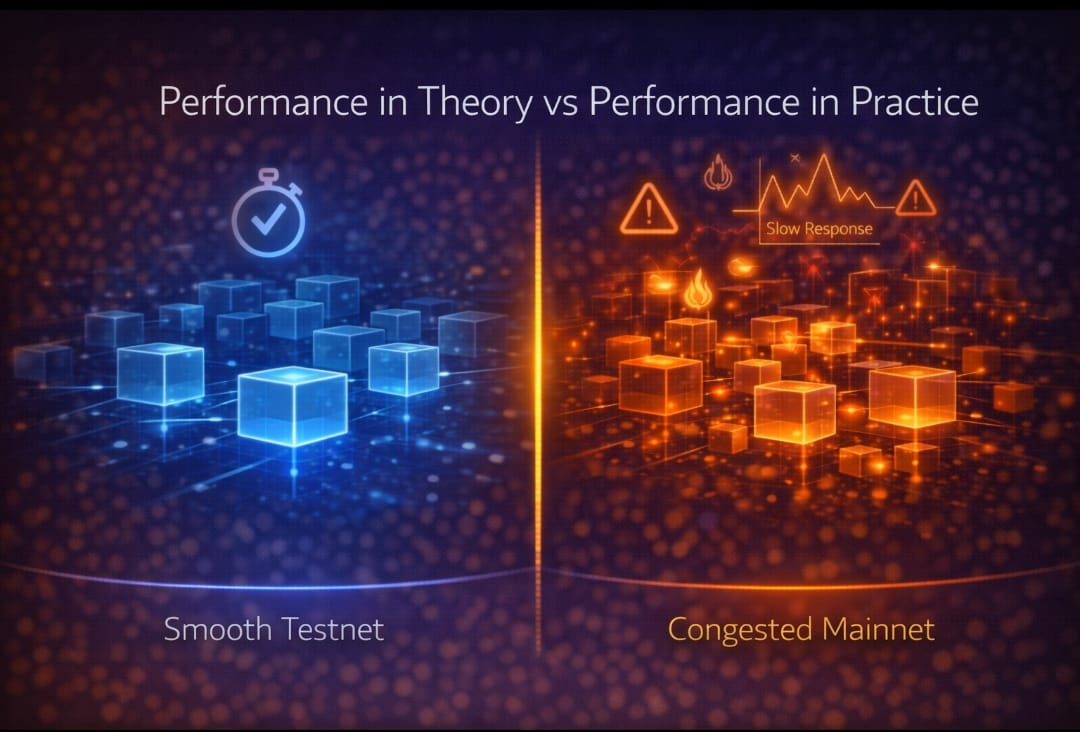
Many modern chains can process transactions quickly under ideal conditions. Benchmarks look impressive. Testnets look smooth. But production environments tell a different story. Congestion appears, latency fluctuates, nodes desync, and reliability becomes unpredictable.
This does not happen because engineers suddenly forget how to code.
It happens because participants optimize for profit, not performance.
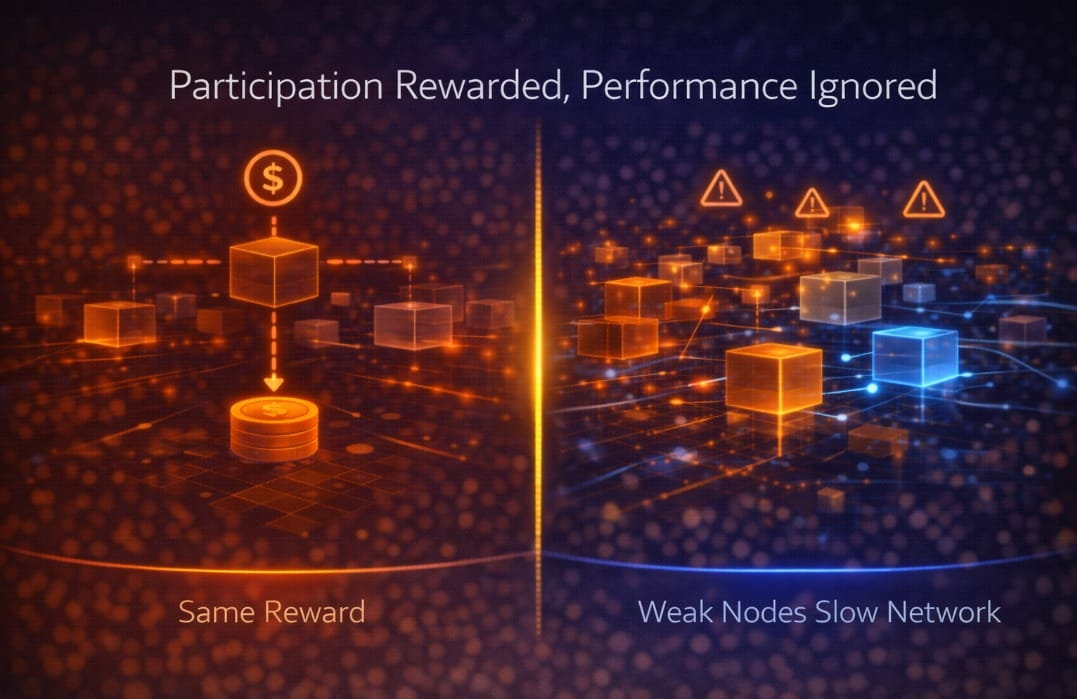
If validators earn nearly the same reward regardless of hardware quality, uptime stability, or execution efficiency, then rational behavior is simple: minimize cost. Cheaper machines, shared infrastructure, overloaded nodes. The network technically works, but gradually becomes fragile.
Speed becomes marketing, not reality.
We’re seeing a pattern across multiple ecosystems where chains launch extremely fast and then slowly behave slower than expected during real usage. Not because the architecture failed, but because the incentives rewarded participation instead of performance.
That is where Fogo feels conceptually different.
Fogo’s Idea: Performance Is an Economic Outcome
Instead of assuming validators will behave ideally, Fogo assumes the opposite: they will behave rationally.
So the network is designed around pushing validators toward optimization. Revenue depends on efficiency. Efficiency depends on hardware quality, networking, and operational discipline. The result is not forced performance — it is economically selected performance.
This changes the conversation completely.
Most chains try to engineer speed at the protocol level. Fogo engineers motivation.
The chain is not asking validators to be honest out of goodwill. It pays them more when they operate better infrastructure. That creates a natural filtering process where weaker setups either upgrade or slowly disappear.
Over time, the network doesn’t just remain fast. It becomes structurally stable.
Not a Solana Rival — A Solana Evolution
At first glance, people may label Fogo as another Solana competitor because both use the SVM execution environment. But I don’t think that description fits.
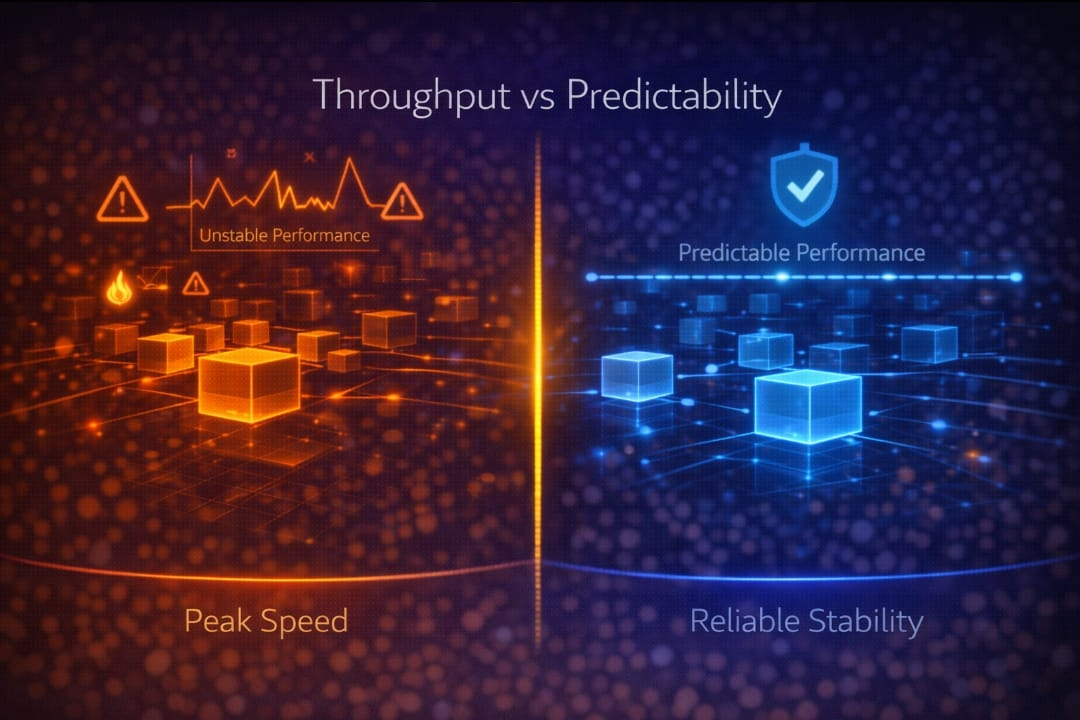
Solana proved that high throughput execution is possible. It solved the technical feasibility question. But scalability in practice is not only about raw execution speed — it is about maintaining predictable behavior under pressure.
Fogo seems to focus exactly on that second phase: operational consistency.
So instead of replacing Solana’s idea, it refines its economic layer. The execution engine is familiar, but the operational expectations change. The validator is no longer just a participant. It becomes a performance provider.
That’s a subtle but important shift.
Why Incentives Matter More Than Architecture
Blockchains are long-term systems. Over years, small inefficiencies compound. If a network rewards average performance, it slowly becomes average. If it rewards optimized performance, it gradually becomes robust.
Technology sets the ceiling. Incentives determine the average.
I think this is why many chains look powerful early but struggle later. The launch phase is driven by excitement and capital investment. The maturity phase is driven by sustainable economics. If those economics do not reward reliability, reliability fades.
Fogo’s philosophy appears to start from the maturity phase rather than the launch phase.
Instead of asking “How fast can we go?”, it asks “How do we stay reliable for years?”
Reliability as the Real Competition
Crypto used to compete on transactions per second. Now the competition is shifting toward predictability. Applications, especially real-world ones, do not need peak speed as much as they need consistent behavior.
Payments, trading systems, AI agents, on-chain games — they fail not when a chain is slow, but when it is inconsistent.
From my perspective, Fogo positions itself in that reliability layer. It does not need to beat Solana’s theoretical speed to matter. It only needs to ensure performance quality stays stable under real usage.
That’s a different battlefield entirely.
Instead of competing chain vs chain, it competes discipline vs complacency.
My Personal Take
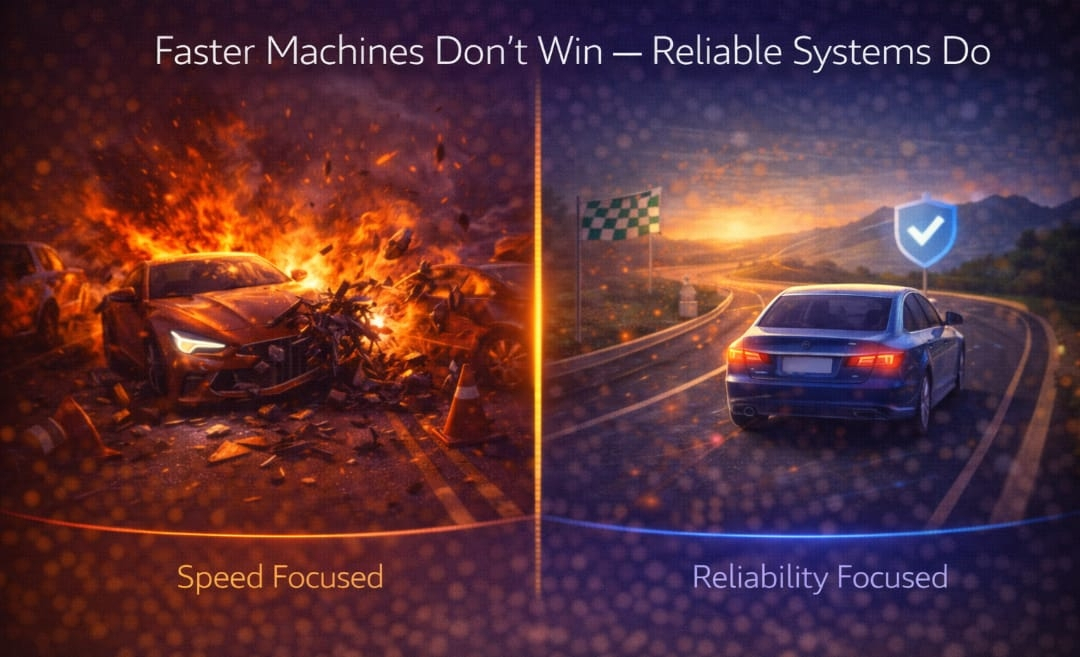
The more I study different ecosystems, the more I feel crypto’s next phase will not be decided by raw technical breakthroughs. We already know high throughput is achievable. The challenge now is sustainability.
I see Fogo as an attempt to make infrastructure operators care about performance the same way miners once cared about hash rate efficiency. When economic rewards directly depend on execution quality, the network naturally optimizes itself without constant intervention.
If this model works, it may influence how future chains design validator rewards entirely.
So I don’t see Fogo as trying to replace Solana. I see it addressing something deeper — the gap between theoretical performance and lived performance.
And honestly, fixing incentives might end up being more important than building a faster engine.
