


I’ve seen this pattern too many times: a new chain shows up, throws a huge TPS number on a graphic, and everyone starts acting like speed alone solves real on-chain trading. But when markets get chaotic, speed isn’t the thing that saves you.
Predictability saves you.
And that’s where @Fogo Official actually feels different to me.
FOGO (and the chain behind it) isn’t trying to win a “who’s fastest” contest on a calm day. The whole vibe is: how do we keep confirmations steady when the flow turns messy? When you look at the design choices they’re leaning into, it’s clear they’re building a chain that wants to behave like infrastructure — not a demo.
Why I Don’t See Fogo as a “Clone”
People hear “SVM” and immediately go, “Oh, so it’s basically Solana 2.0.”
But the way I see it, SVM is the starting engine — not the whole identity.
The execution layer gives you a certain culture and runtime behavior: parallel execution, performance discipline, and an environment where builders naturally think in terms of concurrency and avoiding contention.
That’s already a massive advantage versus most L1s that start from zero and spend years just teaching devs how the system “wants” apps to be built.
But the real differentiation isn’t the engine. It’s the base-layer choices.
It’s how the chain handles latency variance, leader rotation, networking, validator topology, and “stress moments” when everyone shows up at once.
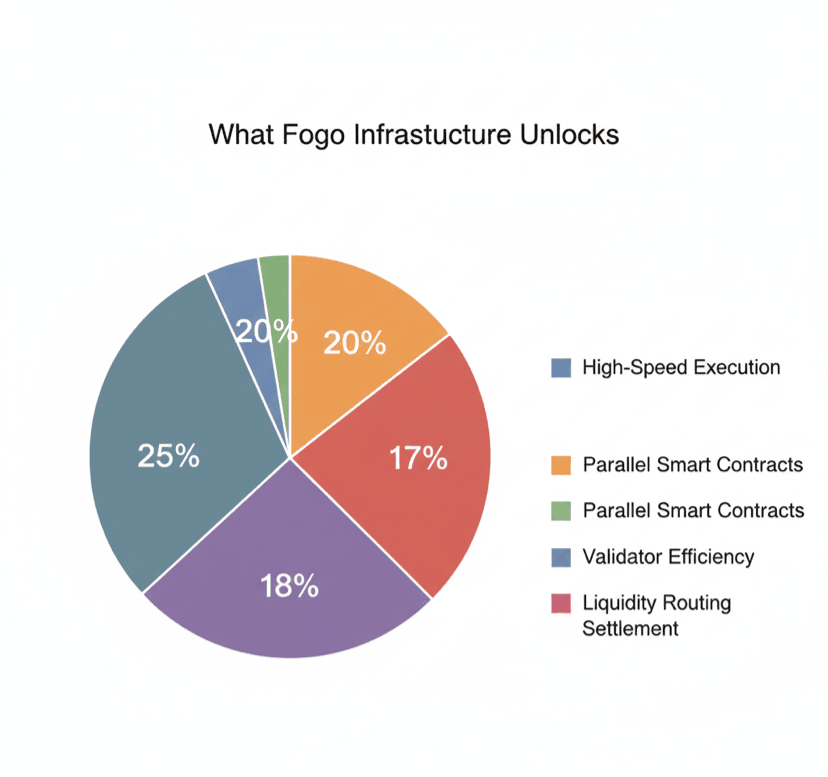
That’s where Fogo is making its bet.
The “Timing Engine” Thesis (This Is the Part I Keep Thinking About)
What keeps me watching Fogo is that they’re treating the chain like a timing system.
In trading, consistency matters more than peak performance. If your chain does 10/10 in speed tests but becomes unpredictable during volatility, traders will treat it like a casino.
Fogo’s testnet parameters (and the way they talk about them) show a specific obsession:
tight cadence, predictable confirmation rhythm, and stable execution under load.
And that matters because “fast” isn’t the goal — fast when it counts is.
Firedancer Isn’t Just a Buzzword Here
I’m not going to pretend every user cares about clients and validators — but I do. Because client quality shows up as “my transaction filled cleanly” vs “why did that lag?”
Fogo’s connection to Firedancer-based validation is basically a signal that they’re pushing toward a world where performance is treated like engineering discipline, not marketing.
And the part I respect is: this isn’t framed as “look how fast we can go.”
It’s framed more like: we’re trying to squeeze variance out of the system.
That’s the difference between “fast” and “tradable.”
The Sleeper Feature: Sessions (This is Where UX Starts Feeling Like a CEX)
Now let me say the quiet part out loud:
Most on-chain trading doesn’t feel bad because of block times.
It feels bad because the UX is annoying.
Sign this. Confirm that. Approve again. Reconfirm. Run out of gas. Repeat.
What I like about Fogo is how they’re thinking about Sessions.
Instead of forcing a user to sign every micro-action like they’re doing security theater, Sessions let apps create scoped permissions that feel closer to how real trading works:
“Let me trade for 10 minutes.”
“Only this market.”
“Only up to this size.”
“Then stop.”
That’s it. Controlled. Limited. Safer than infinite approvals. And way closer to the frictionless feel that keeps people on CEXs.
To me, Sessions is the UX unlock people are sleeping on.
Because if you want on-chain trading to compete with centralized platforms, you can’t just match speed — you have to match flow.
What $FOGO Actually Represents (When I Ignore the Noise)
I’m not interested in pretending every token is “the future.” I look at one question:
If real usage shows up, does the token become necessary?
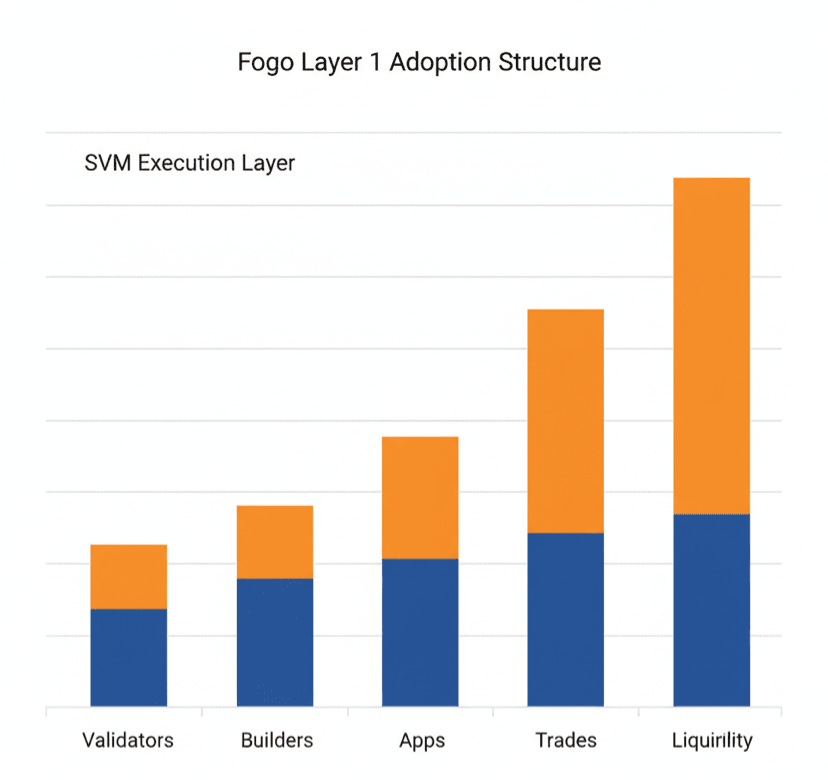
With Fogo, the token story is simple and clean:
Fees / gas to run the network
Staking to secure it
Validator incentives to keep it honest
Ecosystem growth if they fund development and participation properly
And what I like is that it doesn’t rely on some magical narrative.
If this chain actually becomes a home for trading-style apps, then $FOGO becomes part of the cost structure of that activity.
Not hype-led. Usage-led.
What I’m Watching Next (Because This Is Where Chains Get Exposed)
I’m not sitting here pretending success is guaranteed. I’ve been in this market long enough to know that good architecture can still lose if execution is weak.
So here’s what I’m personally watching:
1) Does it stay stable under real stress?
Not the happy-path testnet. I mean the ugly moments: volatility, spikes, congestion, liquidations, MEV pressure.
2) Do builders treat it like a serious deployment environment?
A chain becomes real when builders stop experimenting and start shipping apps that they plan to maintain.
3) Do Sessions become a standard that apps actually use?
If Sessions stays theoretical, it’s just a cool idea.
If apps integrate it deeply, it changes how on-chain trading feels.
4) Does liquidity show up and stay?
Because “fast” without depth is still unusable.
Markets need thickness, not just throughput.
My Honest Take
If I boil it down, this is what I believe:
Fogo isn’t trying to be famous. It’s trying to be dependable.
SVM gives it a strong starting position — not because of branding, but because it imports a performance mindset and lowers the cold-start friction for builders.
But the real bet is the base layer:
tight timing, predictable cadence, and UX flow (Sessions) that can finally make on-chain trading feel normal.
That’s why I’m watching $FOGO like infrastructure — not like a trend.