
When people talk about blockchain and AI today, most conversations sound impressive but feel shallow. Almost every new project says it has “AI integration,” and at first that sounds like the future. But after looking closer, I started noticing something important — there’s a massive difference between a chain that uses AI as a feature and a chain that actually becomes an environment where AI can live.
That distinction completely changes how useful the technology becomes.
The Problem With “AI Features”
Right now, many platforms treat AI like a marketing checkbox. They add a chatbot wallet assistant, maybe a recommendation engine for NFTs, or automated analytics dashboards. These tools are helpful, but they don’t change the foundation of the network.
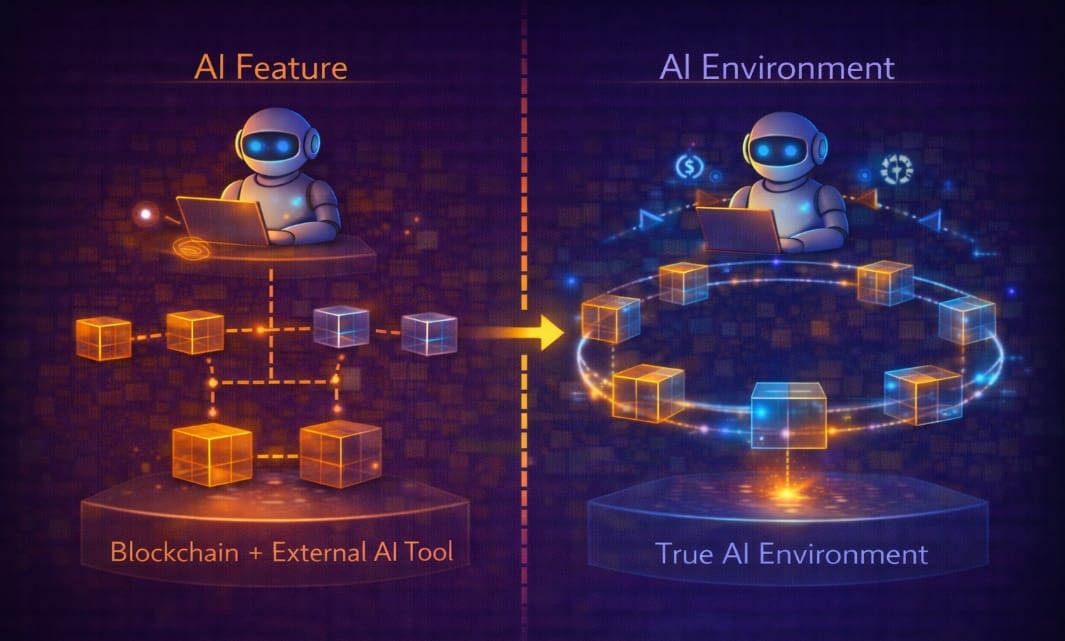
They’re decorations, not infrastructure.
If the AI disappears tomorrow, the blockchain still works exactly the same way. The AI didn’t become part of the system — it just sat on top of it.
From my perspective, that’s similar to adding autopilot to a bicycle. It’s interesting, but the machine itself wasn’t designed for intelligence. The intelligence was attached afterward.
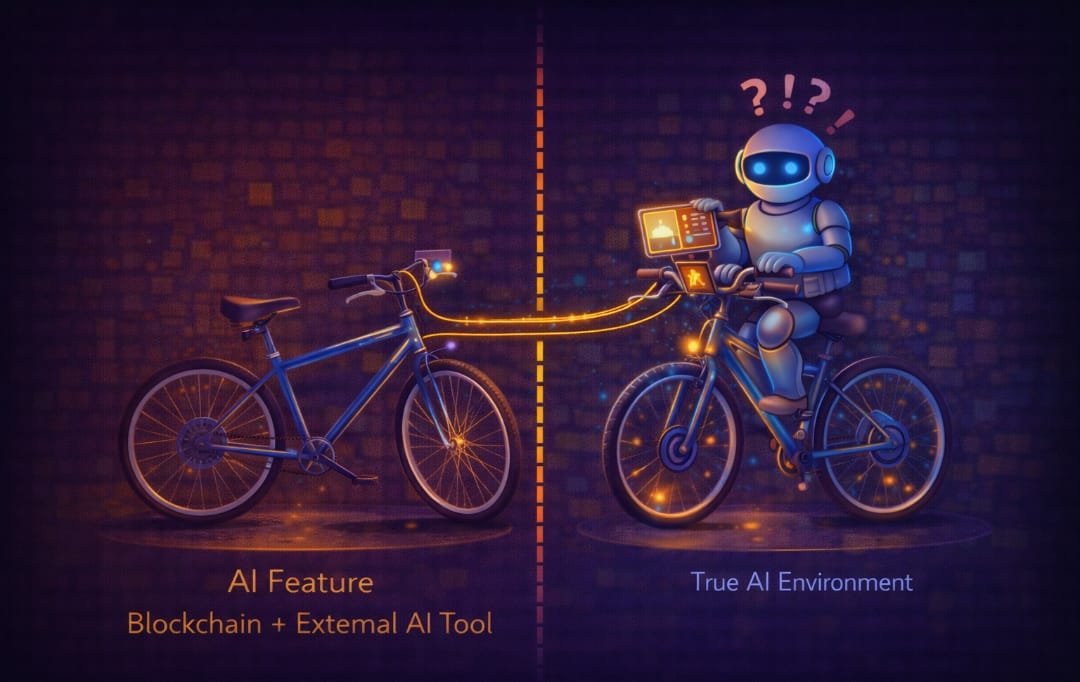
And this is why most “AI chains” don’t feel different in real usage. They still rely on users to interpret data, manage assets, and make decisions manually. The AI assists — it doesn’t participate.
What an AI Environment Actually Means
An AI environment is very different. Instead of tools for humans, the network becomes a place where software agents can operate independently.
That means:
Data must be structured for machines, not just humans
Ownership must be verifiable automatically
Assets must be usable programmatically
Actions must be executable without constant user confirmation
In simple words, AI shouldn’t just help people use the blockchain.
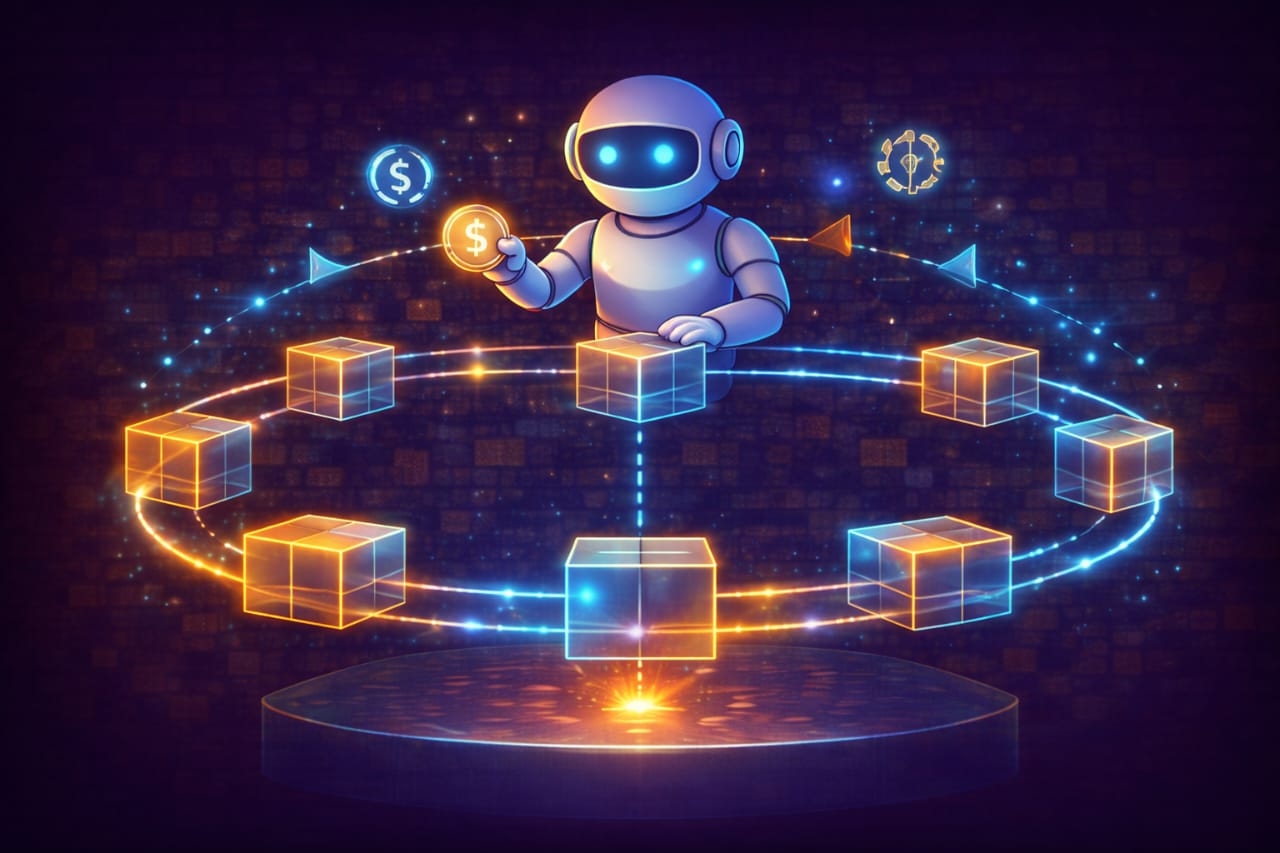
The blockchain should allow AI to become a user.
This changes everything.
Now applications are no longer passive apps waiting for clicks. They become autonomous systems reacting to events. A digital asset isn’t just stored — it can move, react, license itself, or collaborate based on rules.
We’re not just interacting with software anymore.
Software begins interacting with itself.
Where Vanar Fits Into This Idea
When I first looked at Vanar, I didn’t see another chain competing for transactions per second. Instead, it felt designed around real-world behavior — entertainment, brands, virtual experiences, and digital identity.
That matters because AI needs context, not just speed.
Most blockchains optimize financial transfers. But AI agents don’t only trade tokens. They manage content, identity, rights, and interactions. A game character, a digital influencer, or a brand assistant requires persistent ownership and recognizable behavior across applications.
Vanar seems closer to building a digital world than a financial highway.
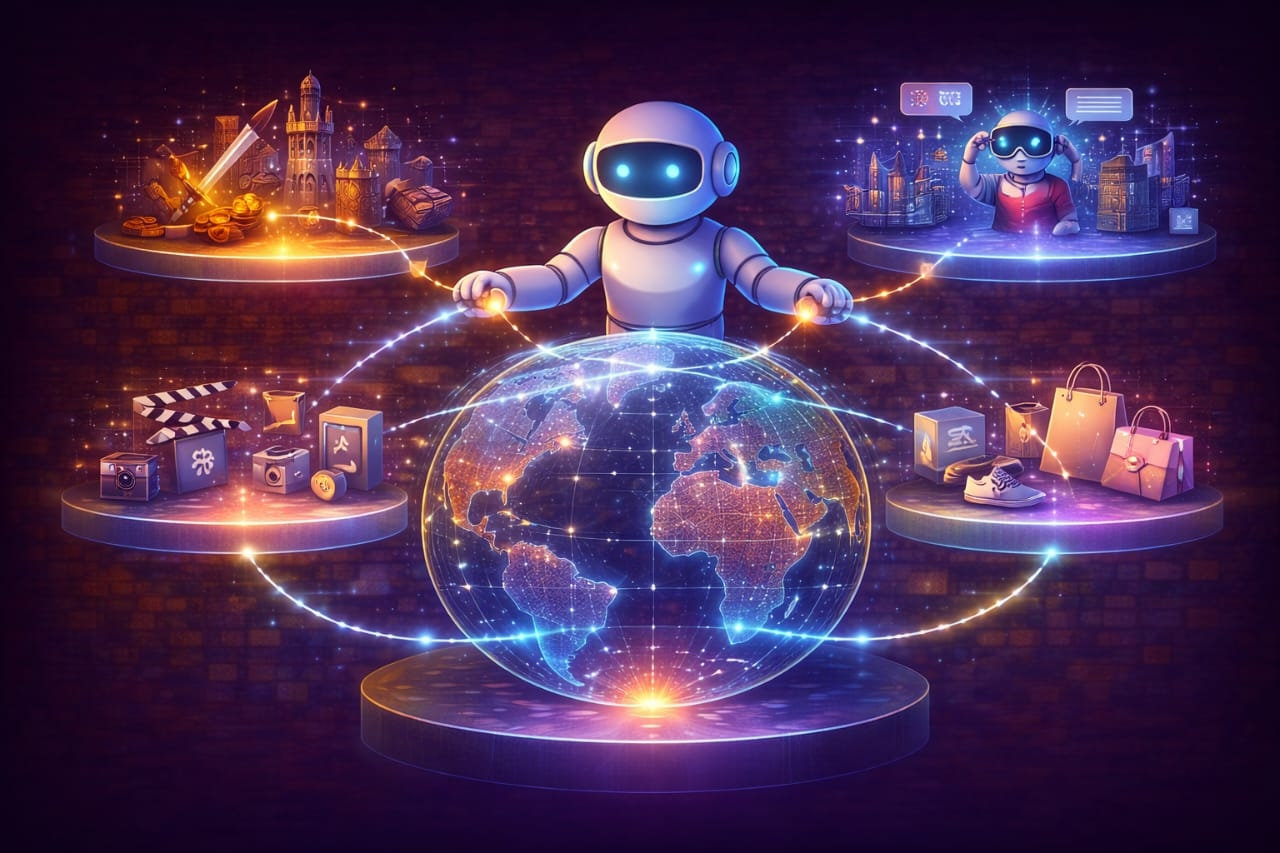
And that’s the key difference.
Instead of asking how fast transactions move, it asks how digital entities exist.
If AI is going to operate independently, it needs continuity — memory, identity, and recognizable presence across platforms.
A wallet address isn’t enough for that.
Why Entertainment Infrastructure Matters
At first I didn’t understand why Vanar focuses so much on media, games, and virtual spaces. But then it clicked: AI agents need environments to act inside.
Finance alone is too narrow.
An AI assistant managing a movie license, a virtual character owning items across worlds, or a brand avatar negotiating digital merchandise — these require persistent ecosystems, not isolated transactions.
That’s what separates an AI environment from an AI feature.
A feature answers questions.
An environment gives AI a role.
And roles require places where behavior continues over time. If every application resets identity, intelligence can’t evolve. But if identity persists across experiences, intelligence compounds.
This is where I think Vanar positions itself differently.
It’s less about adding AI tools and more about hosting digital actors.
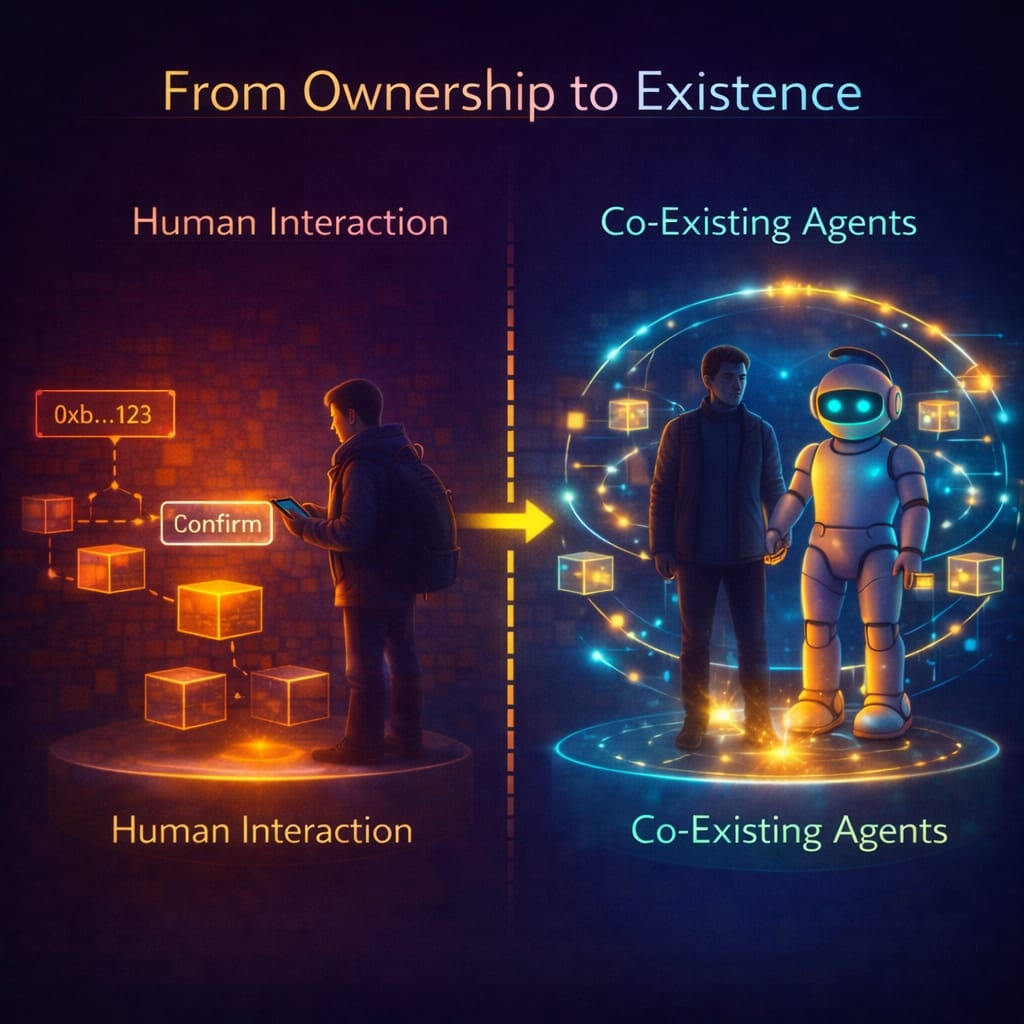
The Hidden Shift: From Users to Participants
Most Web3 discussions still assume humans remain the primary actors. We sign, confirm, approve, and manage everything manually.
But realistically, AI will eventually handle large parts of digital activity — not because humans disappear, but because scale demands it.
You won’t manually negotiate every asset license, game interaction, or brand engagement in a future digital economy. Intelligent agents will.
So the real question becomes:
Is the chain built for humans operating tools, or for intelligent entities participating directly?
Vanar appears to lean toward participation.
And that changes design priorities. Reliability, recognizable identity, and cross-platform continuity become more important than raw throughput. Because intelligence depends more on consistency than speed.
My Personal Take
I’m starting to think the industry is asking the wrong question.
Instead of “Which blockchain integrates AI?” we should ask “Which blockchain can host intelligence?”
An AI feature impresses users for a moment.
An AI environment reshapes behavior permanently.
Vanar feels closer to the second category. Not because it claims stronger models or smarter assistants, but because it focuses on spaces where autonomous digital entities make sense — media, worlds, brands, and persistent presence.
If the future really includes AI agents acting online as naturally as humans, they won’t live inside dashboards. They’ll live inside ecosystems.
And blockchains won’t just store value anymore — they’ll store existence.
That’s why I see Vanar less as a chain trying to compete on technical metrics, and more as a foundation trying to prepare for a different kind of user entirely.
Not just us.
But the intelligence that will operate alongside us.
