
Crypto market cycles refer to the recurring patterns of price movements in cryptocurrencies, driven largely by investor psychology rather than just fundamentals. These cycles typically last around 4 years (often tied to Bitcoin halvings), alternating between periods of optimism and pessimism. 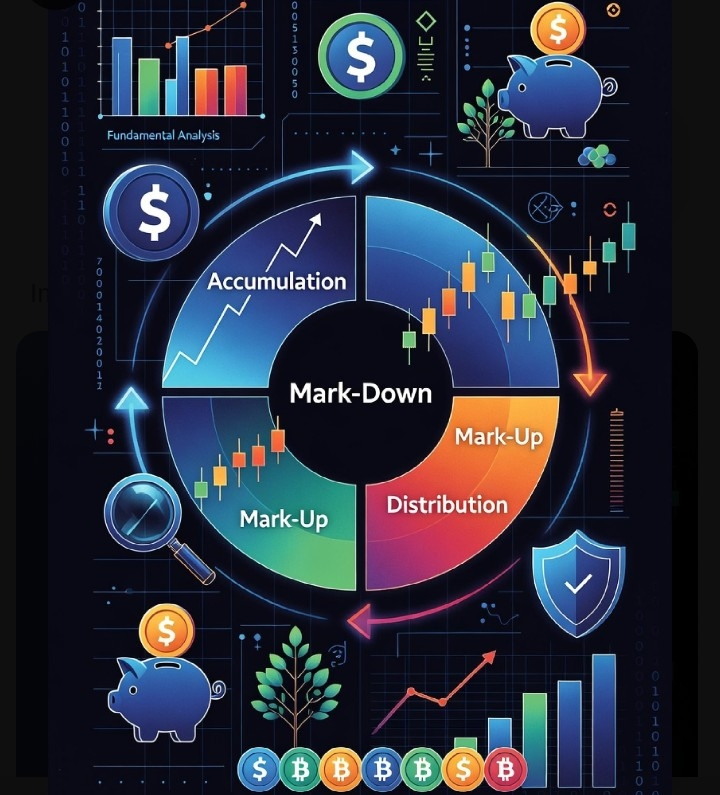
The classic four-phase model includes:
Accumulation Phase (often after a bear market bottom)
Prices stabilize at low levels after heavy declines. "Smart money" (experienced investors) quietly buys in while most retail participants are fearful or disinterested. Volume is low, sentiment is negative, and headlines are pessimistic. This is a time for patient accumulation.Markup Phase (Bull Market)
Prices begin rising steadily, then accelerate as more participants enter (FOMO — fear of missing out — kicks in). Confidence grows, media hype builds, and new highs are reached. This is the exciting growth phase where major gains occur, but euphoria can lead to overvaluation.Distribution Phase
Prices peak or plateau as early investors ("smart money") start selling to latecomers chasing highs. Volatility increases, narratives peak, and greed dominates. This marks the top, often with signs of exhaustion before the downturn.Markdown Phase (Bear Market)
Prices fall sharply as selling pressure overwhelms buying. Panic sets in, leading to capitulation (mass sell-offs at lows). Losses can reach 70–90% from peaks. This painful phase resets the market for the next cycle.
These cycles repeat because human emotions drive herd behavior: greed fuels upward momentum, while fear accelerates declines.The Fear & Greed Index
The Crypto Fear and Greed Index (popularized by sites like alternative.me, CoinMarketCap, and Binance) quantifies market sentiment on a scale of 0 to 100:
0–24: Extreme Fear (potential buying opportunity — investors are too scared, often at bottoms).
25–49: Fear.
50: Neutral.
51–74: Greed.
75–100: Extreme Greed (warning of overvaluation and potential correction — investors are too euphoric, often at tops).
It aggregates factors like volatility, momentum/volume, social media sentiment, Bitcoin dominance, and surveys/Google Trends. As of mid-February 2026, the index is in Extreme Fear territory (around 10–13 across sources like CoinMarketCap, Binance, and Alternative.me), signaling widespread pessimism — a classic contrarian buy signal in past cycles, though always with caution.The famous saying: "Be fearful when others are greedy, and greedy when others are fearful" (Warren Buffett) applies strongly here.Bull vs. Bear Markets
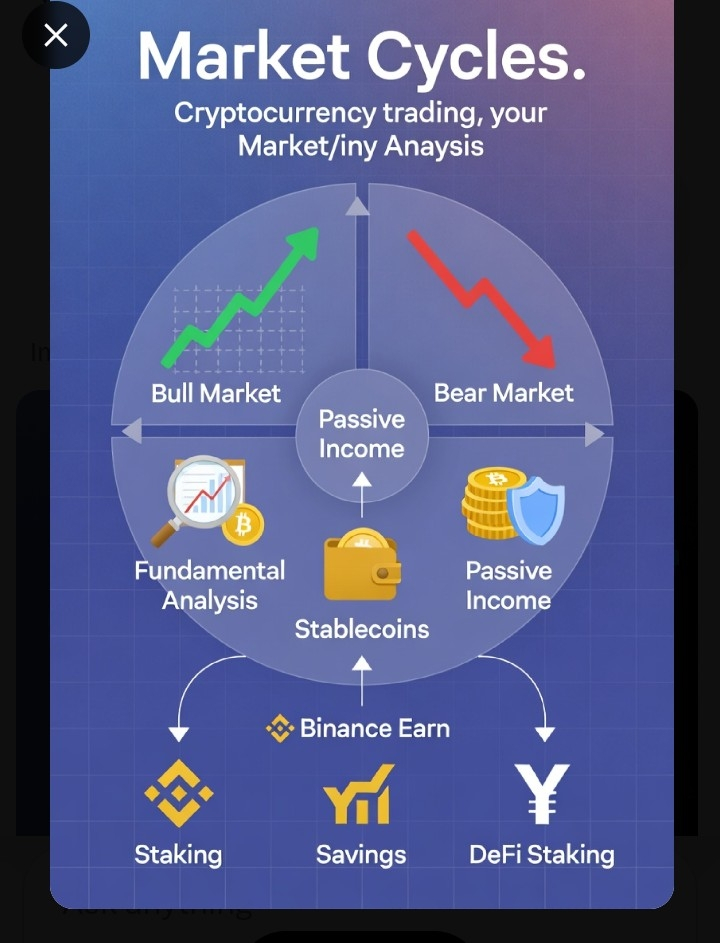
Bull Market: Rising prices, optimism, increasing participation. Driven by greed, FOMO, and positive news.
Bear Market: Falling prices, pessimism, capitulation. Driven by fear, panic selling, and negative sentiment.
Crypto amplifies these due to 24/7 trading, high retail involvement, leverage, and narrative-driven hype.Emotional Control in Crypto Trading/InvestingEmotions like fear (panic selling at lows, missing rebounds) and greed (chasing highs, overleveraging, ignoring risks) are the biggest enemies. They lead to poor decisions: buying high/selling low instead of the opposite.
Tips for better emotional control:
Set clear rules: Use stop-losses, take-profit levels, and position sizing (risk only 1–2% per trade).
Stick to a plan: Avoid impulsive moves based on FOMO or panic — journal trades to review emotions.
Zoom out: Focus on long-term cycles rather than daily noise. Dollar-cost average (DCA) into strong assets during fear phases.
Diversify and use tools: Track the Fear & Greed Index as a sentiment gauge, not a sole signal.
Practice detachment: Treat crypto as an investment, not gambling. Take breaks during extreme volatility.
Mastering psychology separates consistent winners from those who get wrecked by cycles.#CryptoMarketCycles #FearAndGreedIndex #BullBearMarkets #CryptoPsychology #EmotionalControl


