When I first started digging deeper into @Fogo Official I expected another performance focused Layer 1 competing on speed and fees. That narrative is common. What caught my attention instead was how Fogo is positioning itself around something much harder to solve in crypto.
Compliance without sacrificing privacy.
Transparency without turning users into data products.
Performance without compromising durability.
And in the current regulatory climate, that balance matters more than raw TPS numbers.
The conversation around compliance in crypto has always been extreme. Either a chain goes fully anonymous and risks regulatory pushback, or it overcorrects and builds infrastructure that collects excessive user data just to appear compliant. Most ecosystems treat privacy and compliance as opposites.
Fogo is trying to treat them as parallel layers.
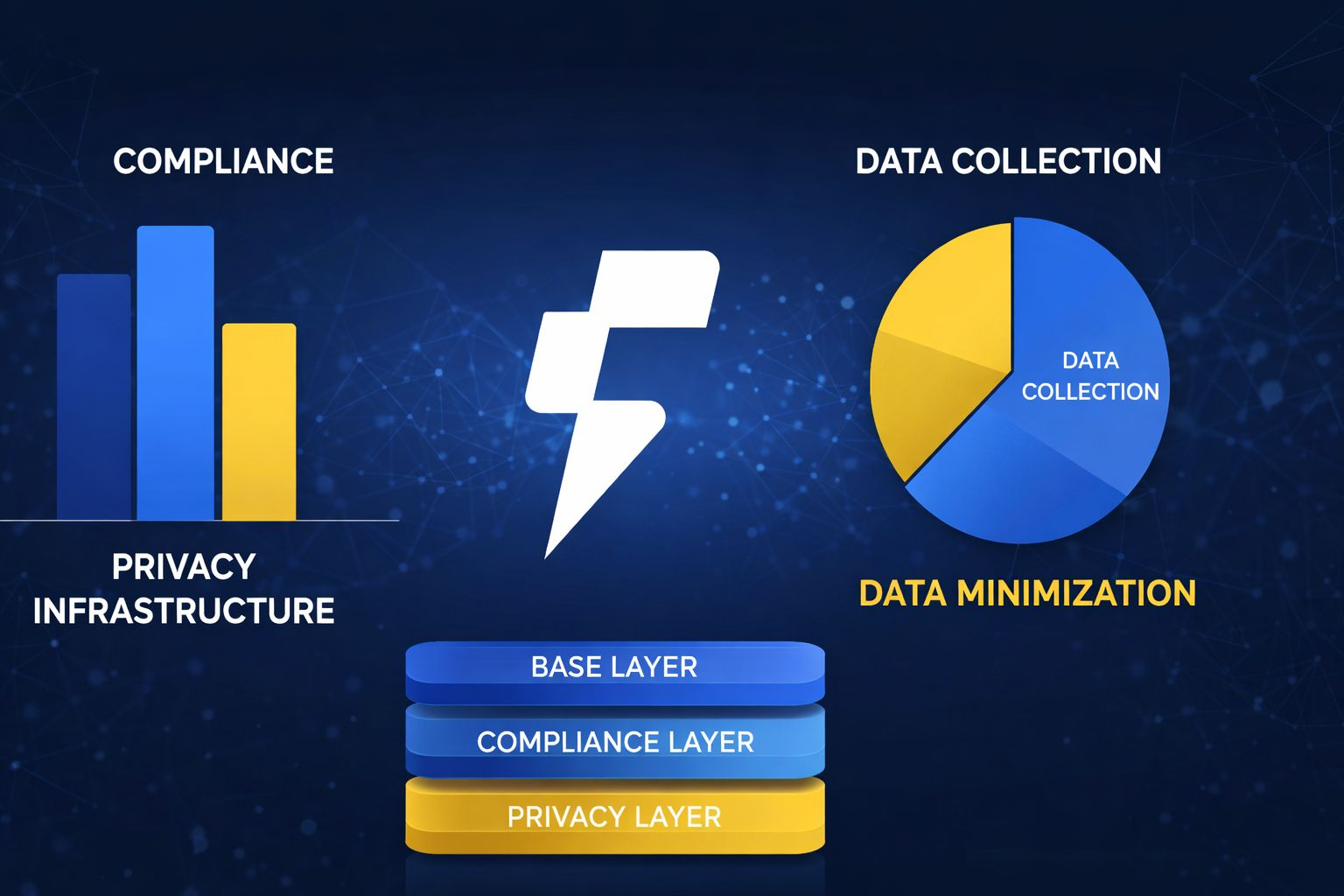
Let’s break down the core comparison visually and conceptually.
In traditional blockchain compliance models, infrastructure often leans toward data collection. Platforms gather wallet metadata, behavioral patterns, IP associations, transaction linking, and user identity overlays. The idea is simple. More data equals easier regulatory reporting.
But that approach introduces structural risk.
More stored data means more attack surfaces.
More centralized logs mean more potential breaches.
More data trails mean less user sovereignty.
Fogo’s design philosophy moves toward data minimization instead of mass data accumulation.
Compliance vs Privacy Infrastructure
Most networks approach compliance as an overlay. They bolt on reporting modules or analytics services after the base layer is built. That creates fragmentation. It also increases dependency on external data providers.
Fogo integrates privacy aware infrastructure at the protocol level. The goal is not to hide illegal activity. The goal is to reduce unnecessary exposure of legitimate activity.
That distinction is critical.
Privacy infrastructure on Fogo is structured around selective disclosure models rather than blanket transparency. Instead of every transaction broadcasting every contextual detail to every observer, the network architecture aims to separate execution visibility from unnecessary metadata exposure.
This creates a layered model:
Base Layer
High performance execution using an optimized virtual machine environment.
Compliance Layer
Structured interfaces for regulatory reporting and auditability when required.
Privacy Layer
Data minimization principles ensuring that only necessary information is surfaced, and only to authorized entities.
That architecture changes the conversation. It moves from either privacy or compliance to privacy with compliance.
Data Collection vs Data Minimization
Let’s talk about the second comparison.
In most Web2 systems, data is the product. Platforms collect as much as possible because analytics drives monetization. When crypto copies that model, it becomes a contradiction. Blockchain was supposed to give users control, not turn them into behavioral datasets.
Data collection heavy models create long term systemic risk. Every database becomes a liability. Every log file becomes a target.
Fogo’s direction leans toward minimizing the amount of data stored in the first place.
Data minimization is not about obscurity. It is about reducing excess.
Only essential execution data is processed.
Unnecessary metadata is not permanently embedded.
Off chain components are structured carefully to avoid unnecessary central data silos.
This matters for institutions.
Institutions do not just want performance. They want predictability. They want risk reduced at the infrastructure level. They want to know that regulatory compliance will not require exposing every user interaction to the entire world.
The more I analyze Fogo, the more it feels like a chain being built for serious long term usage rather than speculative cycles.
Latest Ecosystem Developments and Direction
Fogo’s recent ecosystem direction shows increasing focus on structured growth rather than hype driven expansion.
There is a clear emphasis on:
Infrastructure stability
Execution layer efficiency
Enterprise compatibility
Regulatory alignment
Long term validator incentives
Instead of chasing short term narrative pumps, the ecosystem updates have been centered around durability and refinement.
This approach does not generate immediate viral attention. But it builds credibility.
And credibility compounds.
The validator design model within Fogo is structured to support sustainable decentralization while keeping performance high. That balance is difficult. Too much decentralization without coordination slows networks. Too much centralization breaks trust.
Fogo appears to be optimizing in between.
Another important factor is how the architecture leverages high throughput execution without copying weaknesses from earlier chains. Lessons from past congestion events across multiple Layer 1 ecosystems have clearly influenced design decisions.
Scalability is not just about speed.
It is about sustained throughput under stress.
It is about predictable execution even during volatile markets.
Fogo’s infrastructure direction suggests the team understands that.
Why This Matters for $FOGO
The token model of $FOGO ties directly into network utility. As infrastructure strengthens and more applications deploy on the chain, utility deepens.
But what stands out to me is that the value narrative is not being pushed through noise. It is being built through structural improvements.
Compliance ready infrastructure expands institutional access.
Privacy aware design protects user trust.
High performance execution attracts developers.
That combination forms a stronger long term foundation than simple transaction speed metrics.
In my view, the real opportunity with $FOGO is not short term hype. It is positioning within the next wave of regulatory clarity.
As governments tighten digital asset frameworks globally, chains that cannot adapt will face friction. Chains that overexpose user data will lose trust. Chains that ignore compliance entirely will face barriers.
Fogo is attempting to exist in the narrow corridor between those extremes.
And that corridor may become the most valuable position in the next cycle.
Final Thoughts
I have watched multiple Layer 1 narratives rise and fall. Speed alone does not sustain ecosystems. Marketing alone does not create longevity.
What sustains ecosystems is alignment.
Alignment between technology and regulation.
Alignment between privacy and transparency.
Alignment between scalability and decentralization.
@fogo is building toward that alignment.
The conversation is shifting from how fast a chain is to how resilient it is. From how cheap transactions are to how secure and compliant the architecture can remain under scrutiny.
For me, that shift is important.
The compliance vs privacy debate does not need a winner. It needs integration.
The data collection vs data minimization debate does not need ideology. It needs balance.
If Fogo continues refining this direction, the foundation being built today could matter significantly over the next few years.
That is why I am watching $FOGO closely.
Not because it is loud.
But because it is structured.