

When I heard about Vanar, my first reaction was honestly neutral. Not excitement, not doubt just that familiar feeling of “okay, another Layer 1.” After a while in crypto, you stop reacting to announcements and start waiting for patterns.
But curiosity got the better of me, and I started looking into how Vanar was positioning itself not around speed or “we’re the fastest chain,” but around what actually runs on top of it: AI, gaming, and real world assets.
That’s when it started to feel different. Not revolutionary. Just… more grounded.
For years, Web3 has felt like a solution in search of a problem. Incredible infrastructure, but most of it used to trade memes, farm yield, or speculate on tokens that represent other tokens. Even DeFi, as powerful as it is, still mainly serves people already inside the bubble.
What caught my attention with Vanar wasn’t the tech itself, but the framing. The idea that a Layer 1 shouldn’t just optimize for developers or validators, but for actual user experiences especially in areas where Web3 has consistently struggled: AI integration, gaming, and real-world utility.
On-chain AI is a good example. Most AI projects in crypto today are either buzzwords or thin wrappers around off-chain models. The “AI” part is often just a marketing layer, while everything important still happens on centralized servers. So users don’t really get transparency, and developers don’t really get composability.
The interesting shift here is treating AI as something that can live within the chain’s logic where inference, data access, and incentives are verifiable. Not perfectly decentralized, not magically trustless, but at least aligned with the core promise of Web3: you can see what’s happening.
That’s a subtle but important difference. It moves AI from being a black box service into being part of an open system. You’re not just trusting a model because a company says it’s fair you can audit how it’s used, how it’s paid, and who benefits from it.
Gaming feels similar. For years, blockchain gaming has promised “play to earn,” but most of it turned into “speculate to exit.” Games weren’t fun. They were financial instruments disguised as gameplay loops.
What actually matters in gaming isn’t tokenomics, it’s UX. Load times. Latency. Smooth interactions. The stuff Web2 players take for granted.
And that’s where infrastructure choices suddenly become very real. It’s easy to say “games on the blockchain.” It’s much harder to build a chain where in-game actions feel instant, transactions don’t break immersion, and users don’t have to think about gas fees every time they move an item.
When people talk about Layer 1 performance, they usually obsess over TPS. But TPS is a synthetic metric. It tells you almost nothing about how a system feels to use.
What actually matters is execution model, finality, and how the network handles real workloads. Can it process lots of small actions quickly? Can it avoid congestion spikes? Can it abstract complexity away from users?
That’s the difference between a chain that’s “fast on paper” and one that feels invisible where users don’t even realize they’re on a blockchain.
Real world assets are where this becomes even more obvious. Tokenizing something is easy. Making it legally meaningful, transparent, and usable is not.
Most RWA projects today are still experiments. They rely on off-chain custodians, legal wrappers, and trust assumptions that look suspiciously like traditional finance with extra steps.
But infrastructure still matters here, because RWAs need three things above all else: transparency, reliability, and incentive alignment.
Transparency so users can see what they’re actually holding.
Reliability so systems don’t break under real demand.
Incentives so participants are rewarded for honest behavior, not just speculation.
If your base layer isn’t designed for that if it’s congested, expensive, or fragile then all the “real world” narratives collapse the moment real users show up.
This is where I think the conversation around Layer 1s has been wrong for a long time. We’ve treated them like commodities: faster is better, cheaper is better, more throughput wins.
But infrastructure isn’t a benchmark contest. It’s an environment. And environments shape behavior.
A chain optimized purely for speed encourages bots, arbitrage, and financial games. A chain optimized for UX and composability encourages applications that normal people can actually use.
That doesn’t mean one is morally better than the other just that the design choices matter more than the slogans.
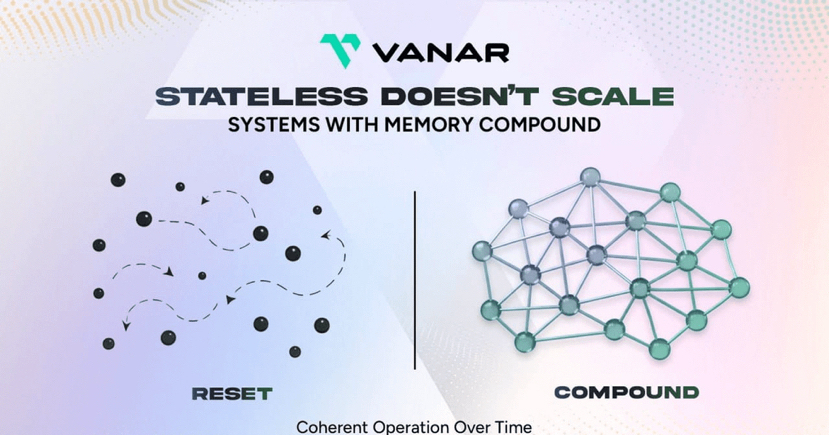
In Vanar’s case, what stood out wasn’t some magical breakthrough, but a different set of priorities. On chain logic that supports AI workflows. Gaming experiences that don’t feel like spreadsheets. Asset systems that at least attempt to bridge on-chain and off chain reality.
None of this guarantees success. Most Layer 1s fail quietly. Even good tech doesn’t create adoption on its own.
But it does shift the conversation from “how many transactions can you process?” to “what kind of behavior does your network make easy?”
And that’s a healthier question.
Because if Web3 is ever going to escape the speculation trap, it needs to deliver real user value. Not just higher yields, but better experiences than Web2 in specific niches.
AI is one of those niches. So is gaming. So are financial tools that don’t require you to be a crypto native to understand them.
The uncomfortable part is that all of this comes with real risks.
Regulation is an obvious one. The moment you touch AI, data, or real-world assets, you’re no longer in a purely experimental sandbox. You’re in a space with laws, compliance requirements, and political pressure.
That’s not a bug. That’s what “real world” actually means.
Speculation is another risk. Even the most well designed infrastructure can get hijacked by short term narratives. Tokens become price charts. Communities become exit liquidity. Long term builders get drowned out by short term traders.
And then there’s centralization. On-chain AI and high-performance gaming often require serious resources: compute, storage, bandwidth. That can easily drift toward systems that are technically decentralized but practically controlled by a few actors.
So none of this is clean. There’s no perfect architecture, no pure decentralization, no guaranteed alignment.
But that’s exactly why infrastructure matters.
Layer 1s aren’t neutral. They encode assumptions about who participates, how value flows, and what kinds of applications are viable.
When I look at Vanar, I don’t see a finished product. I see a direction. A bet that Web3 shouldn’t just be financial plumbing for insiders, but a foundation for applications that feel normal to use.
That’s a harder problem than hitting 100k TPS.
It requires thinking about UX before tokenomics. About incentives before hype. About transparency before marketing.
And maybe that’s the real shift: moving from chains designed to impress other crypto people, to chains designed to disappear into the background while real users do real things.
Not because it sounds good in a pitch deck.
But because if Web3 ever becomes mainstream, that’s probably what it will look like.
Quiet. Invisible. And finally, useful.