
After looking closely at many Layer one projects, it becomes easy to recognize when performance claims are simply repackaged speed narratives. At first glance, Fogo Network might appear to fall into that category because it highlights high performance infrastructure and compatibility with the Solana Virtual Machine. But the deeper i examined the architecture, the clearer it became that speed is not the core message. The real focus is determinism.
Fogo is built as a high performance Layer one using the Solana Virtual Machine as its execution environment. Initially, that sounds like ecosystem leverage. Developers gain familiar tooling, known runtime behavior, and easier migration paths. However, execution compatibility is not the main innovation. The real differentiation lies in how consensus coordination is handled.
Treating Geography as a Real Constraint
Most blockchain networks distribute validators across the globe and then attempt to optimize around the latency that naturally follows. Crypto discussions often treat distance as if it can be abstracted away, but physical limits still exist. Messages must travel through real infrastructure, and those delays compound when coordination spans continents.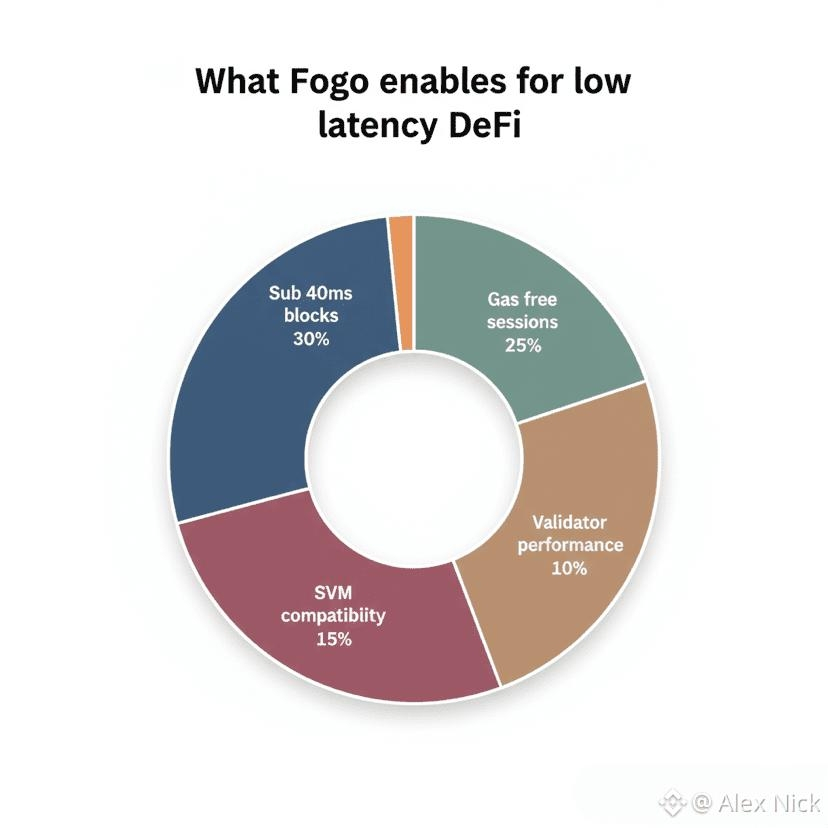
Fogo approaches this reality directly. Instead of assuming global dispersion will somehow produce consistent timing, the network designs consensus around physical locality. Communication paths are shortened and coordination becomes more predictable because validator interaction happens within tighter geographic groupings.
From my perspective, this is less about making blocks faster and more about making block production behave consistently. Predictable timing reduces the uncertainty that applications must compensate for when building on top of the chain.
Multi Local Consensus and Controlled Coordination
The Multi Local Consensus model groups validators into optimized zones rather than relying on a permanently global quorum. Validators within an active zone coordinate more closely, reducing communication variance and tightening execution timing during that period.
This is an intentional tradeoff. The system does not pursue maximum geographic dispersion at every moment. Instead, it prioritizes consistent performance characteristics. Over time, participation rotates, balancing influence while maintaining tighter coordination during active epochs.
Such an approach may not appeal to those who view decentralization purely through constant global distribution. But it signals a clear understanding of the target use case. Systems designed for latency sensitive applications require predictable execution behavior more than theoretical symmetry.
Independence While Remaining Ecosystem Compatible
Another important element is that Fogo runs the Solana Virtual Machine independently rather than sharing network state with the Solana chain itself. Developers gain compatibility advantages, yet the network maintains its own validator set and operational environment.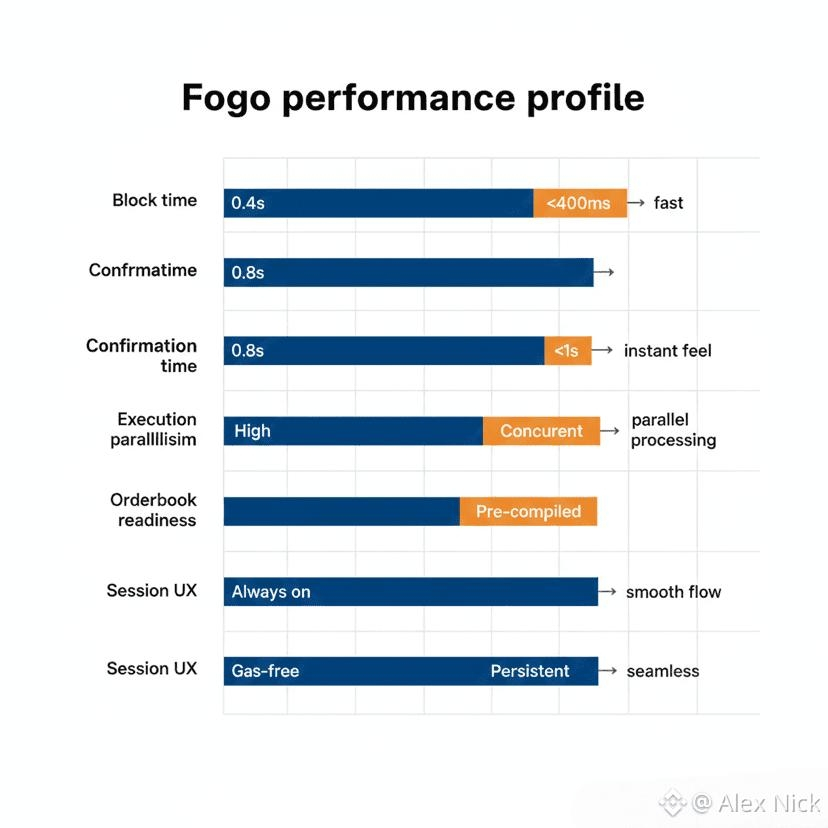
This separation matters because performance issues or congestion in other ecosystems do not automatically affect Fogo. It benefits from established development patterns without inheriting external operational risks. I see this as ecosystem alignment combined with operational independence.
Infrastructure Built Around Predictability
After analyzing the structure more carefully, Fogo feels less like another fast blockchain and more like infrastructure built around a specific belief. The assumption is that future on chain markets will require tighter coordination, lower timing variance, and systems designed with physical constraints in mind.
Markets that depend on precise ordering and rapid decision making do not simply need high throughput. They need consistent execution behavior. Predictability allows builders to design mechanisms with fewer safety buffers and fewer off chain workarounds.
Whether this design philosophy becomes dominant will depend on how on chain markets evolve. Still, the architectural direction appears coherent. Instead of promising a frictionless digital world, Fogo acknowledges that distance, coordination overhead, and load are unavoidable realities.
In a space often filled with abstract claims, building around real world constraints stands out. And that is why Fogo feels less like a project selling speed and more like one attempting to engineer determinism into blockchain infrastructure.