
I used to think blockchain fees were just a fixed toll: pay it, and you’re done. Then I watched a routine swap hang during a busy stretch while other transactions landed, and it made the “optional” part of fees feel very real. Priority fees are that optional extra—basically a tip you attach when you want your transaction treated as more urgent than the rest.
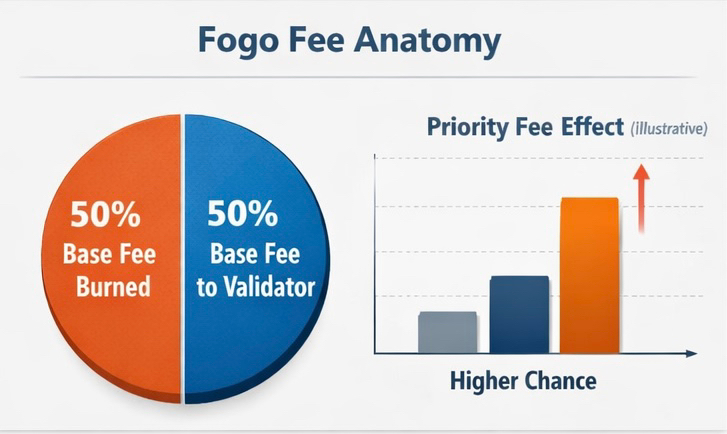
On Fogo, the project says its fee model is designed to mirror Solana’s: a simple one-signature transaction costs 5,000 lamports, and during congestion users can add an optional prioritization fee (a tip) to improve inclusion probability. It also spells out where the money goes: the base fee is split (half burned, half paid to the validator that processes the transaction), while 100% of priority fees go to the block producer. When blocks are full, that tip is the clearest signal you can send that you care about getting in sooner.
Solana’s own description is a helpful reference point: every transaction has a base fee, and the prioritization fee is optional—meant to increase the chance the current leader processes your transaction—and it goes entirely to the validator. In many Solana-compatible tools, the “tip” is tied to how much compute you ask the network to reserve, and Solana warns you can overpay if you request more than you need because the priority fee is based on what you request, not what you actually use.
So when do priority fees actually get used? I default to not using them unless a delay changes the outcome. If I’m doing something retryable, like moving funds between my own wallets, I usually don’t care. But if I’m trading in a fast market, trying to hit a competitive mint, or doing something time-sensitive, paying a small priority fee can be worth it. Even then, it’s not a guarantee; it’s paying for better odds. What surprises me is how small the tip can be when it’s calibrated well—sometimes just enough to avoid a couple of frustrating retries.
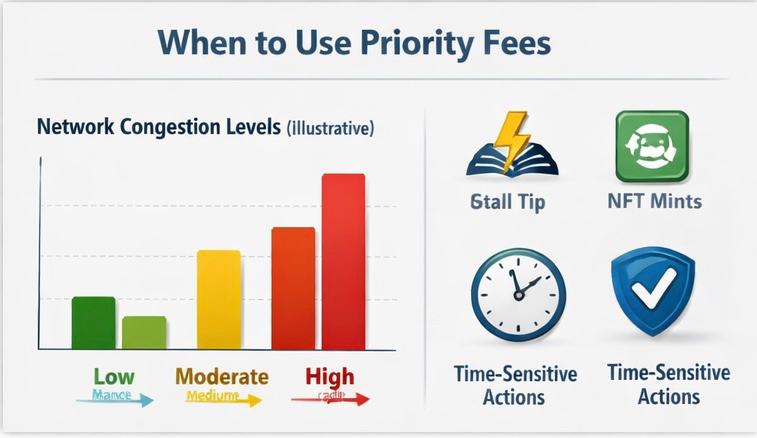
This topic is getting attention now because congestion isn’t rare anymore on high-activity chains. Solana has had bursts where demand drove fees sharply higher; during the January 2025 memecoin frenzy, one report noted daily network fees hit a record around $33 million amid intense trading activity. And who receives priority fees has become a live design question, with recent coverage noting Solana’s move to route 100% of priority fees to validators to better align incentives. Fogo’s documents already assume that world, describing validator software that orders transactions by priority fees and pays those fees to the validator producing the block.
One more twist is that you may not always see the fee at all. Fogo Sessions are meant to reduce transaction-cost friction and can include fee sponsorship, where an app or third party covers fees under constraints. The priority fee still exists; it just becomes part of the cost of delivering a smooth, time-sensitive experience when the network is crowded.
@Fogo Official #fogo #Fogo $FOGO
