
In the rapidly evolving world of blockchain, every new project faces a critical decision: whether to build its own execution environment from scratch or use an already proven system. Fogo has made a strategic and practical choice by leveraging the Solana Virtual Machine (SVM). Instead of taking the risky and time-consuming path of creating a new virtual machine, Fogo is building on a tested foundation. This decision positions Fogo for faster development, stronger reliability, and easier adoption from the beginning.
The Solana Virtual Machine is the execution engine that powers smart contracts on the Solana blockchain. It is specifically designed for high performance, enabling the processing of thousands of transactions per second. This makes it one of the fastest execution environments in the blockchain industry. By adopting SVM, Fogo inherits these performance benefits without having to reinvent the technology.
Building a custom virtual machine is a complex and risky process. It requires years of research, testing, debugging, and security audits. Even then, there is no guarantee that the system will perform efficiently or securely. Many blockchain projects have faced delays and failures because of issues in their custom execution environments.
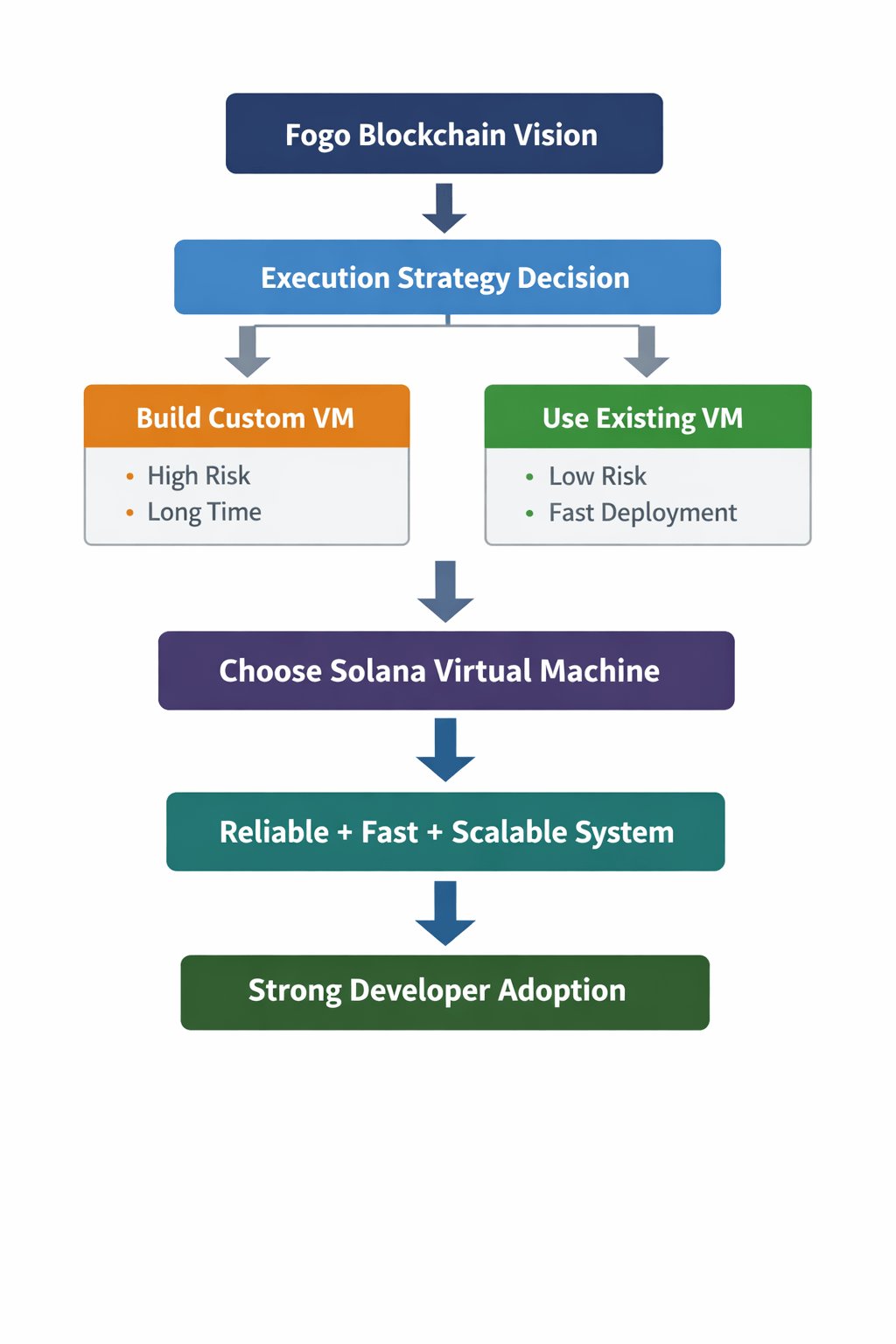
One of the biggest advantages of using SVM is reliability. Since the Solana Virtual Machine has already been tested in real-world conditions, it provides a stable and dependable execution layer. This reduces the chances of unexpected crashes, bugs, or system failures.
Another major benefit is developer familiarity. Thousands of developers are already experienced with Solana’s tools, programming model, and architecture. This means they can easily transition to building on Fogo without needing to learn an entirely new system. Lower learning barriers encourage faster ecosystem growth.
Using SVM also significantly reduces development time. Instead of spending years building and refining a custom VM, Fogo can focus immediately on building applications, improving user experience, and expanding its ecosystem.
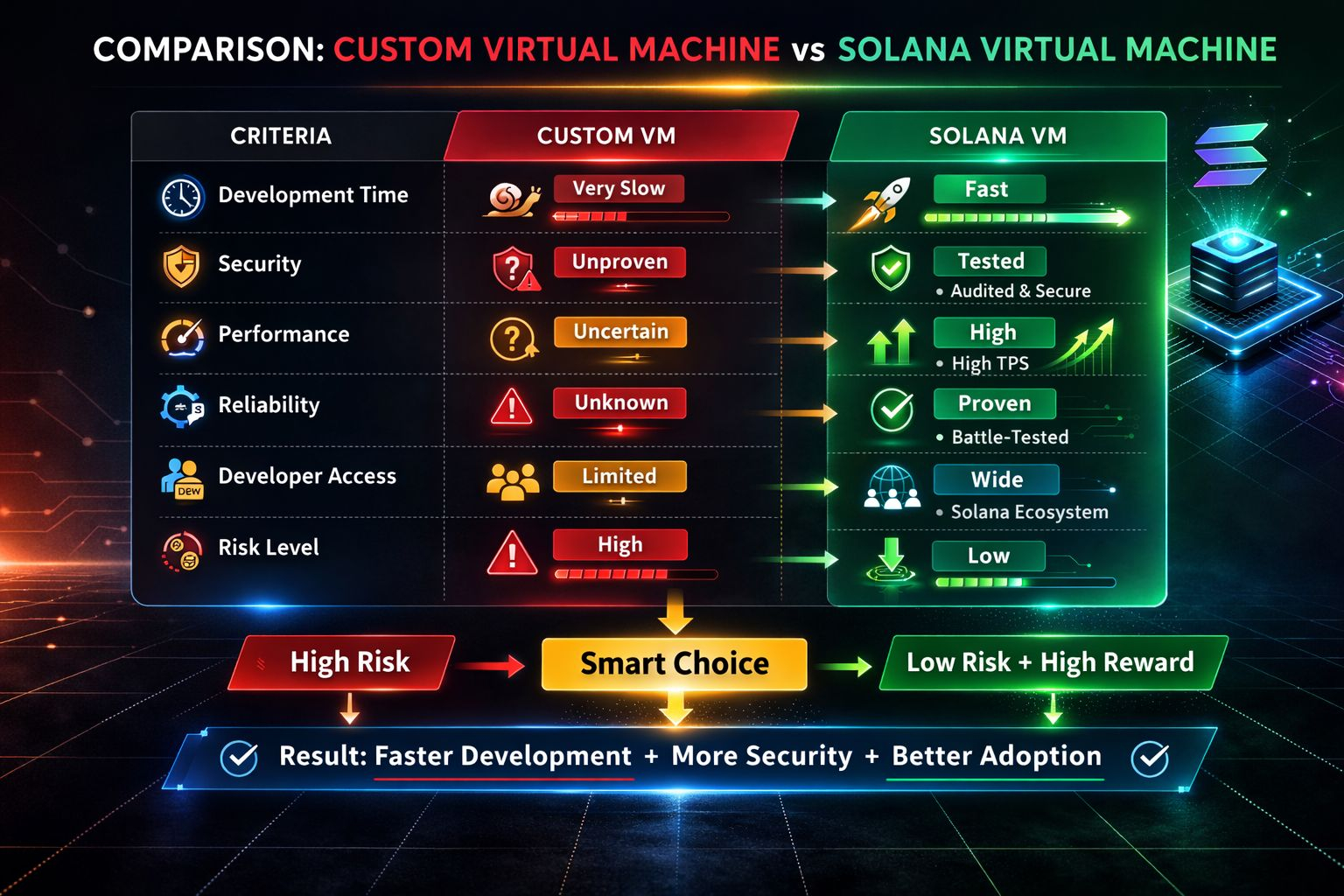
Performance is one of the key strengths of the Solana Virtual Machine. It is optimized for speed and efficiency, allowing blockchain applications to operate smoothly even under heavy demand. This ensures that Fogo can support modern applications such as DeFi, gaming, and real-time services.
Security is another critical factor. New virtual machines often contain hidden vulnerabilities that hackers can exploit. In contrast, SVM has undergone extensive testing, audits, and real-world usage. This makes it a safer choice for building a secure blockchain network.
This approach also accelerates ecosystem growth. When developers can easily build applications, more projects join the network. This increases network activity, attracts users, and strengthens the overall platform.
Additionally, Fogo can focus on innovation rather than infrastructure. Since the execution layer is already proven, the team can concentrate on creating unique features, improving scalability, and delivering better solutions for users.
From a business perspective, this decision is highly efficient. It reduces development costs, shortens time-to-market, and minimizes technical risks. This improves the chances of long-term success.
In the competitive blockchain landscape, speed, reliability, and developer adoption are key success factors. By leveraging the Solana Virtual Machine, Fogo gains a strong competitive advantage over projects that rely on untested technology.
In conclusion, Fogo’s decision to build on the Solana Virtual Machine is both strategic and forward-thinking. It provides a reliable foundation, accelerates development, improves security, and encourages developer participation. By choosing a proven execution framework, Fogo positions itself as a scalable, efficient, and future-ready blockchain platform.
