
I have to tell you, when I first heard about Fogo, I rolled my eyes. Another blockchain, right? But the more I looked into it, the more I realized this one is different. This isn’t just another Layer-1 chasing hype. Fogo feels like it was built with real people in mind—traders, developers, and anyone who wants things done fast, without waiting around for slow confirmations.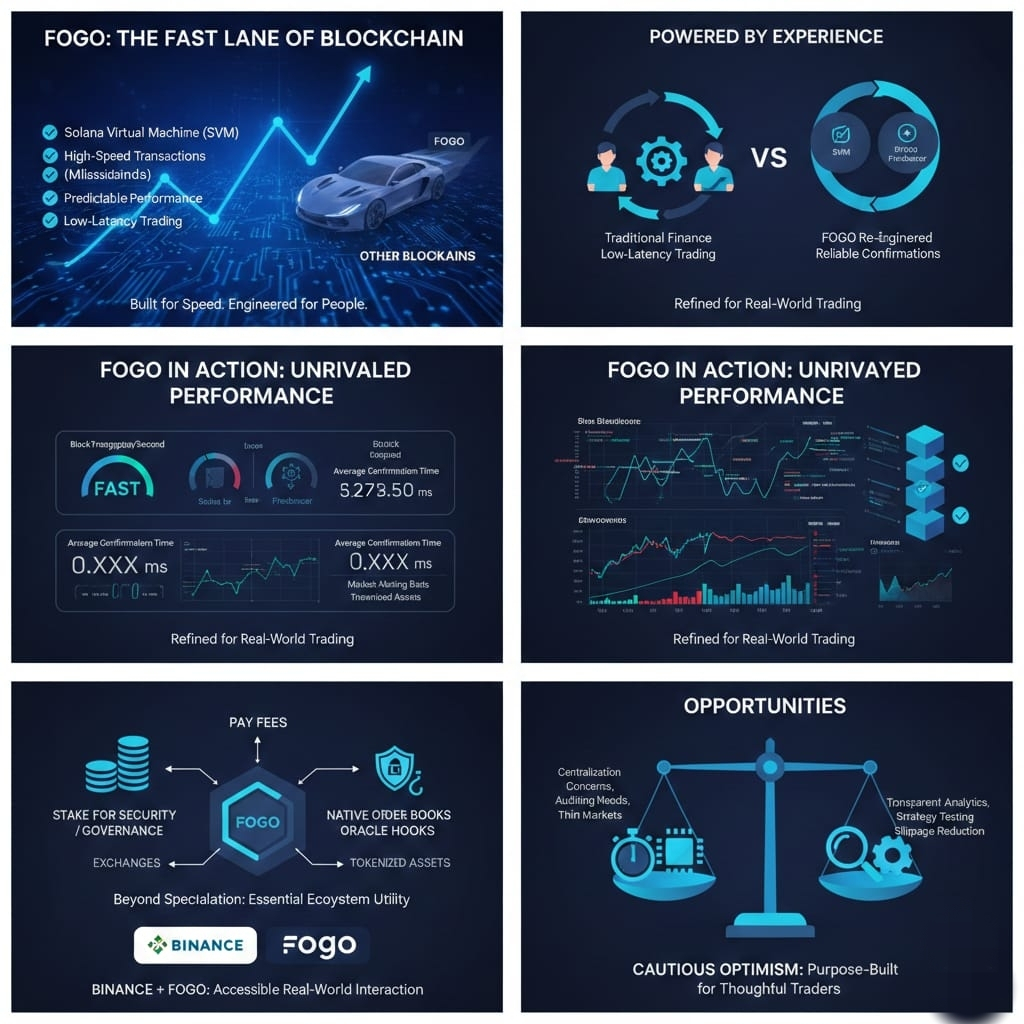
Fogo runs on the Solana Virtual Machine, which is great because if you’ve played around with Solana before, a lot of your existing tools and code can run here almost without changes. But speed is where it really shines. Imagine trading on a chain where milliseconds actually matter, where your orders fill reliably, and where the network feels alive—like a perfectly tuned sports car compared to the sedate sedan of most other blockchains. That’s the experience Fogo is aiming for.
The team behind it isn’t some random crypto startup. Many of them come from traditional finance and low-latency trading backgrounds. They know what it’s like to build systems where every millisecond counts. They took the parts of Solana that worked, like the SVM and Firedancer-inspired nodes, and re-engineered the network for predictable, high-speed performance. It’s like they studied every pain point of traders and said, “We can fix that.”
When you actually see it in action, it’s impressive. Blocks propagate fast, transactions confirm reliably, and everything feels synchronized. It’s not just marketing speak—there’s real engineering behind it. For anyone building exchanges, market-making bots, or tokenized asset platforms, this isn’t a gimmick; it’s practical. The network is built so you can run high-frequency strategies, reduce slippage, and settle trades faster than you thought possible on-chain.
FOGO, the token, isn’t just for speculation. It’s used to pay fees, stake for network security, and participate in governance. Holding it means you’re part of the ecosystem, not just a bystander watching from the sidelines. And for traders, it’s essential—without it, some of the advanced features like native order books and oracle hooks wouldn’t function.
What makes Fogo even more interesting is how Binance has engaged with it. They’ve put out educational content, listed FOGO trading pairs, and given traders a clear, accessible path to interact with the token. For anyone who wants to see how this network actually works in the real world, Binance’s coverage is a great starting point. You can study their guides, check the order books, and see how fast transactions settle.
Of course, speed comes with trade-offs. Optimizing for latency can centralize some sequencing processes temporarily, and on-chain programs still need careful auditing. Markets can be thin, which means fast execution doesn’t automatically protect you from slippage or front-running. That said, if you’re a thoughtful trader or analyst, Fogo offers tools and transparency that make testing strategies genuinely exciting.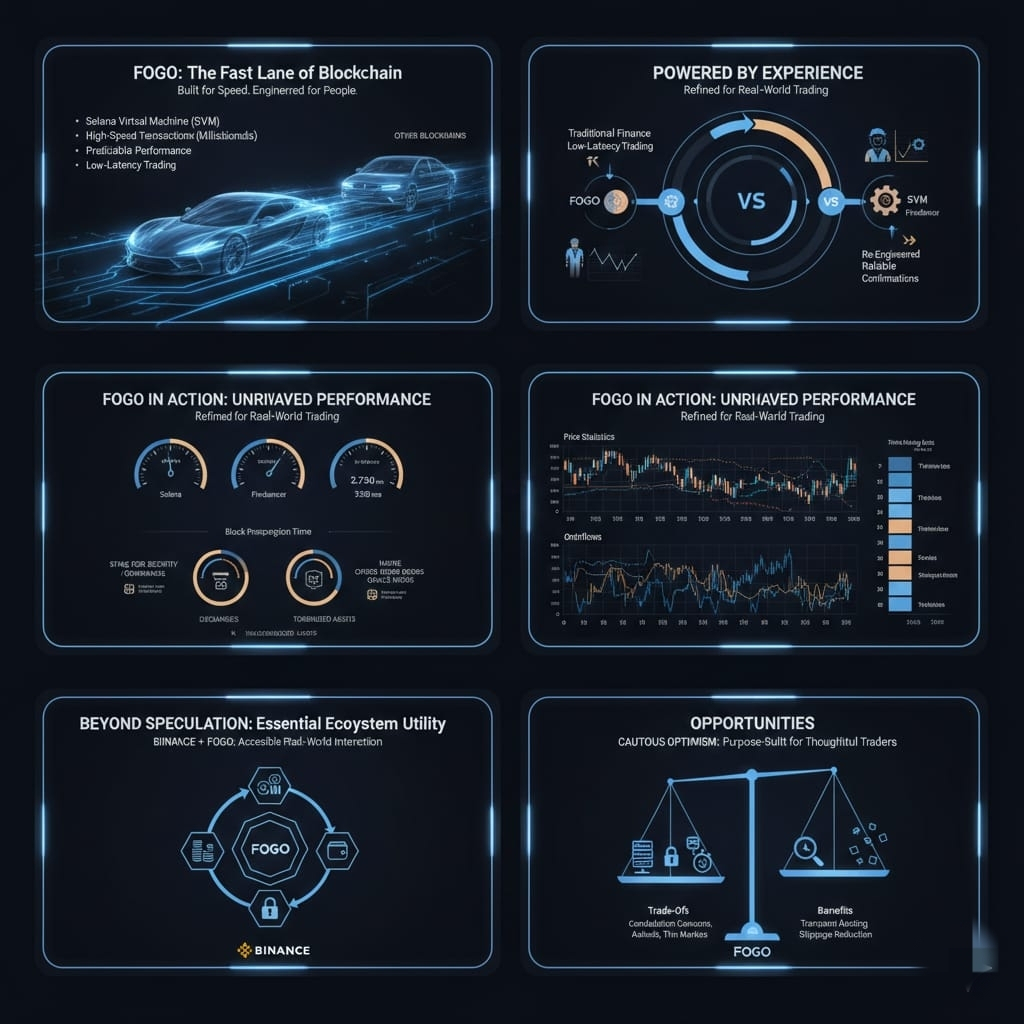
Honestly, I’m cautiously optimistic. I like projects that have a clear purpose and a team that seems to understand the people they’re building for. Fogo isn’t flashy just for the sake of hype—it’s purposeful. If you’re curious and careful, this is the kind of blockchain worth keeping an eye on, maybe testing with small trades, and watching as its ecosystem grows. For me, it feels alive, practical, and real, and that’s rare in the crypto world today.
