
Solana Company (NASDAQ: HSDT) has announced the launch of Pacific Backbone, a major infrastructure initiative aimed at strengthening Solana’s staking and validator ecosystem across the Asia-Pacific (APAC) region.
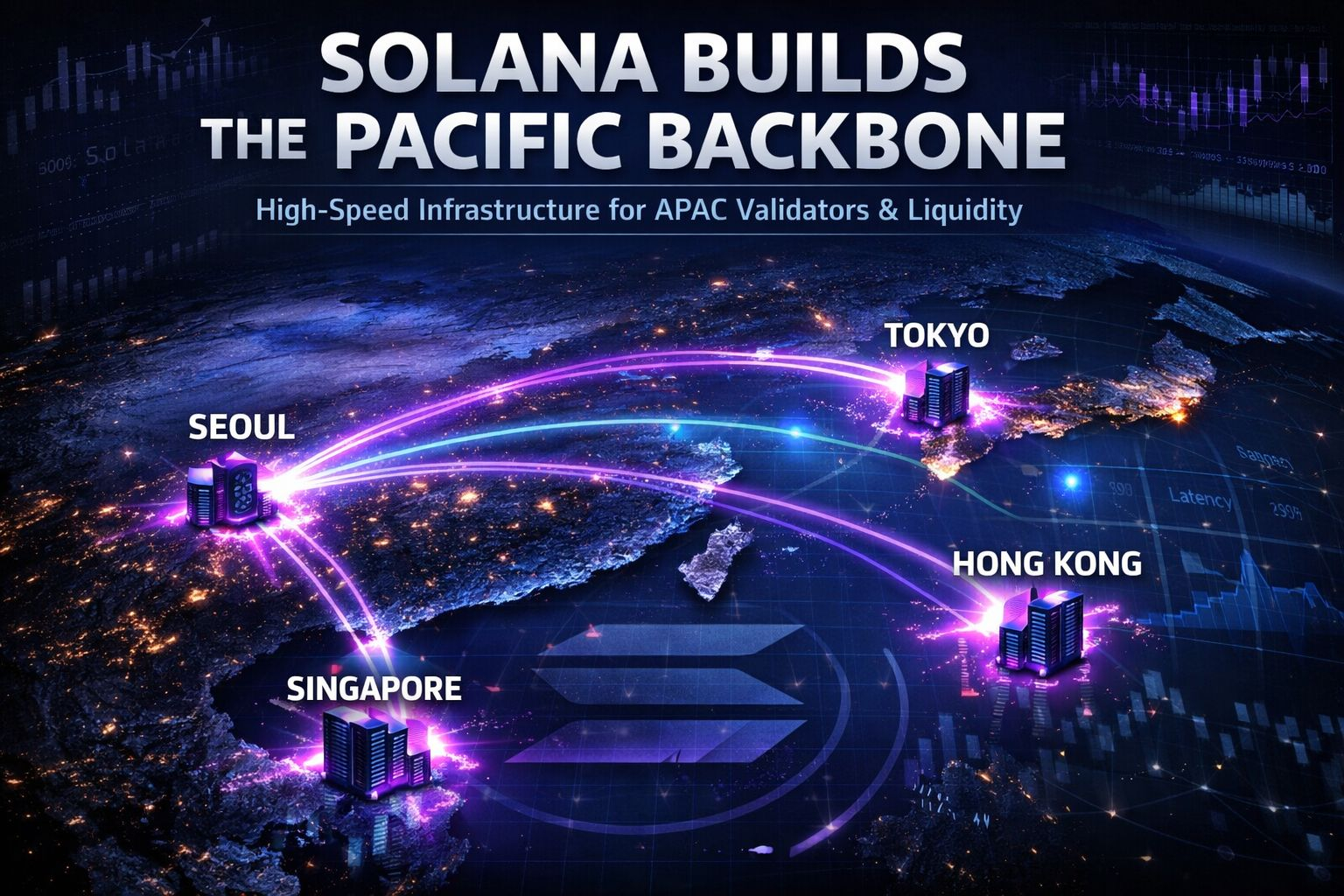
The project will begin with the construction of a high-speed, low-latency network linking key financial and crypto hubs, including Seoul, Tokyo, Singapore, and Hong Kong. The initiative is designed to close existing infrastructure gaps in APAC, lower validator and staking costs, and significantly improve network performance for institutional players.
Strategic Backing and Long-Term Vision
Pacific Backbone is backed by Pantera Capital and Summer Capital, which co-led the $500+ million funding round that launched Solana Company in September. The scale of funding underscores growing institutional interest in infrastructure-level exposure to the Solana ecosystem rather than purely token-based plays.
According to the company, infrastructure deployment will begin immediately, with performance optimization targeted for the second half of 2026. New liquidity-focused products and services are expected to roll out within the next 12 to 18 months, positioning Solana Company as a core service provider for APAC-based market participants.
Why APAC Matters for Solana
Asia-Pacific remains one of the most active regions for crypto trading, market making, and validator participation. However, latency, bandwidth constraints, and operational costs have limited efficiency for high-frequency traders and institutional validators.
Pacific Backbone aims to:
Reduce latency for Solana validators and RPC providers
Lower operational costs for staking and validation
Improve execution quality for market makers and HFT firms
Strengthen Solana’s regional decentralization and resilience
If successful, the initiative could make Solana significantly more competitive against rival Layer 1 networks in institutional APAC markets.
Expanding Institutional Offerings
Earlier this month, Solana Company partnered with Anchorage Digital and Kamino to allow institutions to borrow against natively staked SOL while keeping assets in custody. This move aligns with the broader strategy of turning Solana infrastructure into a yield-generating, capital-efficient platform for institutions.
The company currently holds over 2.2 million SOL, making it the second-largest publicly traded holder of the asset.
Market Reaction Remains Cautious
Despite the long-term ambition, markets reacted negatively to the announcement. HSDT shares fell 8.3% on Monday morning and are now down more than 90% since the company pivoted to a Solana-focused strategy in September.
The sell-off highlights investor skepticism around execution risk, capital intensity, and the time required for infrastructure investments to translate into revenue.
Bottom Line
Pacific Backbone represents one of the most aggressive infrastructure bets yet on Solana’s long-term institutional adoption, particularly in Asia-Pacific markets. While short-term market sentiment remains weak, the initiative signals a clear shift toward deep infrastructure ownership, positioning Solana Company as more than just a SOL treasury play.
Whether this bold strategy can reverse investor confidence will depend on execution, adoption, and the broader direction of the crypto market over the next 12–24 months.


#StrategyBTCPurchase #TrumpNewTariffs #WriteToEarnUpgrade #USJobsData #PredictionMarketsCFTCBacking