
Global markets are once again locked onto the Federal Reserve.
After months of aggressive tightening, the conversation has shifted — not toward immediate easing, but toward when easing might begin. Policymakers are signaling that rate cuts are possible later this year… but only if inflation shows consistent and convincing progress.
For now, patience dominates the narrative.
Inflation: Cooling, But Not Conquered
Inflation has eased from its peak, yet it remains above the Federal Reserve’s long-term 2% target. That gap matters.
Several officials within the Federal Reserve have emphasized that cutting rates prematurely could reignite price pressures — undoing much of the progress made over the past year.
In simple terms:
The fight against inflation isn’t over.
The Labor Market Complication
Strong U.S. jobs data has added another layer of complexity. Employment remains resilient, wages are stable, and consumer demand hasn’t collapsed.
From a policy perspective, this strength reduces the urgency to cut rates.
If the economy can withstand higher borrowing costs, the Fed has room to wait.
The Tightrope Walk
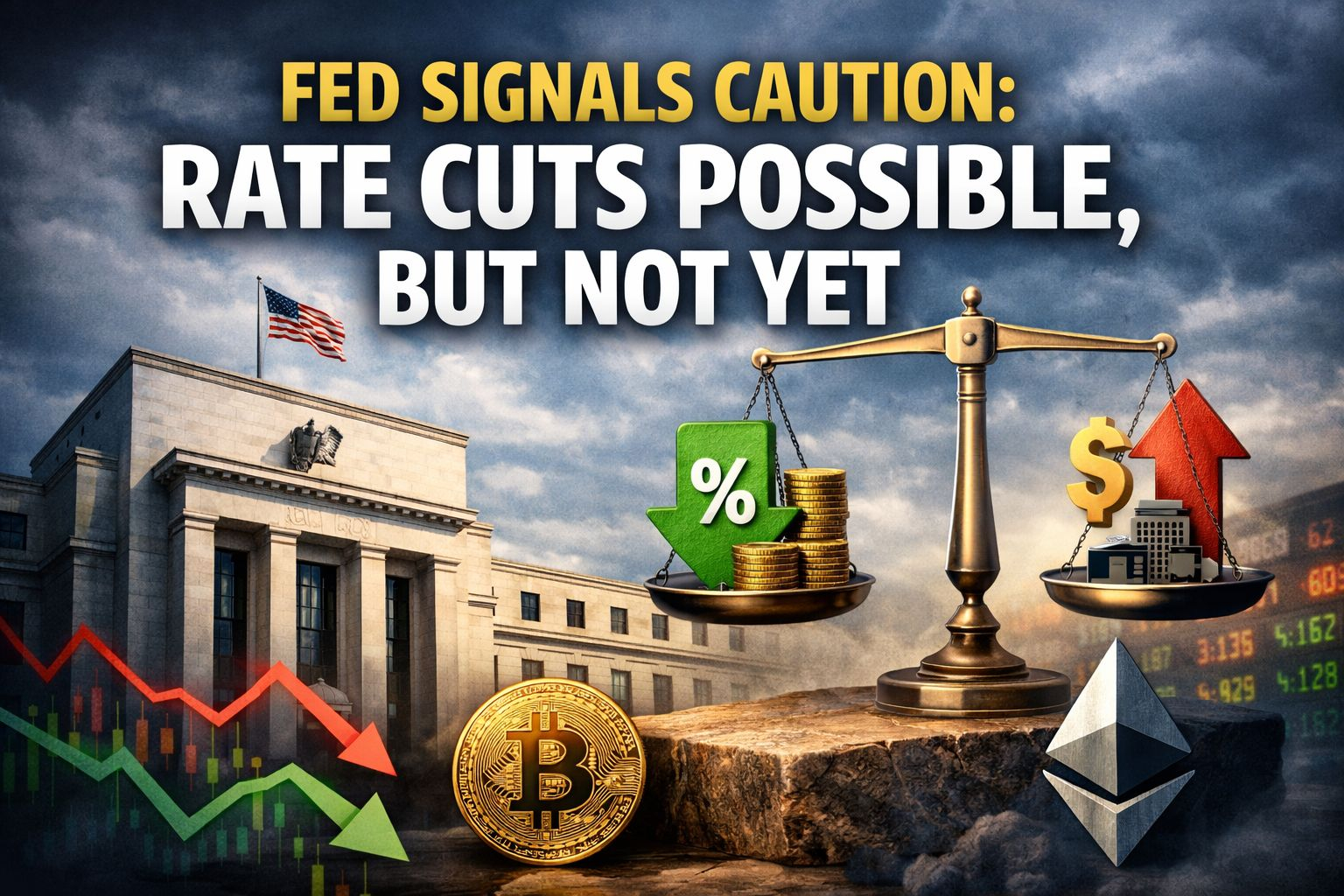
At the same time, policymakers are aware of the opposite risk:
Keeping rates too high for too long could:
Slow business investment
Pressure corporate earnings
Tighten credit conditions
Weaken overall growth
The Fed’s challenge is clear:
Control inflation without triggering unnecessary economic damage.
It’s a delicate balance — and markets know it.
What This Means for Markets
📉 Interest Rates
Near-term cuts appear unlikely. Policy is expected to remain steady until clearer disinflation data emerges.
📊 Inflation
Still the Fed’s primary focus. Every CPI and PCE release now carries outsized market impact.
💼 Labor Market
Strong employment data delays easing. Weakness would accelerate rate-cut expectations.
🌍 Crypto & Risk Assets
Assets like Bitcoin and Ethereum remain highly sensitive to liquidity conditions.
Bitcoin and Ethereum often react sharply to changes in interest rate expectations.
If cuts are delayed → liquidity stays tighter → volatility increases.
If cuts move closer → risk appetite may strengthen.
The Bigger Picture
This isn’t a pivot cycle yet.
It’s a data-dependent waiting game.
Markets hoping for aggressive rate cuts may need to recalibrate expectations. The Federal Reserve is signaling flexibility — but not urgency.
Until inflation convincingly returns to target, policy restraint remains the base case.
Key Takeaway:
The Fed is walking a tightrope — balancing inflation control without stalling growth. Investors should prepare for volatility and policy decisions driven strictly by incoming data, not market pressure.


#TrumpNewTariffs #VitalikSells #StrategyBTCPurchase #TrumpStateoftheUnion #AxiomMisconductInvestigation