
The rise of intelligent machines in the physical world is not a single breakthrough moment. It is a slow crossing of thresholds that used to be theoretical. First, machines learned to recognize patterns in text and images well enough to feel fluent. Then they learned to plan, to write code, to reason across goals. Now the frontier is embodiment, where intelligence stops being a conversation and becomes a force that can move objects, open doors, operate tools, and change outcomes in spaces shared with humans.
Once intelligence enters the physical world, everything gets harder in a very specific way. In software, mistakes are reversible. A bad recommendation can be rolled back. A broken feature can be patched. In robotics, errors have momentum. A robot’s “bug” can be a dented car, a crushed package, a burned motor, or a person knocked off balance. The environment is not a clean interface. It is messy, continuous, unpredictable, and full of edge cases that are not edge cases at all, just everyday life.
What makes this moment feel different is that robotics is no longer limited to rigid automation in controlled settings. For decades, robots were mostly caged behind safety fences, performing repetitive tasks with carefully engineered fixtures. The intelligence lived in the environment as much as in the machine: jigs, conveyors, markers, and calibration routines turned chaos into repeatability. But modern machine learning is trying to invert that relationship. Instead of engineering the world to fit the robot, we are training robots to adapt to the world.
This shift introduces a new set of challenges, because autonomy in physical space is a stack of problems layered on top of each other. Perception is the first layer: seeing the world clearly enough to act. But “seeing” is not just detecting objects. It is understanding what matters and what changes. A human knows the difference between a plastic bag drifting in the wind and a child stepping off a curb, even when both occupy a similar silhouette for a fraction of a second. A machine has to infer that difference from sensors that are imperfect, noisy, and sometimes blind.
Robotic perception also suffers from a brutal constraint: reality does not label itself. A warehouse robot sees reflections, dust, scuffed barcodes, occlusions, and lighting that changes by the minute. A delivery robot deals with rain, snow, glare, and pedestrians who do not walk in straight lines. In homes, the “dataset” is infinite variation: furniture moved around, cables on the floor, pets underfoot, and objects that are partly hidden because that is how humans live. Every one of these conditions stresses models trained in cleaner contexts. When perception fails, everything above it becomes guesswork.
The second layer is prediction and intent modeling. If robots share spaces with people, they must anticipate behavior, not merely react. Reaction is too late when you are moving mass through space. Humans negotiate motion with subtle cues: a glance, a shoulder angle, the speed of a step. Translating that into machine-readable signals is hard. Predicting people is harder, because people are not particles. They make choices. They hesitate. They fake you out. They behave differently when they notice they are being “watched” by a robot.
The third layer is planning, which is where autonomy becomes more than a set of reflexes. Planning in the physical world is not just computing a path from A to B. It involves constraints, tradeoffs, and safety margins that change dynamically. A robot may be able to take the shortest route, but that route might pass too close to a fragile display, a wet floor, or a person carrying hot coffee. In a factory, the optimal route might conflict with human workflows. In a hospital, it might interfere with emergency movement. Planning is a social problem as much as a geometric one.
And then there is control, the layer where physics demands respect. The real world has friction, compliance, backlash, wear, and unexpected contact. A simulated gripper can pick up a thousand different objects in a training environment with perfectly modeled dynamics. A real gripper encounters a slick surface, a deformable package, an off-center weight distribution, or a handle that flexes. The robot must control forces, not just positions. It must be robust to “almost” conditions, where the grasp is slightly wrong but still salvageable if the robot can adjust in time.
This is why manipulation remains one of the hardest and most important frontiers. Moving through a space is challenging, but grasping and using objects pulls the robot into the full complexity of human environments. Doors vary. Handles vary. Packaging varies. The same object can behave differently depending on how it is loaded, worn, wet, or partially blocked. Humans solve this with tactile feedback, a lifetime of priors, and a constant micro-adjustment loop. Getting robots close to that level of competence is not only a machine learning problem. It is a system integration problem across sensing, actuation, materials, and control theory.
Autonomous agents add another dimension to these challenges because they shift robotics from “task execution” to “goal-driven behavior.” A robot that follows a scripted routine is predictable. An agent that pursues goals and adapts strategies can be far more useful, but also far more difficult to govern. The moment a robot has the ability to decide how to achieve an outcome, you must care about misalignment between what you intended and what you specified. In physical systems, specification gaps are dangerous. If you tell an agent “clean the kitchen,” it might decide the fastest method is to push items off the counter. If you tell it “bring me the box,” it might drag it in a way that damages the contents. Optimizing for a metric that is slightly wrong becomes a pathway to behavior that is technically correct and practically unacceptable.
This gets sharper when agents are connected to external tools. A robot might query the internet, access building maps, interact with scheduling systems, or coordinate with other robots. Connectivity increases capability, but it also expands the attack surface. Cybersecurity becomes physical security. If an adversary can spoof sensor inputs, intercept commands, or exploit an update pipeline, they can cause real harm. Even non-malicious failures, like a corrupted model update or a misconfigured fleet policy, can propagate quickly across a network of deployed machines.
One of the most underestimated challenges is reliability over time. Robots are not just algorithms. They are machines with parts that fatigue. Wheels wear down. Joints loosen. Sensors drift. Batteries degrade. Dust accumulates. A model that performs well in a lab can deteriorate in the field because the physical platform is slowly changing. This means autonomy must include self-monitoring and maintenance awareness. The robot needs to detect when it is no longer calibrated, when its grip strength is compromised, or when its camera is partially obscured. Otherwise performance failures will look like “AI mistakes” when they are actually “hardware reality.”
Safety is the obvious challenge, but safety is not a single feature. It is a discipline that must be layered. It includes passive safety, like compliant materials and limited force outputs. It includes active safety, like collision detection, emergency stops, and conservative planning. It includes operational safety, like defining where robots can go, when they can move, and how they behave around humans. It also includes verification and validation, which is notoriously difficult for learning-based systems. Traditional software can be tested against specifications. Learning systems behave statistically. The question becomes: how do you prove a robot is safe enough in an unbounded world?
This is where simulation helps but also misleads. Simulations can produce massive training data and cover rare scenarios, but they cannot perfectly represent reality. The “sim-to-real gap” is not just about textures and lighting. It is about contact physics, sensor quirks, and human unpredictability. A robot that is safe in simulation might still do something unsafe when a sensor saturates in sunlight or when an object slips in a way the simulator never modeled. Bridging this gap requires careful domain randomization, real-world data collection, and conservative deployment practices. It also demands humility: the model should behave cautiously when it is uncertain, rather than confidently improvising.
Autonomous agents bring challenges of interpretability and accountability. When a robot makes a decision that leads to harm, people will ask why. “The model did it” is not an acceptable answer. Operators, regulators, and the public will want traceability: what the robot perceived, what it believed, what policy it followed, what it was optimizing, and what safeguards were in place. But modern learning systems are not naturally transparent. You can log sensor streams and internal states, but that does not automatically produce explanations that humans can understand. Building systems that can generate meaningful rationales, and that can be audited after incidents, is becoming a core requirement for wide deployment.
There is also the problem of coordination at scale. A single autonomous robot is complex. A fleet is a different beast. Fleet behavior includes traffic patterns, resource allocation, conflict resolution, and collective safety. Two robots that are individually safe can create unsafe situations together if their coordination is flawed. Think of a narrow hallway where each robot politely yields, and they deadlock. Or a busy warehouse where small delays create congestion cascades. Multi-agent systems can amplify small errors into systemic inefficiencies. They need robust protocols for priority, negotiation, and fallback behaviors when communication fails.
Economic and labor challenges are intertwined with the technical ones. Robotics will change how work is structured, not only by replacing tasks but by reorganizing workflows. In many settings, the best outcome is not “robots replace humans,” but “robots handle the dull, dirty, and dangerous parts while humans supervise, coordinate, and handle exceptions.” But this requires training, trust, and a careful redesign of processes. Poorly integrated robots can increase workload by creating new failure modes that humans must clean up. A robot that is 95 percent reliable might sound good until you realize that the remaining 5 percent generates constant interruptions, forcing human workers to become babysitters rather than collaborators.
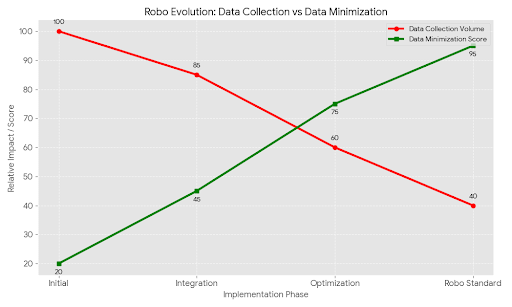
Ethical and social challenges appear quickly when robots move into public spaces. Surveillance concerns grow if robots carry cameras and microphones. Even if data is not stored, the feeling of being recorded can change behavior. Bias and accessibility become practical issues: will robots navigate safely around people with disabilities, children, or elderly individuals? Will they interpret assistive devices correctly? Will they be trained on data that reflects the diversity of real public environments, or only the environments of wealthy early adopters?
Regulation is another challenge that can slow or shape deployment. Regulators will demand evidence of safety and accountability. Companies will face liability questions: who is responsible for an autonomous decision, the manufacturer, the operator, the software provider, or the data supplier? Standards bodies will push for testing protocols, incident reporting, and minimum safety features. This is not just bureaucracy. It is society negotiating how much risk is acceptable and who bears the cost when things go wrong.
One subtle but decisive issue is human trust calibration. People tend to either overtrust or undertrust automation. Overtrust leads to complacency, where operators assume the robot will handle edge cases and stop paying attention. Undertrust leads to rejection, where users avoid the robot even when it is safe and helpful. The ideal is calibrated trust, where humans understand what the robot can do well, what it cannot do, and how it will behave when uncertain. Achieving this requires good interface design, clear signaling, predictable behavior, and transparent operational boundaries.
Autonomous agents also raise a challenge around goal boundaries and permissioning. In the digital world, an agent can be sandboxed with access controls and audit logs. In the physical world, “access” includes physical reach. If a robot can open doors, move objects, and operate tools, you must define what it is allowed to touch, where it is allowed to go, and under what conditions it can act. Permissioning becomes spatial and contextual. A robot might be allowed to enter a supply closet during business hours but not after hours. It might be allowed to handle cleaning chemicals only when supervised. Encoding these policies in a way that is enforceable and resilient to mistakes is hard, but essential.
The rise of intelligent machines in the physical world will likely be uneven. Progress will appear fastest in controlled environments like warehouses, factories, agriculture fields, and certain parts of logistics. Then it will expand into semi-structured environments like hospitals, hotels, and campuses. Finally it will confront the wild complexity of homes and open public streets at mass scale. At each stage, the key barrier is not whether models can be trained to perform tasks, but whether entire systems can be made reliable, safe, secure, and socially acceptable.
If there is one core truth that ties all these challenges together, it is that robotics forces intelligence to become responsible. In a chat window, intelligence can be impressive by sounding right. In a living room, a hospital corridor, or a busy warehouse, intelligence must be right in the ways that matter. It must know when to slow down, when to ask for help, when to stop, and when it does not know. The future belongs not just to smarter machines, but to machines that can carry uncertainty gracefully and operate within boundaries that humans can trust.
If you want, tell me the environment you care about most, like warehouses, delivery robots, home assistants, agriculture, or hospitals, and I’ll tailor this into a more situation-specific narrative while still keeping it as a single continuous piece without headings.