
Last night, I found myself reflecting on Mira 2.0’s mechanism of “Critical Validation” through liquidity pools. Unlike traditional systems that separate financial capital from verification processes, Mira fuses them into what can be described as a form of financial fortification. It raises an intriguing question: how did depositors’ balances evolve into instruments of truth?
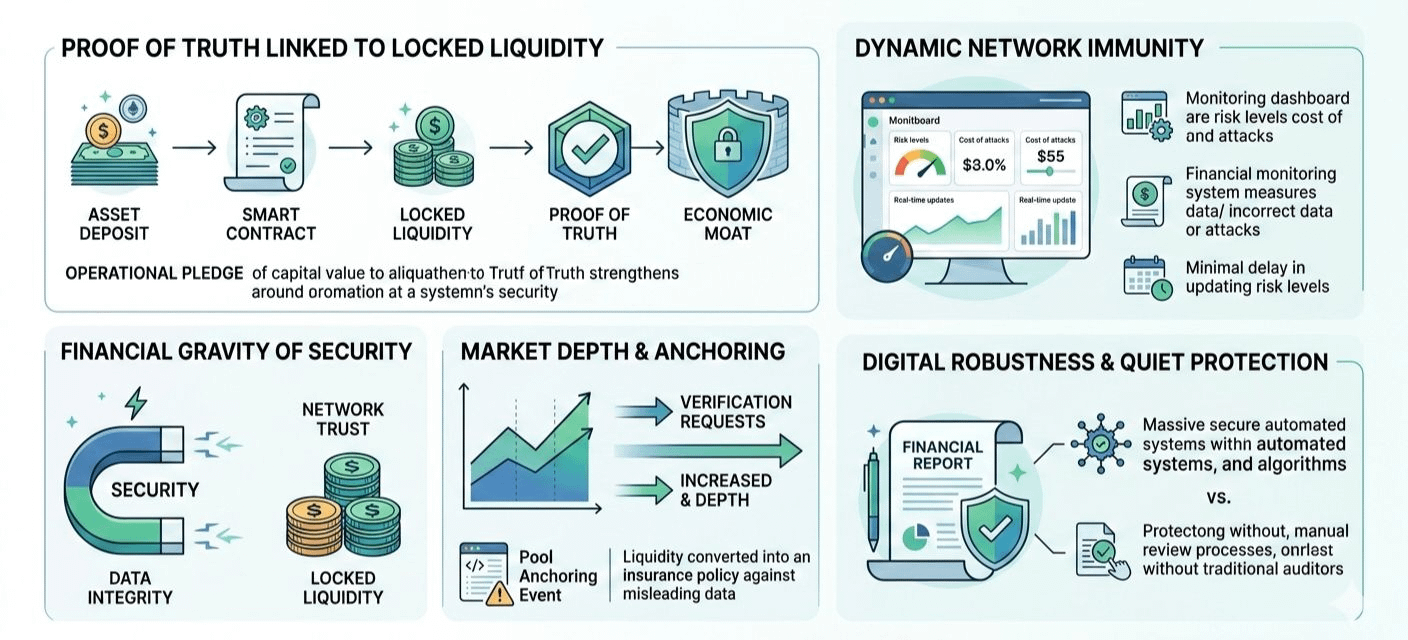
Locking assets as liquidity within a smart contract is no longer merely a yield-seeking strategy. It becomes an operational commitment — a pledge of capital that directly underwrites data integrity. In this framework, Proof of Truth is proportional to the volume of locked liquidity, forming an economic barrier that is costly to penetrate. I think of this as the “Financial Gravity of Security.” Each validation request subtly shifts market depth, and with every “Pool Anchoring Event” recorded in the logs, liquidity transforms into a living guarantee — an economic safeguard against misinformation.
What stands out is the network’s dynamic immunity. Rather than relying on conventional cybersecurity defenses, the system continuously calculates the financial consequences of erroneous validation. Risk levels adjust almost instantly, creating a quiet but powerful layer of protection. It evokes the assurance once symbolized by central bank deposit guarantees — yet here, mathematics and economic incentives resolve uncertainty before information even reaches decision-makers.
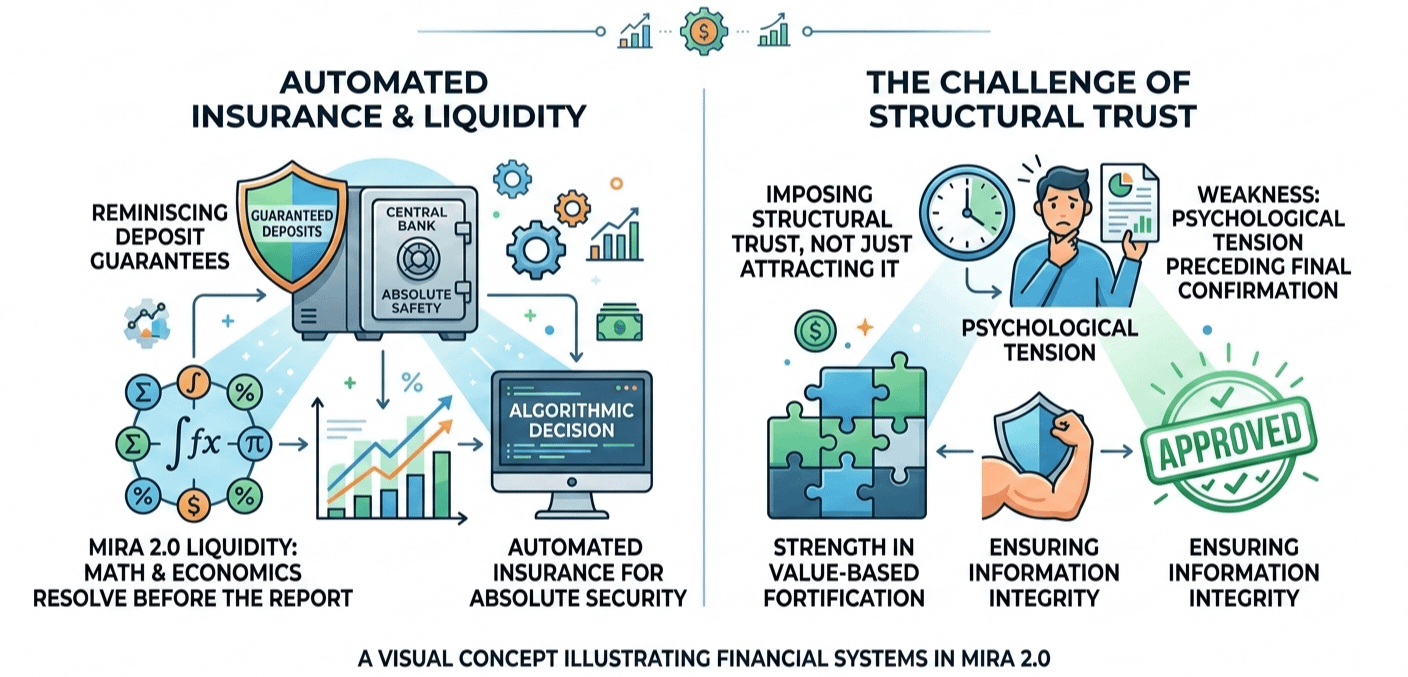
Mira 2.0’s true strength lies in this architecture of structural trust. Liquidity is not just attracted; it is strategically positioned as collateralized confidence. However, with that strength comes a subtle tension — the psychological weight that precedes final financial confirmation of data integrity.
The essential question remains: are market participants prepared to entrust critical financial truth to an uncompromising algorithm? And have you noticed the intermittent behavior in liquidity pool updates — almost as if the system emits calibrated safety signals rather than maintaining a steady flow?