

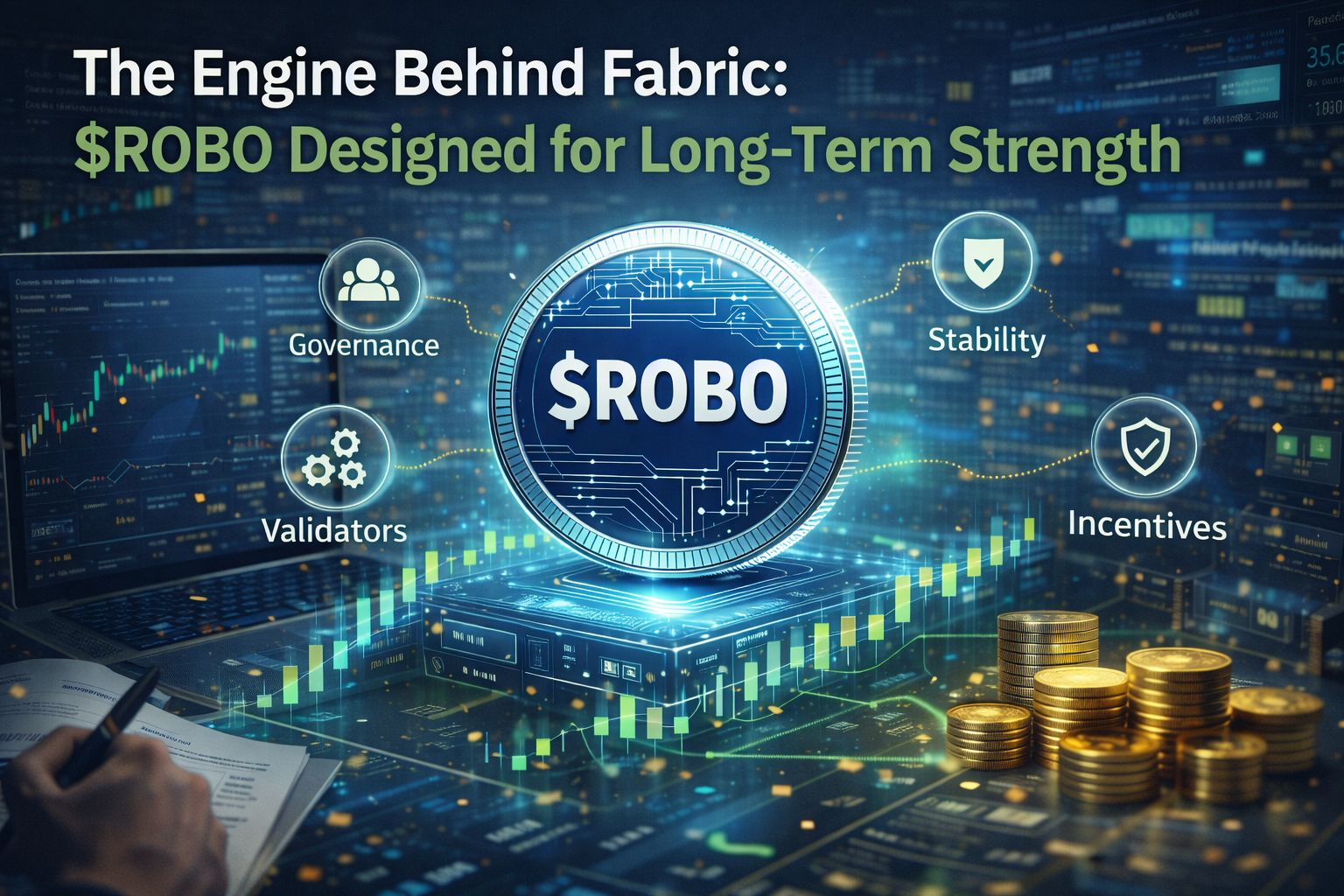
When I carefully studied the @Fabric Foundation whitepaper, one thing became very clear this is not a short-term narrative token. The architecture is built around sustainability, scalability, and coordinated network efficiency. And at the center of that system stands $ROBO
According to the whitepaper, ROBO is not just a tradable digital asset it functions as the operational fuel of the Fabric ecosystem. It is designed to power governance participation, incentivize validators, and enable seamless transactional execution across the network. That layered utility gives the token structural relevance inside the protocol, not just market relevance outside it.
What impressed me most is the framework for ecosystem alignment. The whitepaper outlines mechanisms that reward contribution and responsible participation. This creates a healthy feedback loop as network activity grows, token utility expands, and as utility expands, ecosystem value strengthens. That kind of design promotes organic growth rather than artificial hype cycles.
Fabric Foundation also emphasizes efficiency in transaction coordination. The goal is to maintain scalable throughput while ensuring decentralized integrity. $ROBO acts as the bridge between technical infrastructure and community governance, which positions it as both a utility and influence asset within the network.
From a structural perspective, the tokenomics model supports long-term stability by encouraging active participation instead of passive speculation. That is a powerful distinction.
After understanding the whitepaper deeply, I see $ROBO as more than momentum I see it as engineered intention