

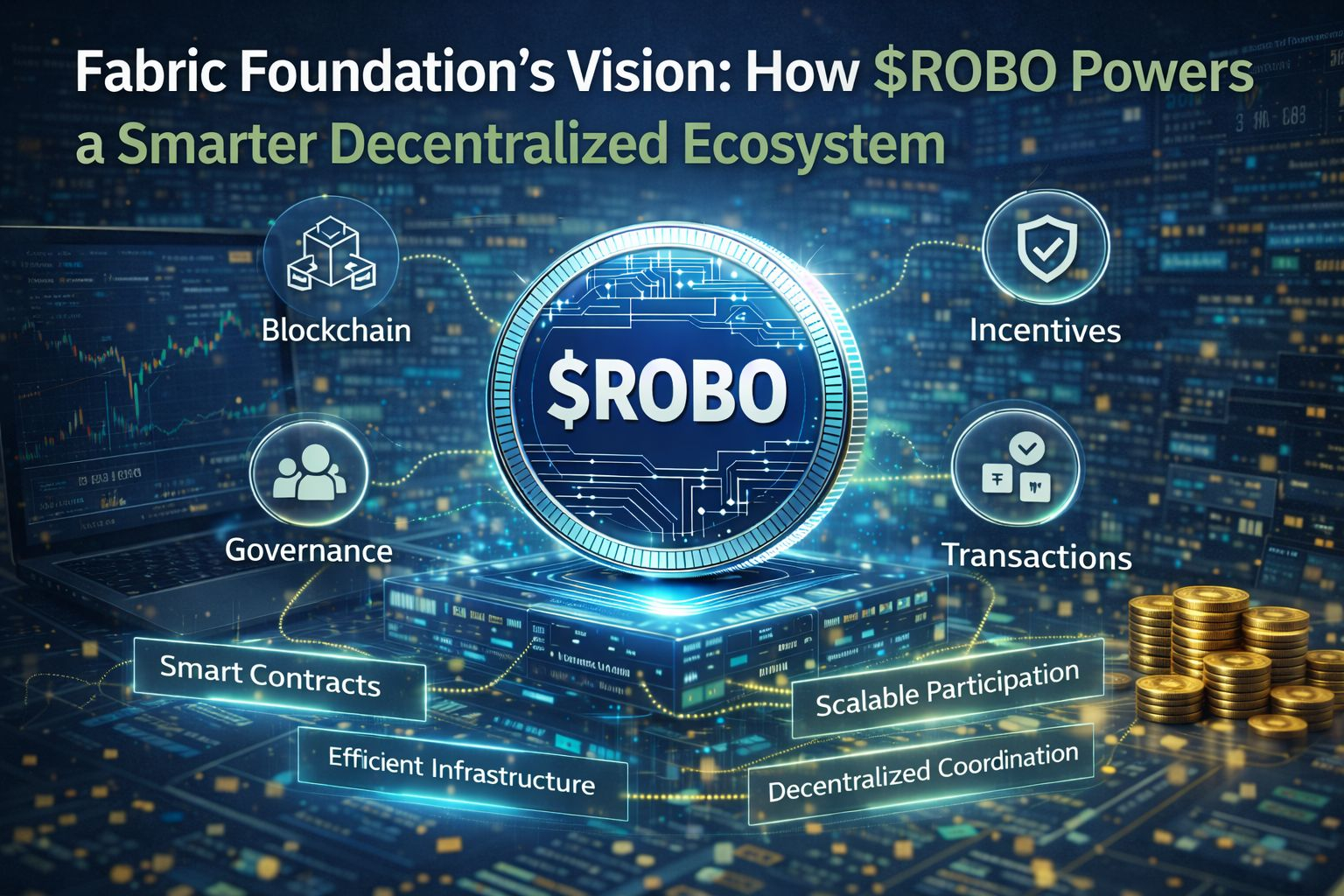
After carefully studying the @Fabric Foundation whitepaper, it becomes clear that the project is designed with a strong focus on 'long-term infrastructure and meaningful ecosystem utility". Rather than creating a blockchain that simply processes transactions, Fabric Foundation aims to build a "programmable digital environment" where technology, governance, and incentives operate together in a balanced and efficient way.
One of the most important components of this system is $ROBO , which functions as the operational core of the Fabric ecosystem. According to the whitepaper, ROBO enables key activities within the network such as facilitating transactions, supporting governance participation, and helping coordinate different components of the platform. This integrated role allows the token to connect users, developers, and validators in a unified framework.
Another positive aspect highlighted in the whitepaper is the "focus on efficiency and scalability". Fabric Foundation introduces an architecture designed to optimize resource usage while maintaining decentralized integrity. By encouraging responsible participation and rewarding contributions, the system aims to create a sustainable and productive network environment.
What makes this vision particularly exciting is the "alignment between technology and community involvement". Instead of relying on temporary hype, the ecosystem is structured to grow through real utility and participation. As more users interact with the network, the practical value of $ROBO expands naturally through governance engagement, network coordination, and transactional activity.
From my perspective, the whitepaper reflects a thoughtful approach to building blockchain infrastructure. Fabric Foundation focuses on "strong foundations, transparency, and long-term growth", and $ROBO stands at the center of that strategy as the token that powers and connects the entire ecosystem.