


The world stands at the precipice of a technological revolution where machines don't just execute commands they think, transact, negotiate, and collaborate independently. @Fabric Foundation is architecting this future through ROBO, a token designed to become the lifeblood of an entirely new economic paradigm: the "Machine to Machine (M2M) autonomous economy".
Let me take you deep into what makes this project fundamentally different from everything else in the crypto landscape.
🔬 The Core Vision: Machines as Independent Economic Agents:
According to the Fabric Foundation white paper, the project was born from a singular realization billions of machines, robots, drones, autonomous vehicles, and AI agents are entering our world, yet "there exists no native financial infrastructure designed specifically for them". Every existing payment rail, every blockchain protocol, was built with human users in mind.
$ROBO changes this entirely.
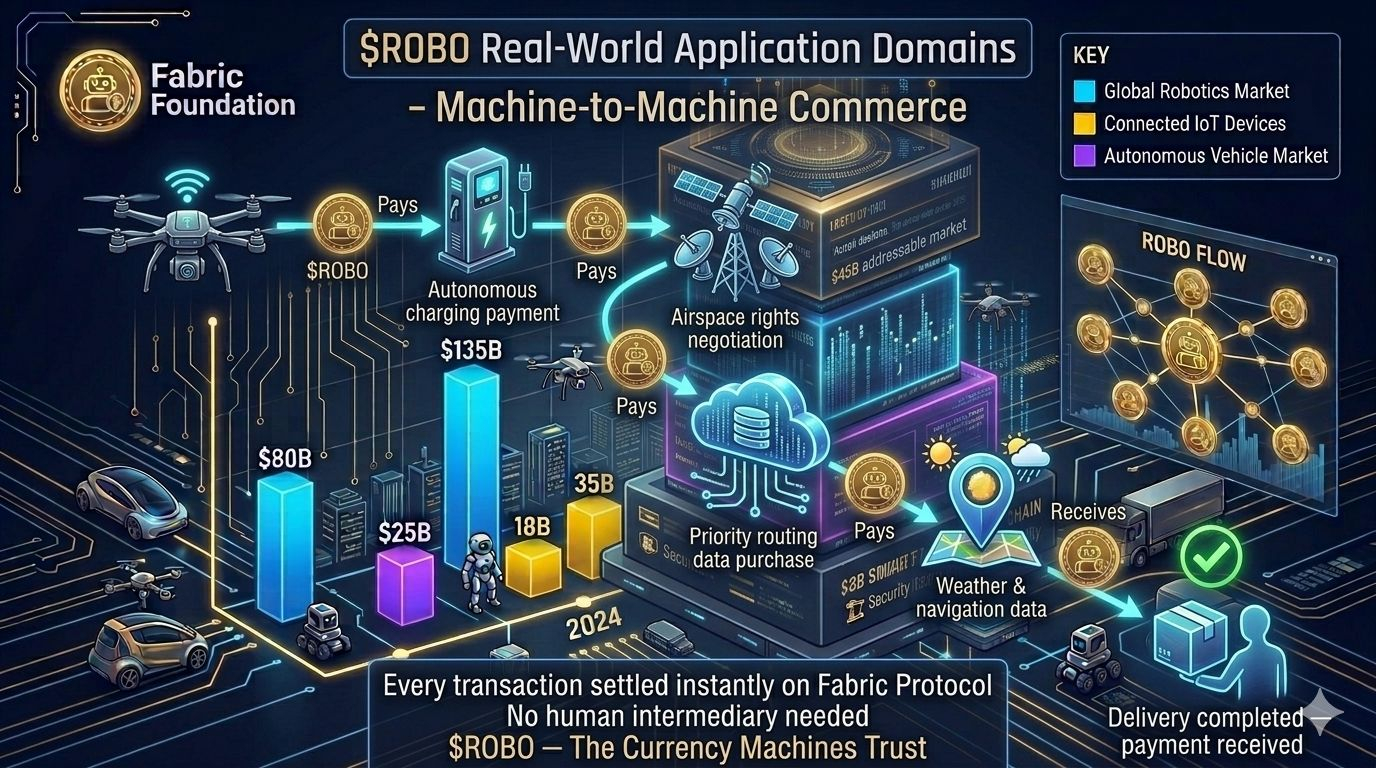
Fabric Foundation envisions a world where every autonomous machine possesses its own digital wallet, its own economic identity, and the ability to engage in real-time micropayments and complex financial transactions "without any human intermediary". Imagine a delivery drone that autonomously pays for its own charging station usage, negotiates airspace rights with other drones, purchases priority routing data, and receives payment upon successful delivery all settled instantly through ROBO tokens on the Fabric network.
This isn't science fiction. This is the infrastructure being built right now.

🏗️ The Fabric Crypto-Economic Protocol: A Deep Technical Dive:
What truly distinguishes Fabric Foundation from other blockchain projects is the "purpose built crypto economic protocol" detailed extensively in their white paper. This isn't a generic smart contract platform repurposed for robotics it's a ground-up architectural design with several revolutionary layers:
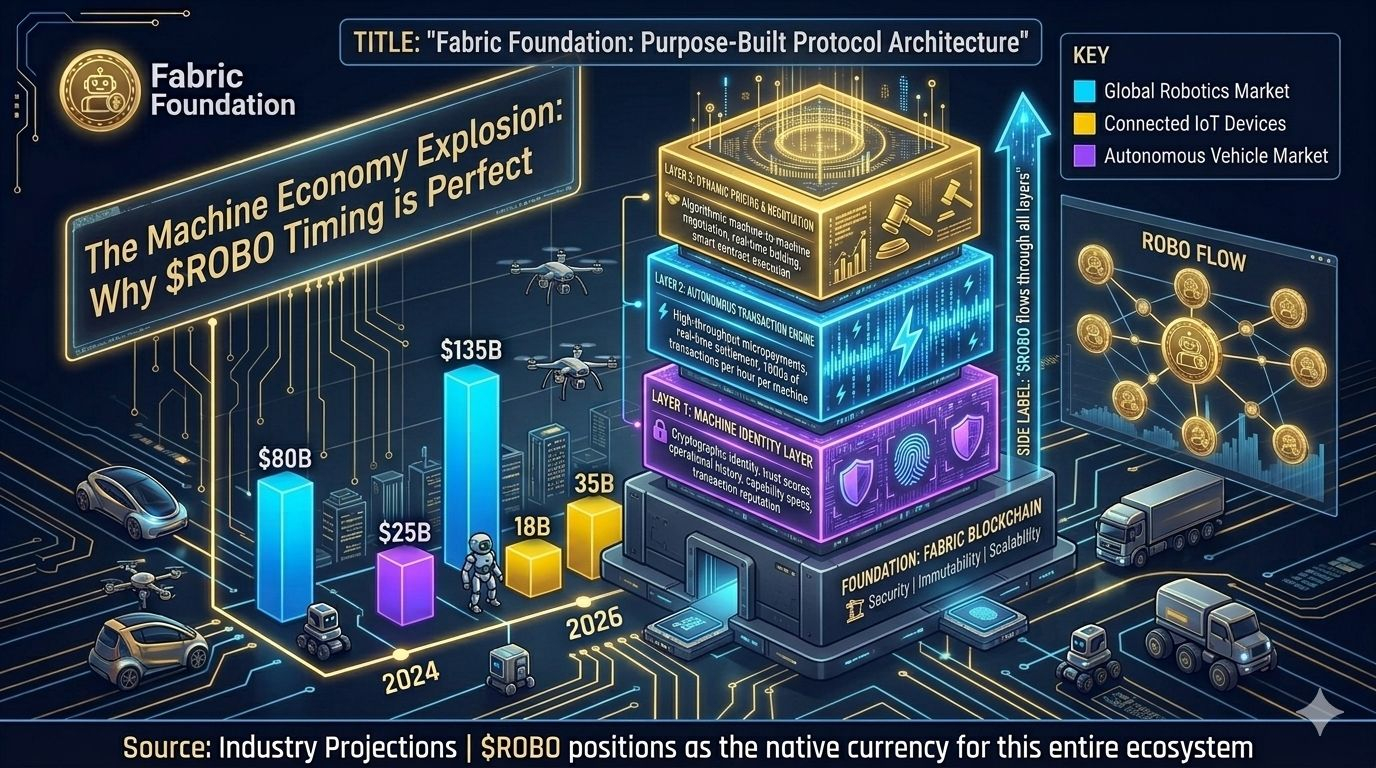
1. Machine Identity Layer:
Every device operating within the Fabric ecosystem receives a "unique cryptographic identity". This identity isn't just an address it's a comprehensive digital passport that carries the machine's operational history, trust score, capability specifications, and transaction reputation. This allows machines to evaluate counterparties before engaging in economic transactions, creating a "trustless yet trust aware" network.
2. Autonomous Transaction Engine:
The white paper describes a sophisticated transaction processing system optimized for the unique demands of machine commerce. Unlike human transactions that might occur a few times daily, machines can execute "thousands of microtransactions per hour". The Fabric protocol is engineered to handle this throughput with minimal latency, enabling real time settlement that machines require for continuous operations.
3. Dynamic Pricing & Negotiation Protocols:
Perhaps the most fascinating technical innovation is the built in "machine negotiation framework". ROBO enables machines to autonomously negotiate prices for services, resources, and data using algorithmic pricing models embedded within the protocol. A warehouse robot needing additional computational power could broadcast a request, receive bids from nearby edge computing nodes, evaluate offers based on price, latency, and reputation, and execute the optimal contract all within milliseconds.
💰 ROBO Tokenomics: Designed for Sustainable Machine Commerce;
The white paper outlines a tokenomic model that demonstrates extraordinary thoughtfulness about long term sustainability:
ROBO serves as the "universal medium of exchange" within the entire Fabric ecosystem. But its utility extends far beyond simple payments:
-> Staking for Machine Operators :
Organizations deploying autonomous machines stake ROBO to register their devices on the network, creating inherent demand that scales directly with adoption.
-> Service Collateralization:
Machines providing services to other machines must lock ROBO as collateral, ensuring accountability and creating a self-regulating quality assurance mechanism.
-> Governance Participation:
ROBO holders participate in protocol governance, voting on network upgrades, fee structures, and ecosystem development priorities. This ensures the community that builds the network also directs its evolution.
->Data Marketplace Fuel:
The Fabric ecosystem includes a machine data marketplace where autonomous devices buy and sell operational data, sensor readings, environmental mapping, and predictive analytics���all denominated in ROBO.
The token's economic design creates "multiple concurrent demand drivers" while maintaining deflationary pressure through transaction fee mechanisms described in the white paper.

🌍 Real-World Application Domains:
The Fabric Foundation white paper identifies several massive industries where $ROBO will create transformative impact:
🤖"Industrial Robotics & Manufacturing"
Factory robots autonomously purchasing replacement parts, scheduling maintenance, and selling excess production capacity to neighboring facilities all coordinated through ROBO transactions.
🚗 Autonomous Transportation
Self driving vehicles paying for road usage, insurance, parking, charging, and traffic data in real time. The white paper estimates that a single autonomous vehicle could execute over "10,000 ROBO microtransactions daily".
🏥 Healthcare Robotics
Surgical robots licensing specialized procedure algorithms from other institutions, medical delivery drones coordinating with hospital infrastructure, and diagnostic AI agents purchasing updated training datasets.
🌾 Agricultural Automation
Farming drones and autonomous tractors purchasing weather data, negotiating water rights, and selling crop health analytics to agricultural marketplace creating a fully autonomous farming economy.
📦 Supply Chain & Logistics
Warehouse robots, shipping containers, and delivery systems creating an end-to-end autonomous supply chain where every handoff, storage period, and transportation segment is automatically negotiated and settled in ROBO.
🔐 Security Architecture: Built for Machine Scale Trust:
The white paper dedicates significant attention to security recognizing that when machines handle financial transactions autonomously, the security framework must be "mathematically bulletproof". Fabric Foundation implements:
"Multi layered cryptographic verification" ensuring that every machine transaction is authenticated, authorized, and immutable.
"Byzantine fault tolerance" mechanisms specifically adapted for machine networks where individual devices may malfunction or be compromised.
"Anomaly detection protocols" that identify suspicious transaction patterns and automatically quarantine potentially compromised devices.
This security first approach ensures that the ROBO economy remains resilient even as it scales to millions of participating machines.
📊 The Market Opportunity: Why Timing Matters
The convergence of several technological megatrends creates a "perfect storm" for Fabric Foundation's vision:
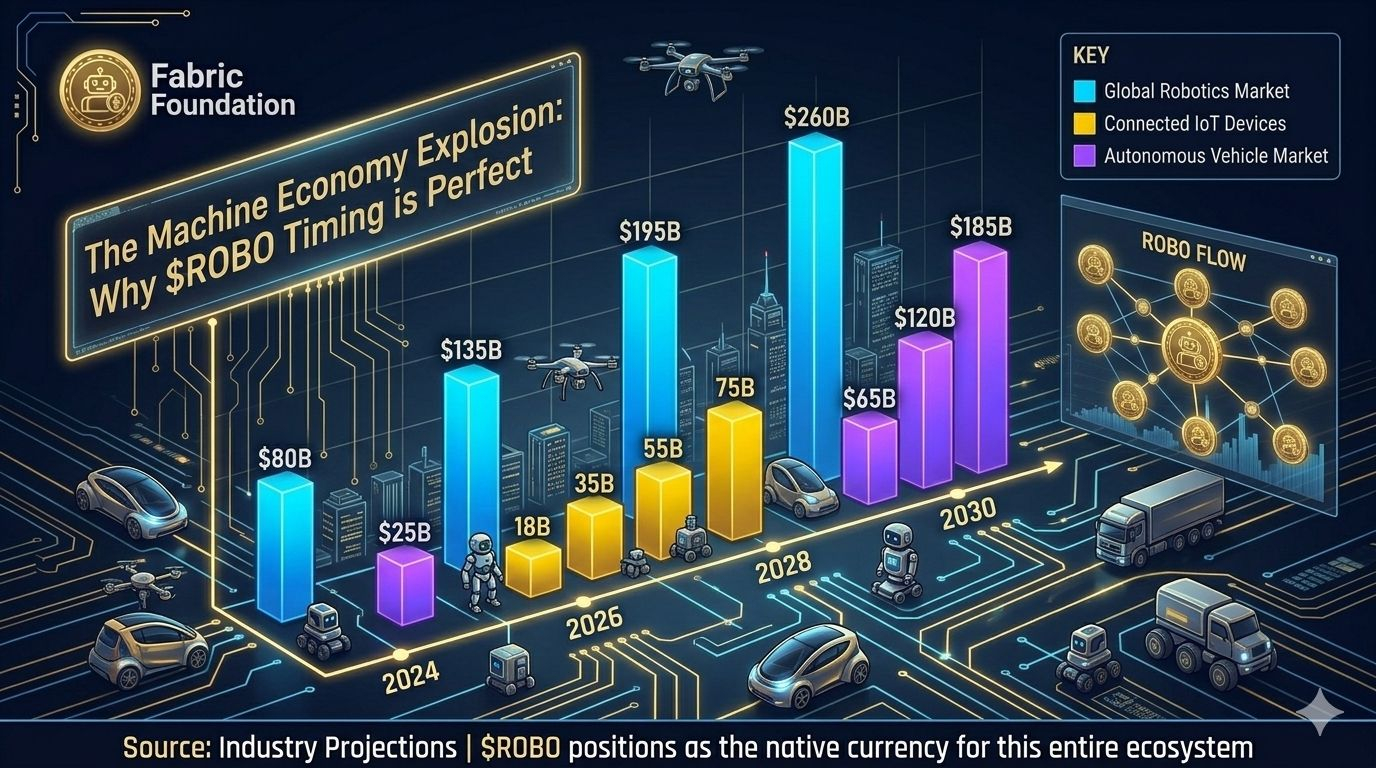
-> The global robotics market is projected to exceed $260 billion by 2030
-> Over 75 billion IoT devices will be connected by 2030
-> Autonomous vehicle markets are accelerating toward mainstream adoption
-> AI agent deployment is growing exponentially across every industry
Yet "none of these machines currently have a native financial protocol". This is the gap that ROBO fills and the first mover advantage in establishing the standard machine economy protocol is "enormous".
🤝 The Fabric Foundation Team & Community Philosophy:
The white paper reflects a team that understands building lasting infrastructure requires more than technology it requires "community". Fabric Foundation is committed to open development, transparent governance, and inclusive participation. Their approach to building @Fabric Foundation ensures that developers, machine operators, investors, and enthusiasts all have meaningful roles in shaping the ecosystem.
The community driven development model means that ROBO isn't just a token it's a "movement" toward a future where machines and humans coexist in a collaborative economic framework that benefits everyone.
🔮 Final Perspective: Why $ROBO Represents a Generational Opportunity:
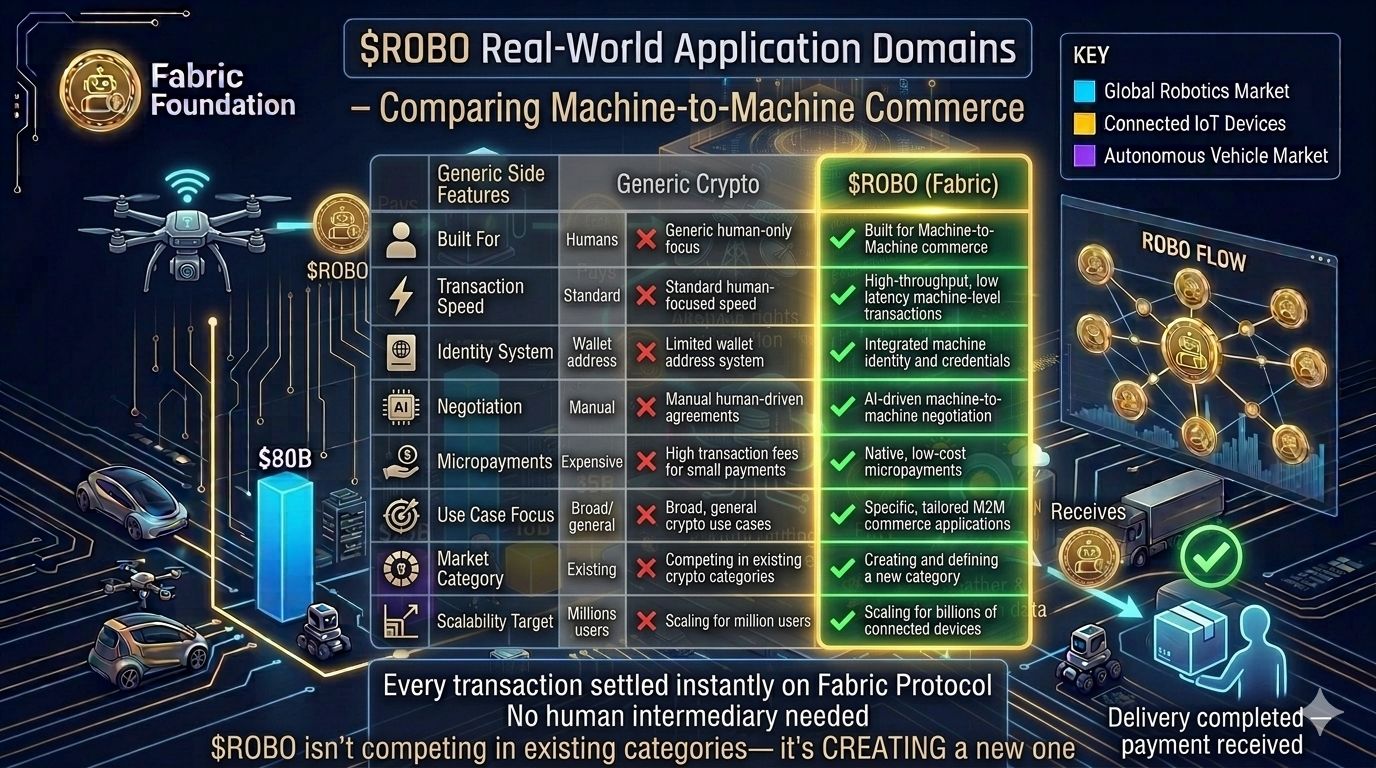
Most cryptocurrency projects compete within existing categories another DeFi protocol, another NFT platform, another Layer 1 blockchain. "Fabric Foundation is creating an entirely new category": autonomous machine finance.
When you look at ROBO through the lens of the white paper, you're not seeing a speculative token you're seeing the "foundational currency of a multi trillion dollar machine economy" that is inevitable. The only question is which protocol will become the standard, and Fabric Foundation's comprehensive technical architecture, thoughtful tokenomics, and clear vision position ROBO as the frontrunner.
The machines are coming. They will need money. That money is ROBO.