
At first glance, ROBO’s market debut looked like any other AI-adjacent token launch: explosive listings, surging volume, and headlines cheering the “robot economy.” Traders rushed in, eyes glued to the price action, largely skipping the part that actually decides the fate of the network. Once you dig into Fabric’s documentation, the real story is far more subtle and far more consequential.
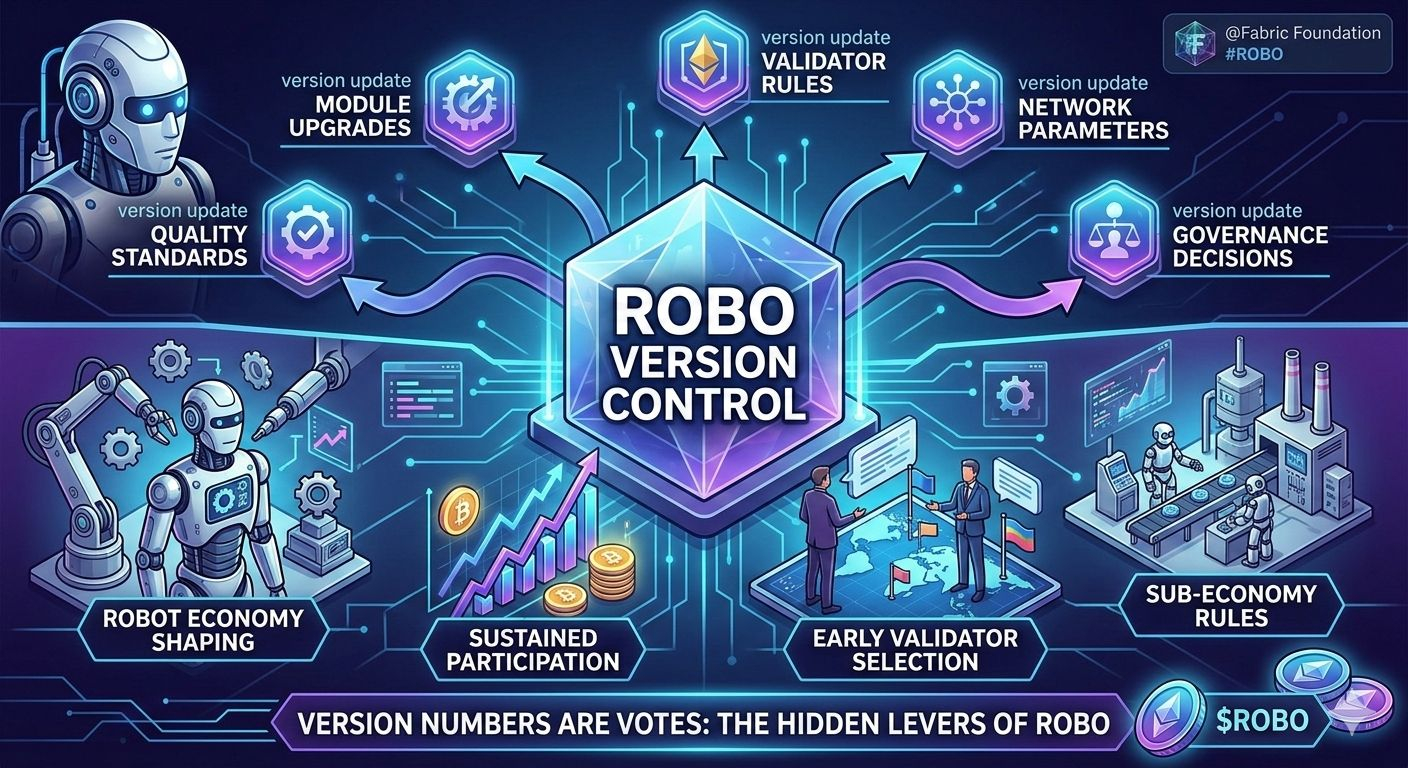
ROBO isn’t just about who holds tokens. It’s about who controls the levers that shape the robot economy: which modules get upgraded, which quality standards are enforced, which validators earn influence, and how network parameters propagate across users and sub-economies. Think of version control here as a form of governance disguised as software updates. Every decision about what becomes “standard” is a decision about real-world behavior.
Fabric positions ROBO as a modular platform. Its cognition stack is composed of interchangeable modules skills that can be added or removed like apps in a store. Each sub-economy can, in principle, set its own pricing models, performance thresholds, and rules, and propagate those across the larger network. That means the token is only the headline; the true influence comes from controlling which versions and parameters are adopted. Early governance decisions how validators are chosen, which modules get promoted, and which policies stick effectively shape the entire operating landscape before broader decentralization even begins.
This is the quiet “power grab” that traders often miss. Fabric is transparent: several governance questions are unresolved. Early validator selection could be permissioned, permissionless, or hybrid. Rules for sub-economies are still being defined. The whitepaper anticipates that governance structures will evolve, but for now, a small set of stakeholders could steer the network’s trajectory. In other words, the loudest voices in the market traders reacting to listings and volume aren’t the ones setting the real rules.
The exchange-side hype illustrates the risk. Binance listed ROBO with a Seed Tag on March 4, daily volumes exceeded $100 million, yet the market cap remained relatively modest. Excitement creates velocity, but not commitment. Who stays engaged enough to influence validator rules or enforce quality standards? Sustained participation, not initial frenzy, will determine whether governance evolves into something economically meaningful.
Fabric’s roadmap underscores this. In 2026, the network progresses from identity and settlement to multi-robot workflows, reliability testing, and throughput optimization. Incentives favor active participation over passive holding, with decay mechanisms and minimum activity thresholds to reward contributors who keep showing up. Without repeated engagement, the governance structure is theoretical: a liquid token attached to an unfinished experiment.
Here’s the tension: early-stage networks require control to maintain trust. Robots aren’t meme coins. Lax validator rules or politically softened thresholds can destroy confidence. But if a small foundation or early coalition ends up controlling the release path, token-based governance risks becoming cosmetic. Right now, token holders can signal on upgrades, but critical questions remain unresolved.
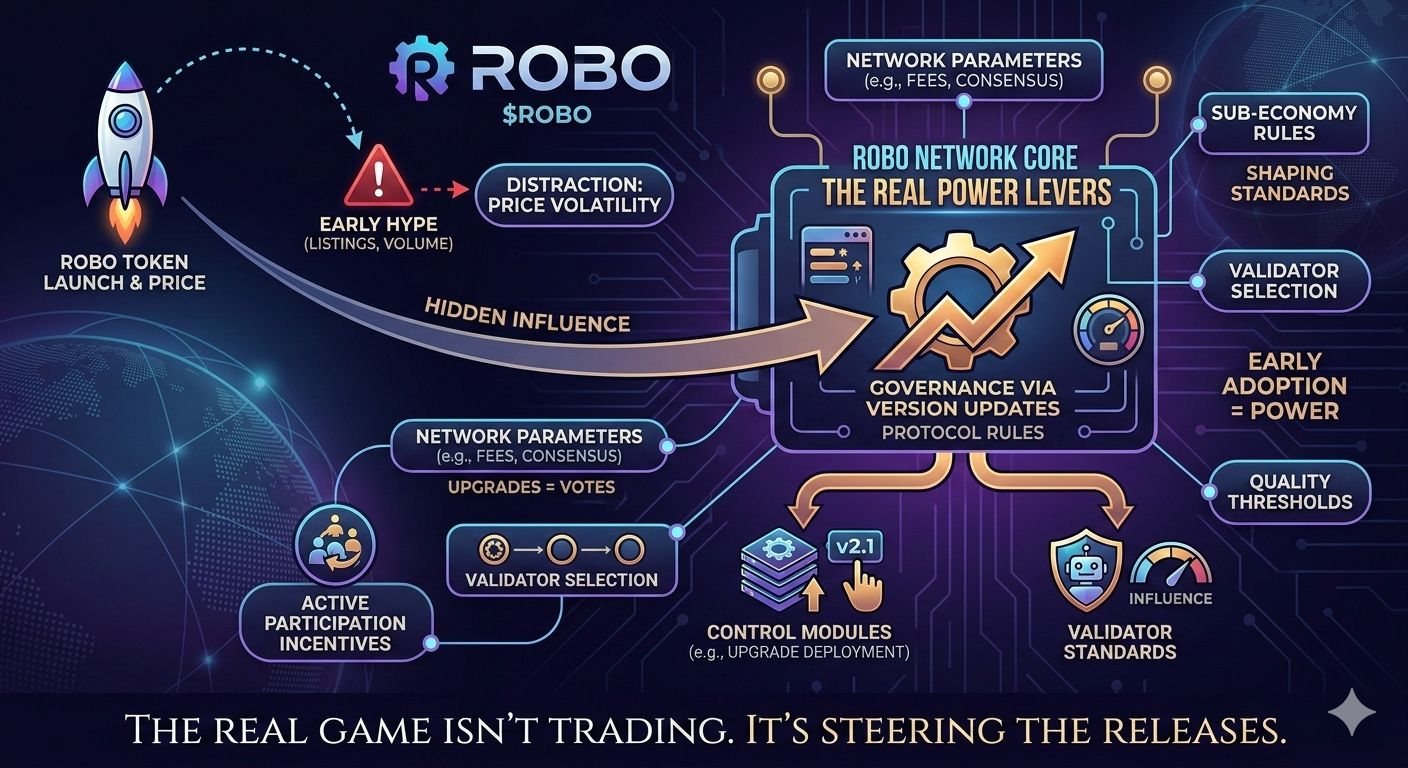
For anyone tracking ROBO, the takeaway is clear: version numbers are more than software they’re votes. Look beyond price charts. Watch which updates take hold, which validators gain influence, and whether usage remains consistent after the initial hype. The network’s true test isn’t its first week of listings it’s whether governance through upgrades translates into sustained economic power. The next release is more than an update; it’s the stage where authority in the robot economy quietly consolidates.