
I was reading about something interesting recently and it made me realize how strange the internet can be. A small piece of code from the 1990s might end up helping robots handle money on their own.
Back in 1995 there was an HTTP status code called 402 Payment Required. The idea was simple. One day the internet might allow services to charge automatically when something was used. But that system never really came together back then. So the code stayed unused for decades, sitting quietly inside the web standards like an unfinished idea.
Now @Fabric Foundation is trying to bring that idea back in a new way.
They’ve been working with companies like Coinbase and Circle, the issuer behind the USD Coin, to build something called the x402 protocol. Instead of humans clicking payment buttons, machines can trigger payments directly through this system.
Imagine a robot using OpenMinds OM1, Fabric’s operating system. If that robot goes to a charging station it doesn’t need a person to approve the payment. Its blockchain identity starts the process. The station checks the identity and the payment completes using USDC. The whole thing happens automatically.
To me that feels like a real shift. Machines and payment systems are not just connected loosely anymore. They actually start working together.
Think about a delivery drone finishing its route. It could pay tolls, recharge itself, or cover maintenance costs using the money it earned from deliveries. A care robot helping elderly people might receive payments for its work, pay for its electricity, and store the rest.
All without someone standing there managing the wallet.
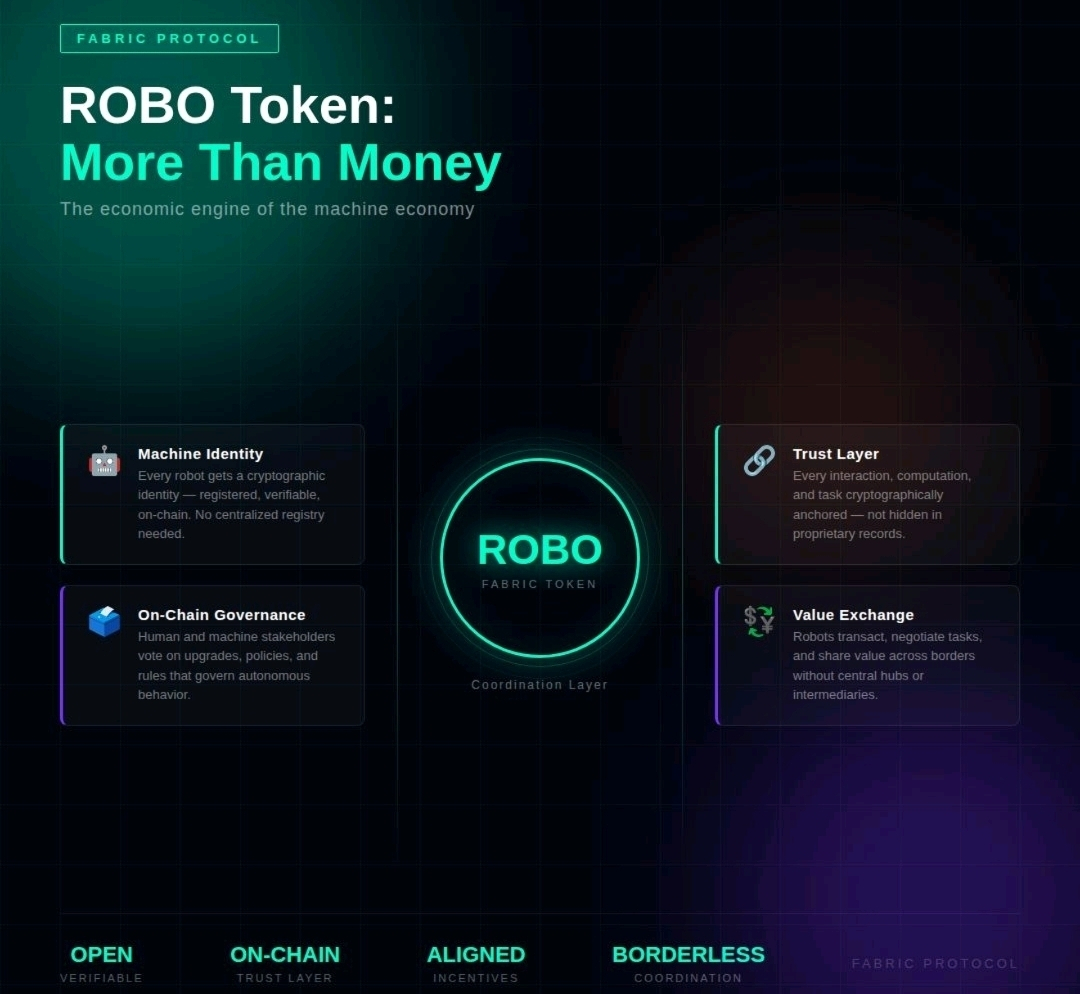
That’s where $ROBO comes in. It’s used across the network for identity registration, governance voting, and participation. According to the design, part of the protocol revenue goes toward buying ROBO from the open market.
So the demand is supposed to come from machine activity itself.
Another part that caught my attention is the hardware. Fabric’s FC1000 VPU chip is built to verify robot tasks using zero-knowledge proofs. Normal computers struggle with that type of math. The VPU chip is designed for it and reportedly runs some proofs much faster.
Verification matters because if proving a robot did a job costs more than the job itself, the whole idea breaks down. Cheap verification is basically required for a machine economy.
Even Polygon Labs seems to think the hardware matters. They committed several million dollars toward VPU server infrastructure before the chips were even available.
The operating system side is interesting too. OM1 is supposed to work across many types of robots. Walking robots, wheeled machines, warehouse arms. They can all access a shared marketplace for skills, like navigation or sorting inventory.
Almost like an app store but for robots.
And regular people could still participate. If someone can’t afford a robot, they might contribute ROBO into a shared pool that buys robots. The revenue those machines earn gets split between contributors.
So owning robot productivity becomes something more accessible.
Of course the big question is whether the whole thing actually scales. Hardware production, regulations, and corporate adoption will decide a lot of that.
What Fabric seems to be building right now is the base layer.

I’ll probably keep watching the VPU chip deliveries over the next months. That might tell us whether this idea is really moving from theory into something real.