
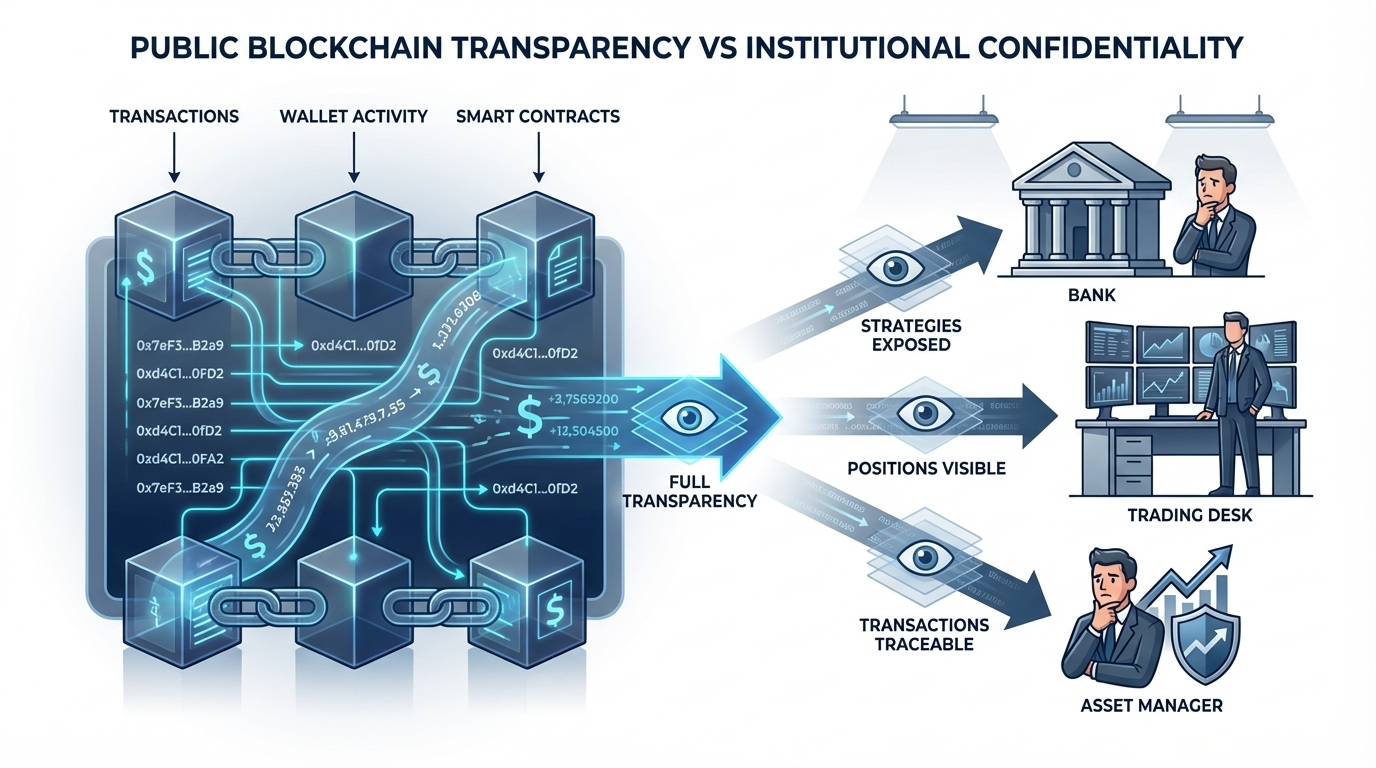
Ethereum's base layer was never designed for institutional participation. Every transaction hash wallet address and contract interaction sits permanently on a public ledger meaning a hedge fund executing a $500M position or a bank settling tokenized treasury bonds broadcasts its entire operational strategy to the world in real time. This is not a minor UX issue. It is a structural incompatibility between public blockchain architecture and the compliance-driven confidentiality-dependent workflows of regulated finance. The result is a hard ceiling on Real World Asset adoption. Institutions are not allergic to blockchain. They are allergic to financial transparency they cannot control.
THE MIDNIGHT SOLUTION
@MidnightNetwork attacks this problem at the protocol level through its Kachina framework a zero-knowledge proof architecture that executes private state transitions entirely off-chain before submitting only a cryptographic validity proof to the public ledger. The critical differentiator is what Midnight calls Selective Disclosure. Unlike Monero or early Zcash implementations that enforce blanket opacity Midnight's Compact smart contracts allow an institution to prove regulatory compliance KYC validity or asset ownership to a specific counterparty or regulator without exposing the underlying data to the broader network. For RWA infrastructure this is the missing primitive. A tokenized private credit fund can prove solvency to an auditor. A bank can demonstrate AML compliance to a regulator. The proof is public. The data is not. That is the bridge between on-chain settlement and off-chain legal reality.
TOKENOMICS ALPHA
The structural scarcity mechanics of $NIGHT are where the institutional liquidity multiplier thesis gets compelling. The total supply is fixed at 24 billion tokens with no VC allocation and no team reserve. 100% was distributed publicly via the Glacier Drop. NIGHT is never spent on transactions. Instead holding NIGHT continuously generates DUST a shielded non-transferable decaying resource used exclusively to pay for private computation on the network. This creates a powerful demand flywheel. As institutional usage and developer activity on Midnight increases the demand for DUST generation capacity rises. The only way to acquire perpetual DUST generation rights is to hold NIGHT. NIGHT cannot be manufactured. DUST cannot be bought on the open market. Every enterprise every developer every protocol building on Midnight's privacy layer must either hold NIGHT or rent capacity from someone who does. The token is not a fee token. It is a perpetual license to private computation on a network that institutions actually need.
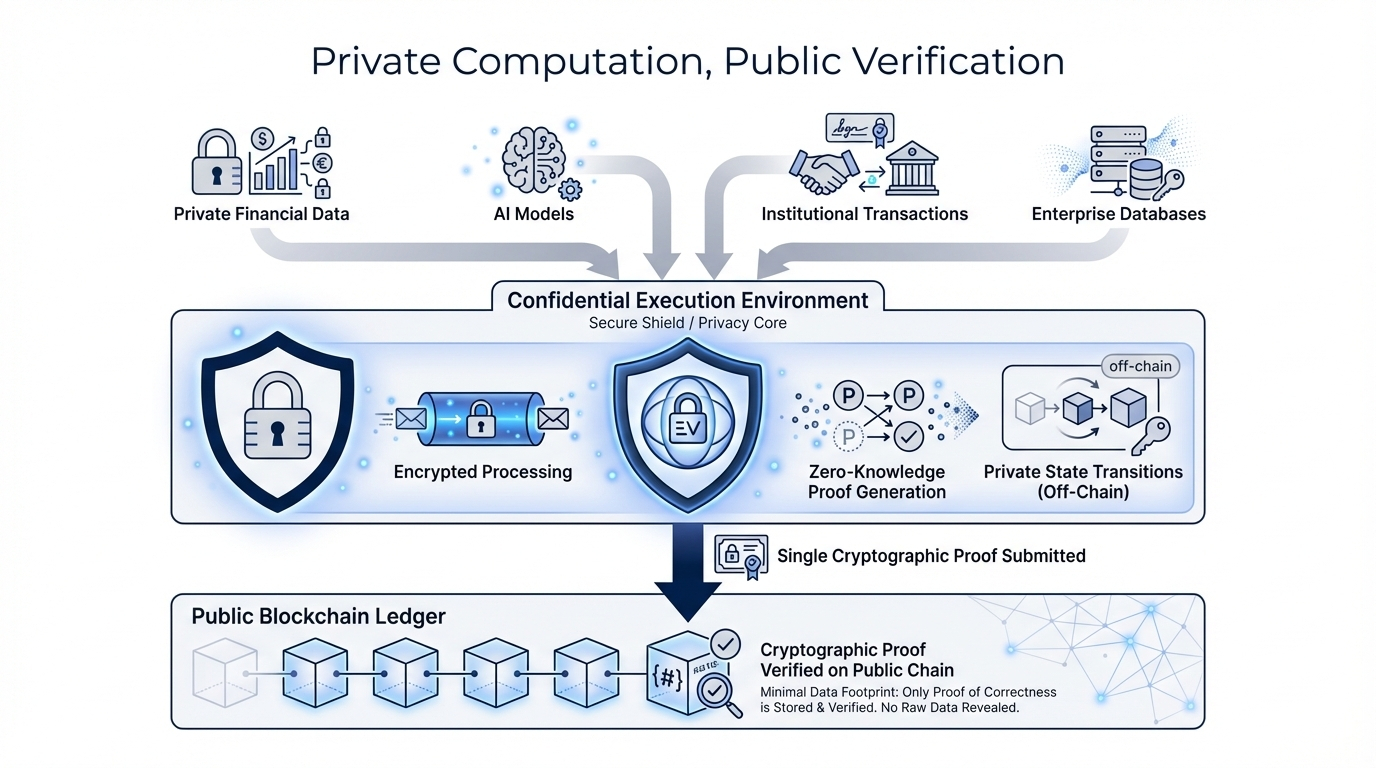
Most privacy narratives in crypto are built for retail speculation. Midnight is engineered for the one use case that unlocks institutional capital at scale: the ability to transact with proof but without exposure. The Kachina protocol gives regulators what they need. Selective Disclosure gives institutions what they need. And the NIGHT generation model creates a structural scarcity that pure market dynamics will eventually be forced to reprice. This is not a privacy coin. It is infrastructure for the next phase of on-chain finance.