
Fabric Protocol: Using Public Ledgers to Coordinate Human–Robot Collaboration
One lesson I picked up early while trading in crypto is that the loudest moments in the market often arrive just before a narrative begins to lose momentum. A token can dominate social feeds, trading volume can spike, and communities can expand quickly. But when the excitement settles, a more important question always appears: what real activity continues once the attention shifts elsewhere?That perspective is the one I keep in mind when looking at Fabric Protocol. At first glance the project seems to sit within the familiar themes of robotics and artificial intelligence. Crypto has seen many projects use those narratives before. What makes Fabric slightly different is the direction it takes. Instead of focusing purely on AI applications, the protocol is trying to build coordination between humans and machines through shared public infrastructure.The core idea is fairly straightforward. Fabric proposes an open network where robots, developers, operators, and validators interact through a common ledger. Computation, service records, and operational data are recorded on-chain rather than managed inside private company systems.
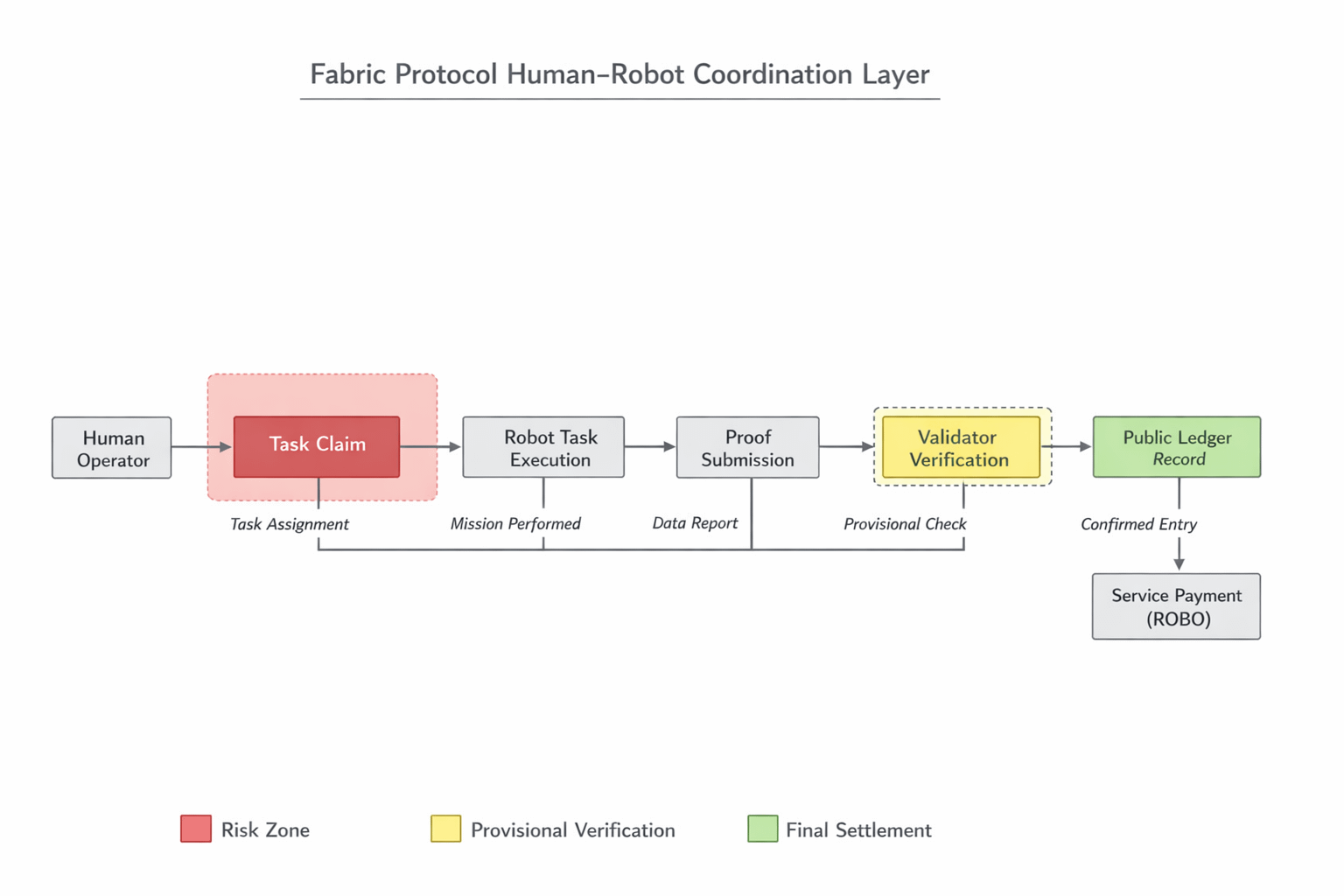
Operators must bond tokens in order to run robotic services. Validators stake assets to confirm that activity is legitimate. Users and applications pay fees when they interact with the network. Ideally, those elements combine to create an economic loop where value comes from actual work rather than passive speculation.Still, architecture on paper does not guarantee that a system will succeed in practice. The larger challenge is retention.For a network like Fabric to remain meaningful, different participants must keep contributing over time. Developers need to continue building applications, operators must maintain bonded infrastructure, validators must actively confirm service quality, and users must keep returning because the robotic services offered through the network provide real value.Another technical challenge appears in how the protocol handles verification. Unlike purely digital systems, physical robotic tasks cannot always be proven through simple cryptographic proofs.
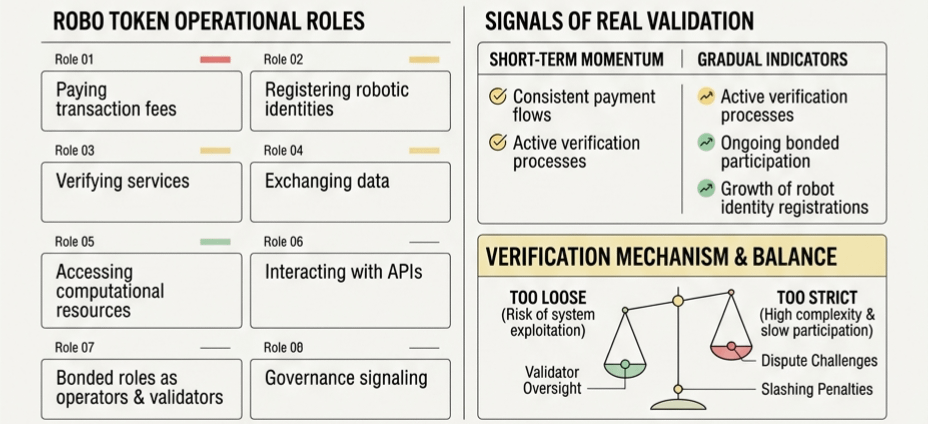
Fabric acknowledges this limitation and introduces a combination of validator oversight, dispute challenges, and slashing penalties designed to discourage dishonest behavior or poor service performance.That approach highlights an important balance the network must maintain. If verification rules are too loose, bad actors could manipulate the system. If they become too strict or complex, participation may slow down or become expensive. Whether Fabric can maintain that balance in real operating environments will likely determine how reliable the system becomes.For investors and traders, this means the current stage of the ROBO token is still closely tied to narrative momentum. Markets are essentially evaluating an early concept whose real validation will depend on operational evidence rather than speculation alone.The stronger signals will not necessarily come from short‑term price movements or bursts of online attention. Instead, they will appear through gradual indicators such as the growth of robot identity registrations, consistent payment flows for services, active verification processes, and ongoing bonded participation from network operators.
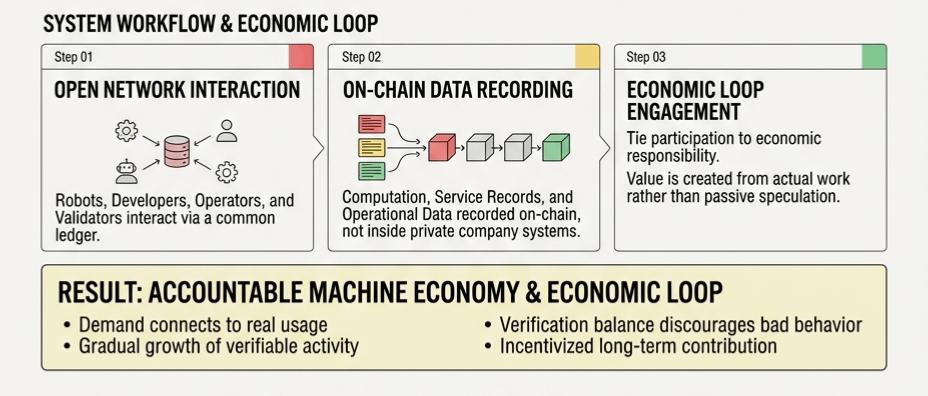
If those components begin reinforcing each other, Fabric could evolve into an early infrastructure layer for accountable machine economies. The bigger question sitting behind the project is whether public blockchain systems can realistically coordinate humans and autonomous machines at meaningful scale.If that becomes possible, the implications could extend well beyond crypto markets, influencing how robotic services are managed, trusted, and economically organized in the real world. $ROBO #ROBO @Fabric Foundation