
Midnight is not excitement. I do not really have that reaction anymore. Not after watching this market recycle the same instincts through a hundred different wrappers.
After a while new projects stop feeling new. They begin to blur into a familiar pattern, where the surface changes but the underlying tension stays the same. Better branding, sharper language, cleaner positioning yet the same tradeoffs quietly persist underneath. I have watched this cycle repeat enough times to recognize the rhythm before it fully plays out.
Midnight does not try too hard to break that pattern, and maybe that is why it stands out slightly. Not because it feels revolutionary, but because it feels aware. Aware that the old extremes no longer hold. Aware that forcing a choice between full transparency and full privacy was never a complete solution to begin with.
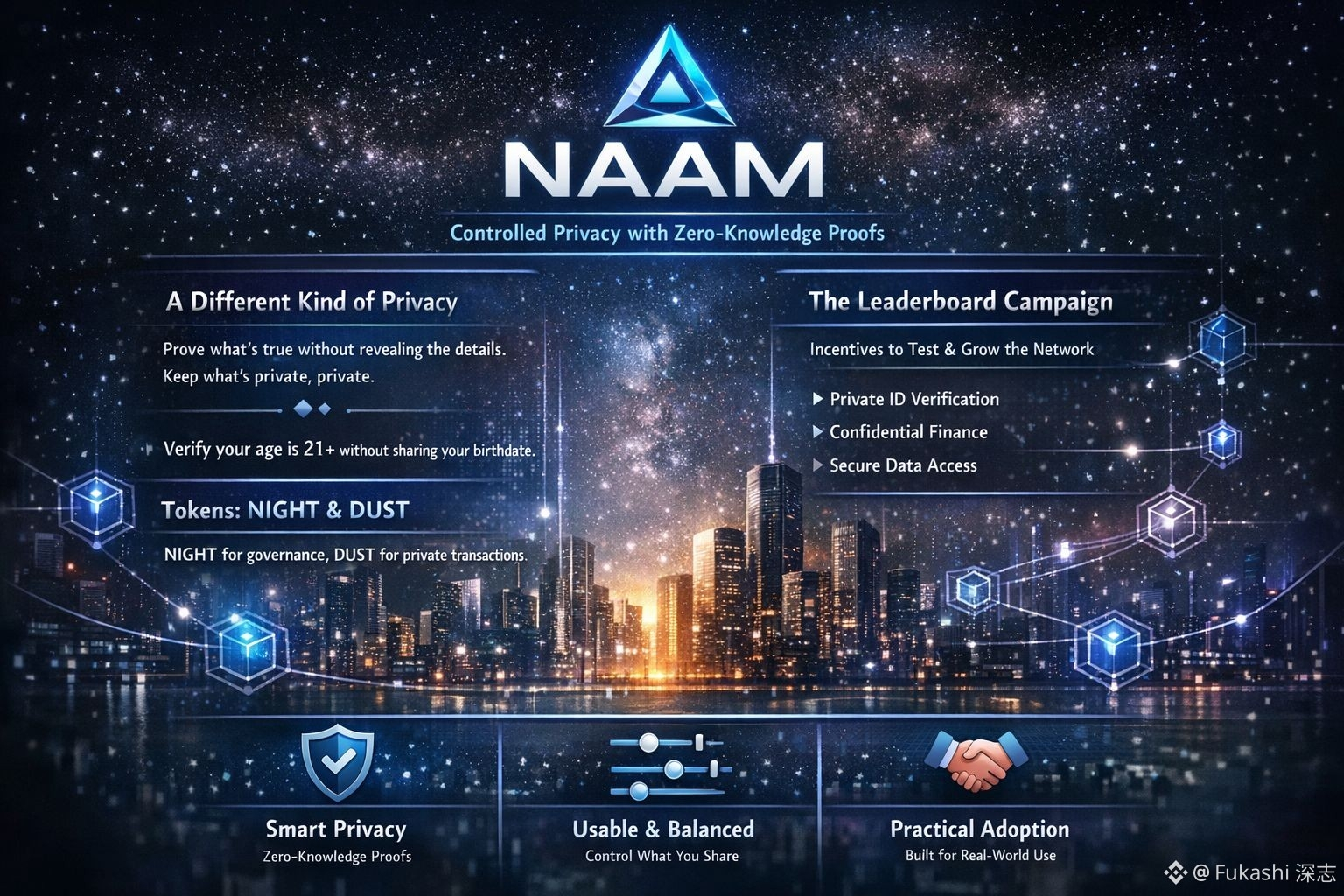
Transparency, in this space, has been idealized far beyond its practical limits. It has been framed as a moral high ground, as if visibility automatically creates trust. In reality, constant exposure introduces its own set of problems. It creates friction, surveillance, and a permanent record that can be analyzed, exploited, and weaponized. Over time, it becomes less about accountability and more about vulnerability.
This is where Midnight begins to carry some weight. Not as a perfect answer, but as an attempt to sit within that tension. It does not present privacy as an abstract ideal. It tries to approach it as something that must function under real conditions, where systems are used, stressed, and negotiated against.
That is not an easy position to hold. Because the moment privacy moves from theory to implementation, compromise becomes unavoidable. And Midnight, at its core, feels like a product of that compromise. Not a flaw necessarily, but a reality.
That is also where caution becomes necessary.
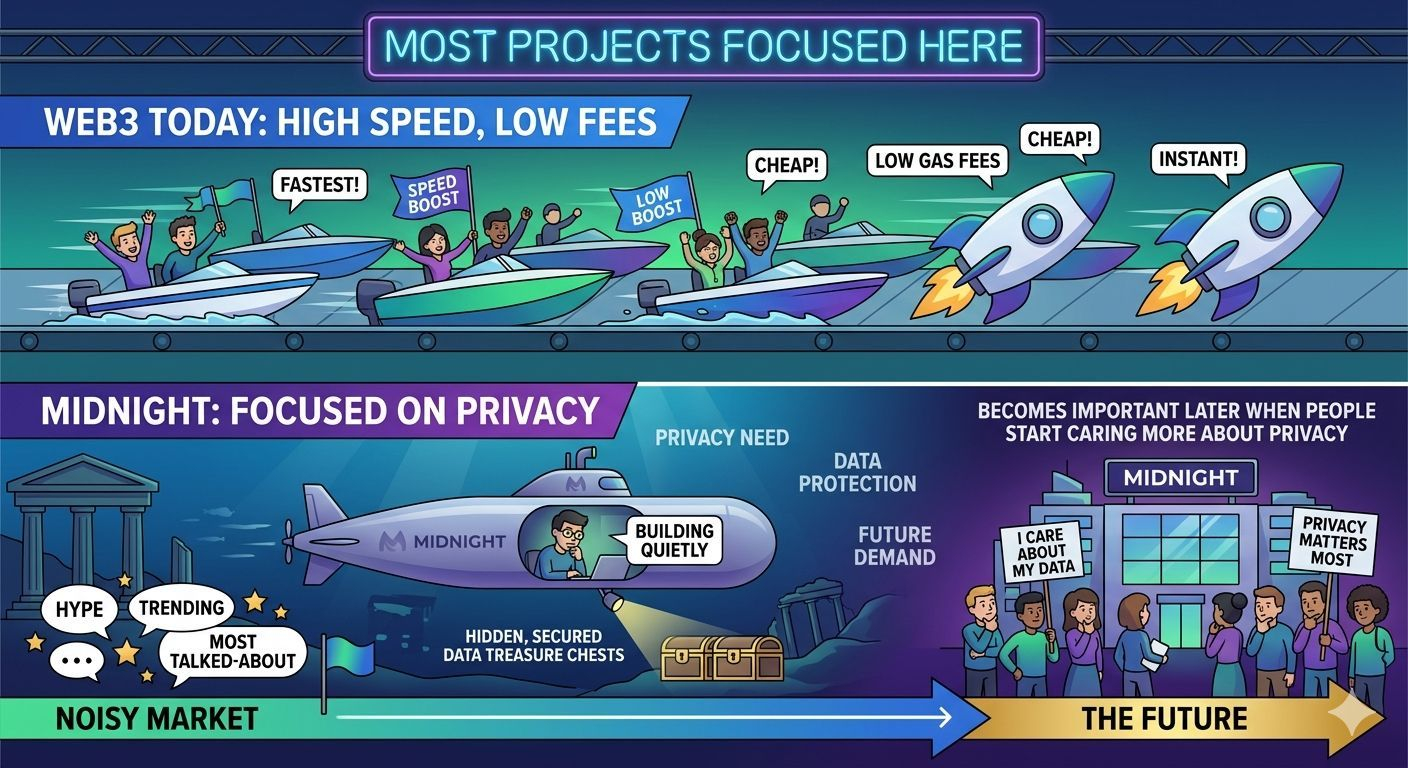
The market has a tendency to turn balanced solutions into exaggerated narratives. A project finds a workable middle ground, and suddenly it is framed as a breakthrough. I do not see Midnight in that light. I see it as a response to a problem that has been ignored for too long the discomfort of living entirely in public systems.
That discomfort is real. People do not want every action permanently visible. They do not want every transaction reduced to a traceable history. Privacy is not an edge case anymore; it is becoming a baseline expectation. Midnight is stepping into that absence, and that alone makes it relevant.
But relevance is not the same as resolution.
When a system tries to make privacy usable at scale, the real questions start to appear in the details. Where does visibility return? Who controls disclosure? Under what conditions does privacy shift into transparency? These boundaries are never as clean as they sound in high-level explanations.
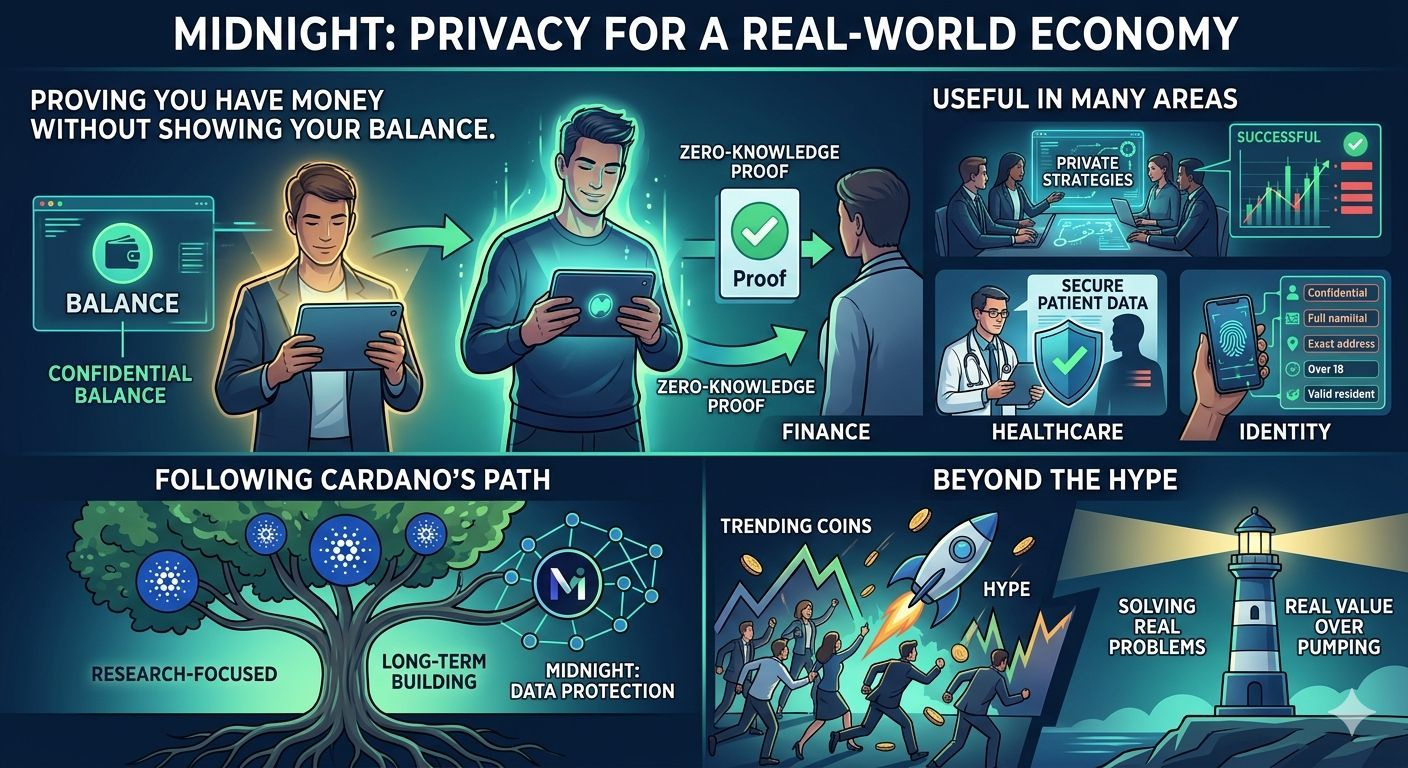
That is where the real test exists.
Because different participants want different things. Builders want flexibility. Users want protection. Institutions want predictability. Existing power structures want assurance. These demands overlap only up to a point. After that, something has to give.
Midnight feels like it is designed to navigate that pressure rather than eliminate it.
And that makes it less of a solution and more of a negotiation.
Not in a negative sense, but in a structural one. It feels deliberate, controlled, and aware of the environment it needs to survive in. It does not rely on loud promises or ideological extremes. Instead, it positions itself in a way that is easier to accept, easier to integrate, and ultimately easier to sustain.
But that kind of positioning comes with its own risks.
The most convincing projects are not always the ones that fail loudly. They are the ones that appear stable, reasonable, and aligned with real needs yet gradually adapt themselves to fit the systems around them. Not all at once, but over time. Subtle shifts. Adjusted priorities. Refined boundaries.
By the time those changes become visible, the original idea has already evolved into something more acceptable, but also more constrained.

Whether Midnight follows that path or avoids it is still unclear.
What is clear is that it reflects a shift in the market itself. The space is no longer driven by purity or idealism alone. It is becoming more pragmatic, more cautious, and more focused on systems that can function in reality rather than theory.
That shift is important.
But it is not entirely comfortable.
Because moving from pure transparency to managed privacy does not remove trust from the system. It simply changes where that trust is placed. It introduces new layers of control, new decision points, and new questions about who ultimately defines the boundaries.
That is why it is difficult to form a clean conclusion about Midnight.
It is not empty. It is not superficial. It is reaching toward something the space genuinely needs. But it is also operating in a space where every solution carries hidden dependencies.
In the end, Midnight does not feel like a final answer. It feels like a reflection of where crypto is heading away from extremes and toward structured compromise.
Less ideology. More design.
Less noise. More control.
Less innocence. More intention.
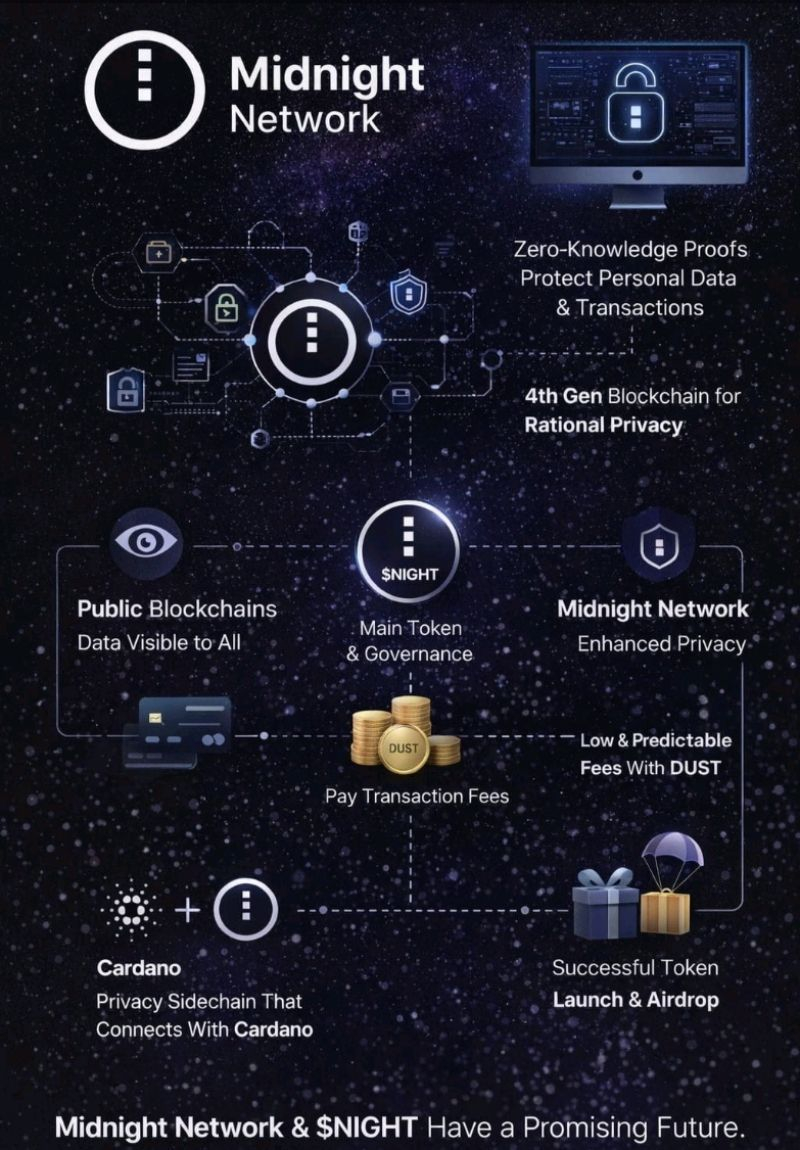
And maybe the real question is not what Midnight claims to be, but what it becomes once it is no longer being introduced carefully and starts being used under real pressure.
@MidnightNetwork $NIGHT #night #Web3metaverse #PrivacyDebate #ZeroKnowledgeFuture #MidnightNetwork